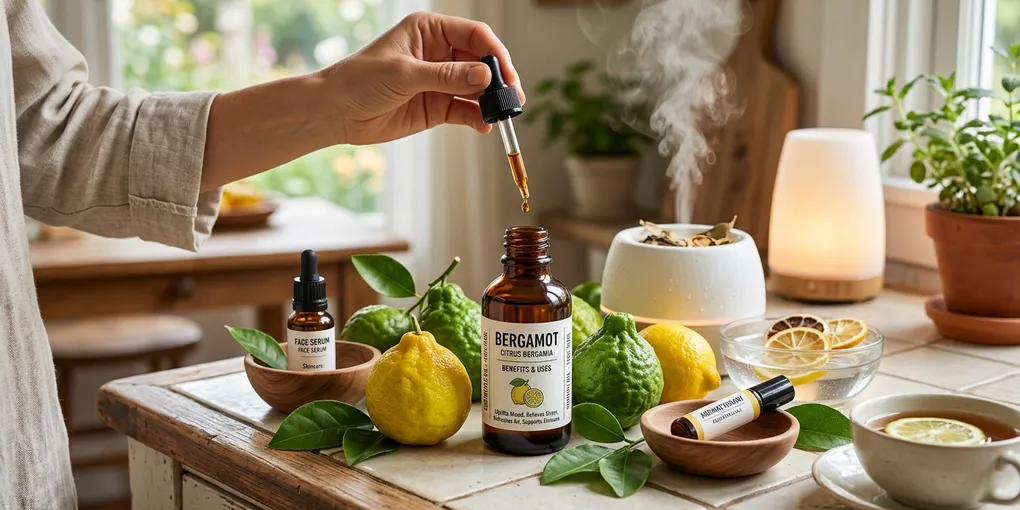
Yes, bergamot is one of the best-studied essential oils for lifting mood. Small clinical studies have found that simply inhaling it for 15 minutes can improve positive feelings and lower markers of stress. It won’t replace treatment for depression or anxiety, but as a quick, natural pick-me-up it’s hard to beat. Below: what the research actually says, the easiest ways to use it, three mood blends, and the one safety rule (sun sensitivity) you can’t skip.
Table of Contents
- Quick Answer: Does Bergamot Lift Your Mood?
- What Is Bergamot Essential Oil?
- Why Bergamot Makes You Feel Better
- 3 Fast Ways to Use Bergamot for Mood
- 3 Mood-Lifting Diffuser Blends
- Bergamot for Stress and Anxious Moments
- Bergamot for Better Sleep
- Massage: Sore Muscles and an Unsettled Stomach
- Bergamot in Skincare (Read This First)
- A Natural Bergamot Room Spray
- How to Choose a Good Bergamot Oil
- Safety Checklist
Quick Answer: Does Bergamot Lift Your Mood?
| Best for | Quick mood lifts, everyday stress, winding down |
| How to use | Diffuse 3–5 drops, or inhale from a cotton ball |
| How fast | Many people notice a shift within 10–15 minutes |
| Pairs well with | Lavender, sweet orange, frankincense, ylang ylang |
| Main caution | Regular bergamot causes sun sensitivity on skin; use FCF oil for topical use |
What Is Bergamot Essential Oil?
Bergamot essential oil is cold-pressed from the rind of Citrus bergamia, a lemon–bitter orange hybrid grown mainly in Calabria, Italy. You already know the scent: it’s what flavors Earl Grey tea, and it’s a classic top note in perfumes.

What sets it apart from other citrus oils is its softer, slightly floral edge. It smells bright like lemon but not sharp, which is why it works for both energizing mornings and calm evenings. That’s also why it’s a go-to in self-care routines.
Why Bergamot Makes You Feel Better
Scent is processed in the brain’s limbic system, the same area involved in emotion and memory. That’s why a smell can change how you feel almost instantly. Bergamot is rich in linalool and linalyl acetate, two compounds also found in lavender that are associated with calming effects.
The research is small but encouraging:
- In a mental health clinic waiting room, people who spent time in a room diffused with bergamot reported noticeably more positive feelings than those who didn’t.
- In a small Japanese study of women, 15 minutes of inhaling bergamot vapor lowered salivary cortisol (a stress hormone) and improved self-reported mood and fatigue scores compared with resting alone.
These are short-term effects in small groups, so think of bergamot as a mood nudge, not a cure. If low mood lasts more than a couple of weeks, talk to a doctor. For the bigger picture, see can essential oils help with mood?
3 Fast Ways to Use Bergamot for Mood
1. The cotton-ball reset (2 minutes). Put 1–2 drops on a cotton ball or tissue, hold it a few inches from your nose, and breathe slowly. Pair it with 4-7-8 breathing: in for 4, hold for 7, out for 8. Repeat 3–5 times.
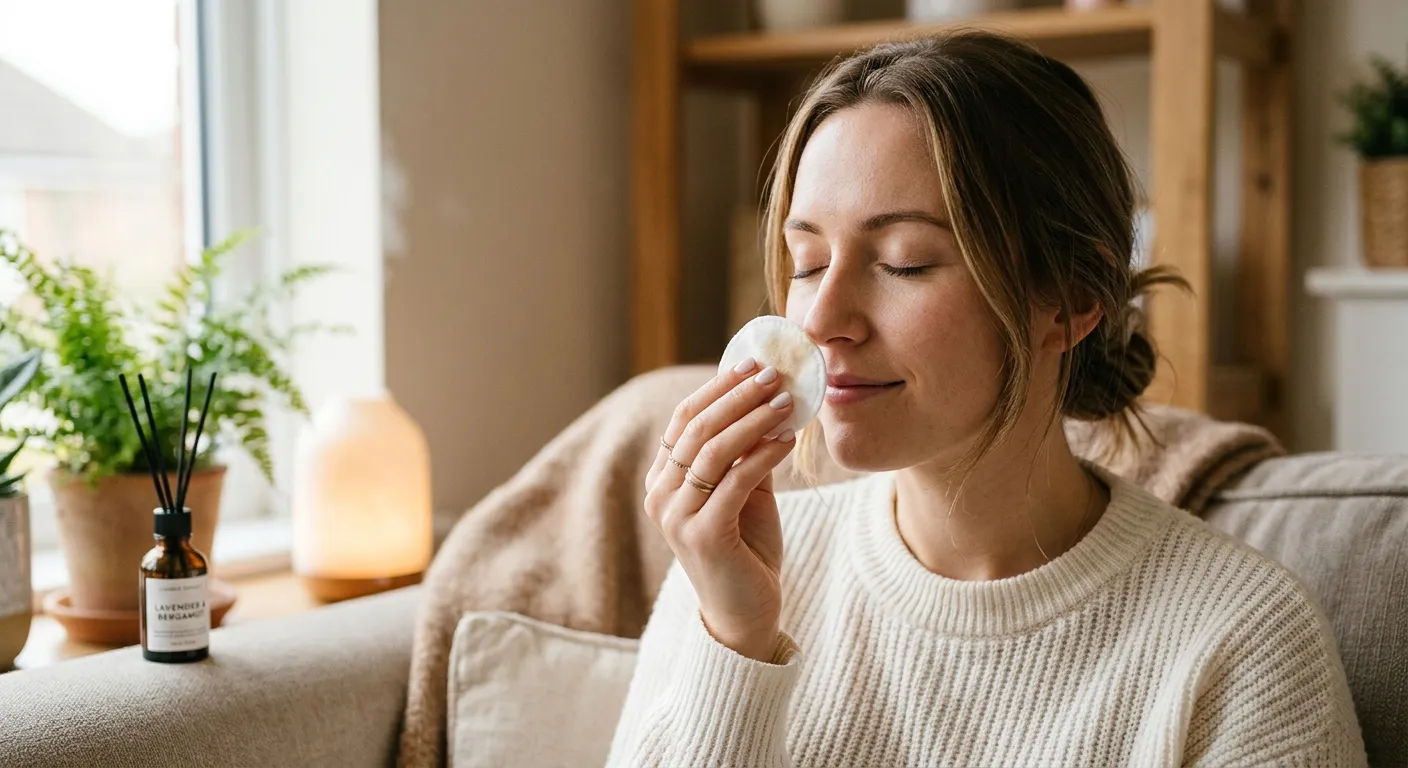
2. Diffuse while you work or wake up. Add 3–5 drops to an ultrasonic diffuser. Run it 30–60 minutes at a time, then take a break so your nose doesn’t tune it out.
3. A personal inhaler or wrist blend. For on-the-go use, add 10–15 drops to a blank aromatherapy inhaler stick. Or mix 1 drop of bergapten-free (FCF) bergamot with 1 tsp of jojoba and dab it on your wrists. Dilution matters, so never apply it neat.
3 Mood-Lifting Diffuser Blends
Morning sunshine (energy + good mood)
- 3 drops bergamot
- 2 drops sweet orange
- 1 drop peppermint
Focus and clear head (work or study)
- 4 drops bergamot
- 3 drops lemon
- 2 drops rosemary
Calm and content (evening wind-down)
- 4 drops bergamot
- 3 drops lavender
- 2 drops cedarwood
Want to make your own? Start with our beginner’s guide to blending. Bergamot plays well with florals (lavender, geranium, ylang ylang), woods and resins (cedarwood, frankincense), and herbs (rosemary).
Bergamot for Stress and Anxious Moments
The same cortisol findings above are why bergamot shows up on almost every list of essential oils for stress relief. It’s especially useful in short, stressful windows: before a meeting, after a hard phone call, or at the end of a long day.
Keep a cotton ball or inhaler in your bag or desk drawer, and combine it with slow breathing. The breathing does real work too, and the scent becomes a cue your brain learns to associate with calming down.
Bergamot for Better Sleep
Because it’s calming without being sedating, bergamot works well as part of a nighttime routine, especially mixed with lavender.
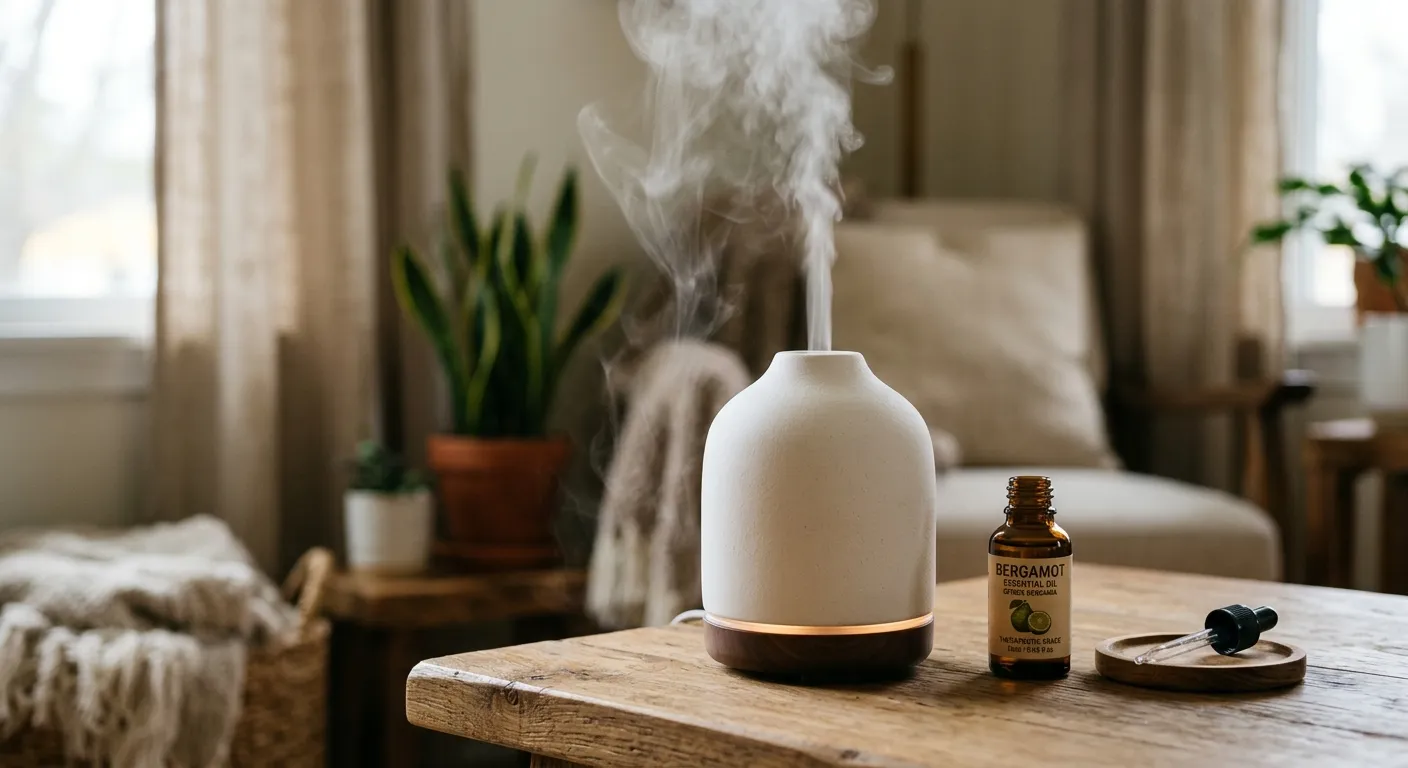
Fill your diffuser to the line, add 4–6 drops, and switch it on 30–60 minutes before bed. Turn it off (or use the timer) once you’re settled, since diffusing all night isn’t necessary and can irritate airways.
Massage: Sore Muscles and an Unsettled Stomach
A diluted bergamot massage oil combines a relaxing scent with the benefits of massage itself.
- Shoulders, neck, and sore muscles: mix 4–6 drops FCF bergamot with 2 tbsp jojoba, grapeseed, or sweet almond oil.
- Tension headache: a small amount of the same blend rubbed into the temples and back of the neck.
- After a heavy meal: 1–2 drops in 1 tbsp carrier oil, massaged in slow clockwise circles on the belly for 5–10 minutes. Many people find this soothing, though the evidence for bergamot itself easing digestion is mostly traditional.
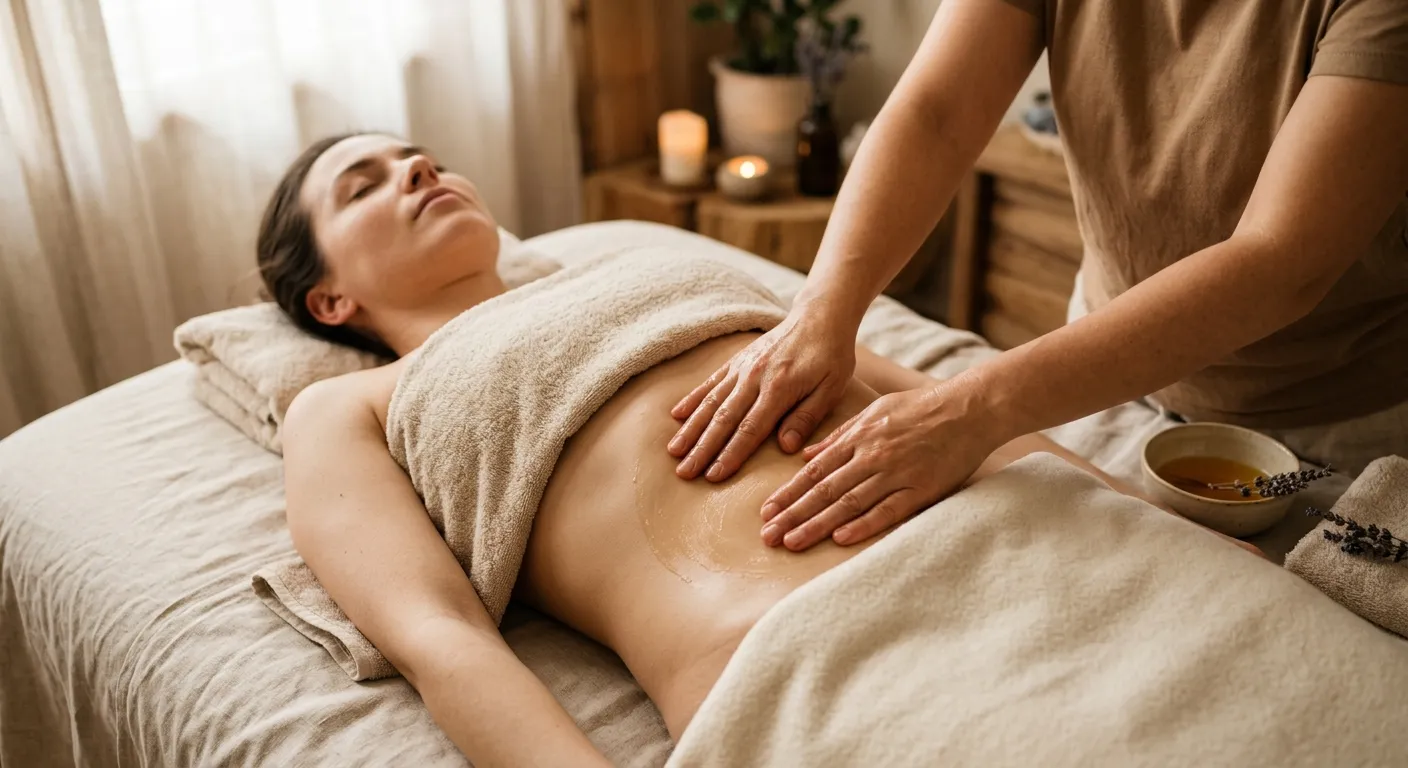
Not sure which base to use? See our list of the best carrier oils. Always patch test first.
Bergamot in Skincare (Read This First)
Regular bergamot oil contains bergapten, a furocoumarin that makes skin react badly to UV light. Apply it and go into the sun, even hours later, and you can get burns, blisters, or dark patches that last for months. This is called photosensitivity, and bergamot is one of the worst offenders.
The fix is simple: for anything that goes on skin, buy bergapten-free bergamot, labeled “FCF” (furocoumarin-free). If you only have regular bergamot, keep it to the diffuser.
If you add FCF bergamot to a face cream or serum:
- Keep it at 0.25–0.5%, roughly 1–2 drops per 1 oz (30 ml) of product.
- Patch test on your inner arm and wait 24 hours.
- Skip it on broken or very sensitive skin.
Lab studies show bergamot has some antimicrobial activity, which is why it appears in blemish products, but there isn’t good evidence that it clears acne on its own. Think of it as a pleasant addition to a routine, not a treatment.
A Natural Bergamot Room Spray
Bergamot makes a cheerful natural room freshener, and spritzing it is another easy mood lift.
- 2 oz witch hazel (or high-proof vodka)
- 2 oz distilled water
- 20–25 drops bergamot (or 15 bergamot + 10 lavender)
Combine in a glass spray bottle, shake before every use, and mist into the air, not onto wood or fabric you care about.
How to Choose a Good Bergamot Oil
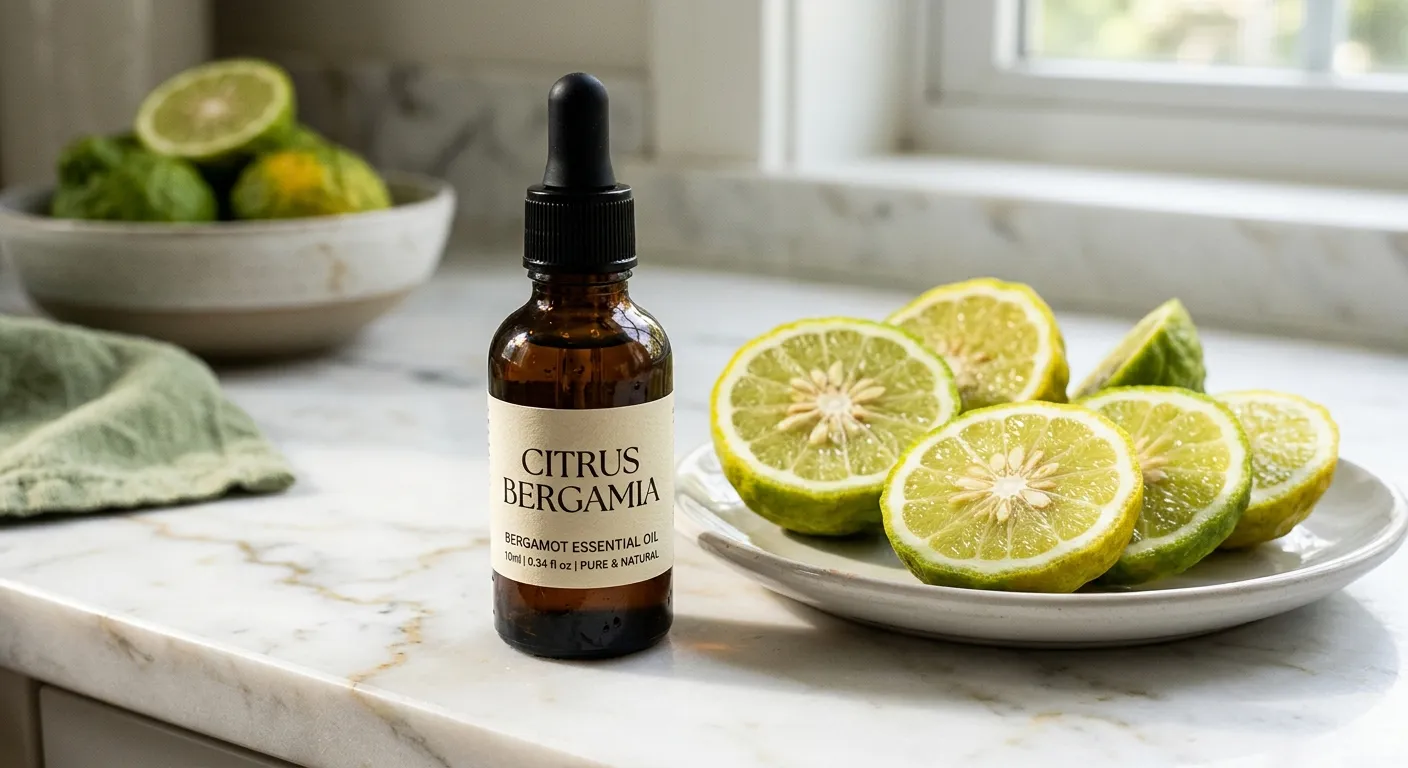
A cheap or adulterated oil won’t smell right and won’t do much. Spotting low-quality oil comes down to a few checks:
- Latin name on the label: Citrus bergamia. Avoid anything called “fragrance oil” or “perfume oil.”
- GC/MS test report: reputable brands publish third-party lab results by batch.
- Extraction method: cold-pressed for regular bergamot; FCF oils are further processed to remove bergapten.
- Dark glass bottle: amber or cobalt, to protect it from light.
- Freshness: citrus oils oxidize faster than most. Use within about a year of opening and store it cool and capped.
Safety Checklist
- Don’t swallow essential oils.
- Use FCF (bergapten-free) bergamot for anything on skin, and avoid sun or tanning beds on treated skin if you’re unsure.
- Always dilute before topical use, and patch test.
- Diffuse in short sessions in a ventilated room. Keep diffusers away from cats, birds, and small pets.
- If you’re pregnant, nursing, have asthma, or are diffusing around young children, check with a healthcare provider first.
- Aromatherapy supports mood; it doesn’t treat depression or anxiety disorders.
Frequently Asked Questions
Does bergamot essential oil really help with mood?
Small studies suggest it does in the short term. Inhaling bergamot has been linked to more positive feelings and lower cortisol after about 15 minutes. It’s a helpful mood booster, not a treatment for depression.
How do I use bergamot oil to feel better quickly?
The fastest method is inhaling 1–2 drops from a cotton ball while taking slow, deep breaths. Diffusing 3–5 drops in your room for 30–60 minutes is the easiest hands-off option.
What blends well with bergamot for mood?
Sweet orange and peppermint for energy, lemon and rosemary for focus, and lavender, cedarwood, or frankincense for calm.
Is bergamot oil energizing or relaxing?
Both, depending on what you pair it with. On its own it’s bright but gentle, so it suits mornings with citrus oils and evenings with lavender or cedarwood.
Is bergamot oil safe on skin?
Only when diluted and, ideally, bergapten-free (FCF). Regular bergamot can cause serious sun reactions. Keep facial use to 0.25–0.5% and patch test first.
Can I diffuse bergamot around pets?
Use caution. Cats and birds are especially sensitive to essential oils. Diffuse briefly in a ventilated room and make sure pets can leave the area.