
Quick answer: Most diffusers that stop misting have one of four problems. The water is above the max line or below the min line, the lid isn’t seated properly, a timer or mode setting has paused it, or the ultrasonic plate at the bottom is coated with oil residue or mineral scale. Unplug the diffuser, set the water to the fill line, reseat the lid, and wipe the plate with a cotton swab dipped in rubbing alcohol. That fixes the majority of “dead” diffusers in a couple of minutes.
If that doesn’t work, find your symptom below and jump to the fix.
Find Your Symptom
| What you see | Most likely cause | Go to |
|---|---|---|
| No lights, no sound, nothing | Outlet, cord, or adapter | Fix 4 |
| Lights on, but no mist at all | Water level, dirty plate, or a stuck low-water sensor | Fix 1, Fix 5 |
| Mist is weak or patchy | Residue or scale on the plate, thick oils | Fix 5, Fix 6 |
| Water ripples or buzzes, but no mist comes out the top | Lid not sealed, or fan blocked | Fix 2, Fix 7 |
| Mists for a while, then stops | Timer or intermittent mode | Fix 3 |
| Diffuser is running, but you can’t see the mist | Humid or drafty room | Fix 9 |
| Nothing works after all of this | A failed plate, fan, or circuit board | Fix 10 |
Table of Contents
- Before You Start: Unplug It
- Fix 1: Set the Water to the Fill Line
- Fix 2: Reseat the Lid and Inner Cap
- Fix 3: Check the Timer and Mist Mode
- Fix 4: Check the Power Cord and Adapter
- Fix 5: Clean the Ultrasonic Plate
- Fix 6: Dissolve Mineral Scale With Vinegar
- Fix 7: Clear the Air Intake and Fan
- Fix 8: Go Easy on Thick Oils
- Fix 9: Check the Room, Not the Diffuser
- Fix 10: Know When It’s Dead
- How to Keep It From Happening Again
Before You Start: Unplug It
Diffusers combine water and electricity. Unplug yours before you pour, wipe, or flip it over. This is the most basic essential oil safety step, and it also protects the circuit board and ultrasonic plate from a short if water splashes where it shouldn’t.
Fix 1: Set the Water to the Fill Line
This is the most common cause, and the fastest to fix.
An ultrasonic diffuser has a small ceramic plate at the bottom of the tank. The plate vibrates very fast, and those vibrations break the water’s surface into the fine mist that carries your oils. The plate only works well within a certain range of water depth:
- Too little water: many diffusers have a low-water sensor (often a small float or a pair of metal contacts) that shuts misting off to protect the unit. The lights may stay on while nothing comes out.
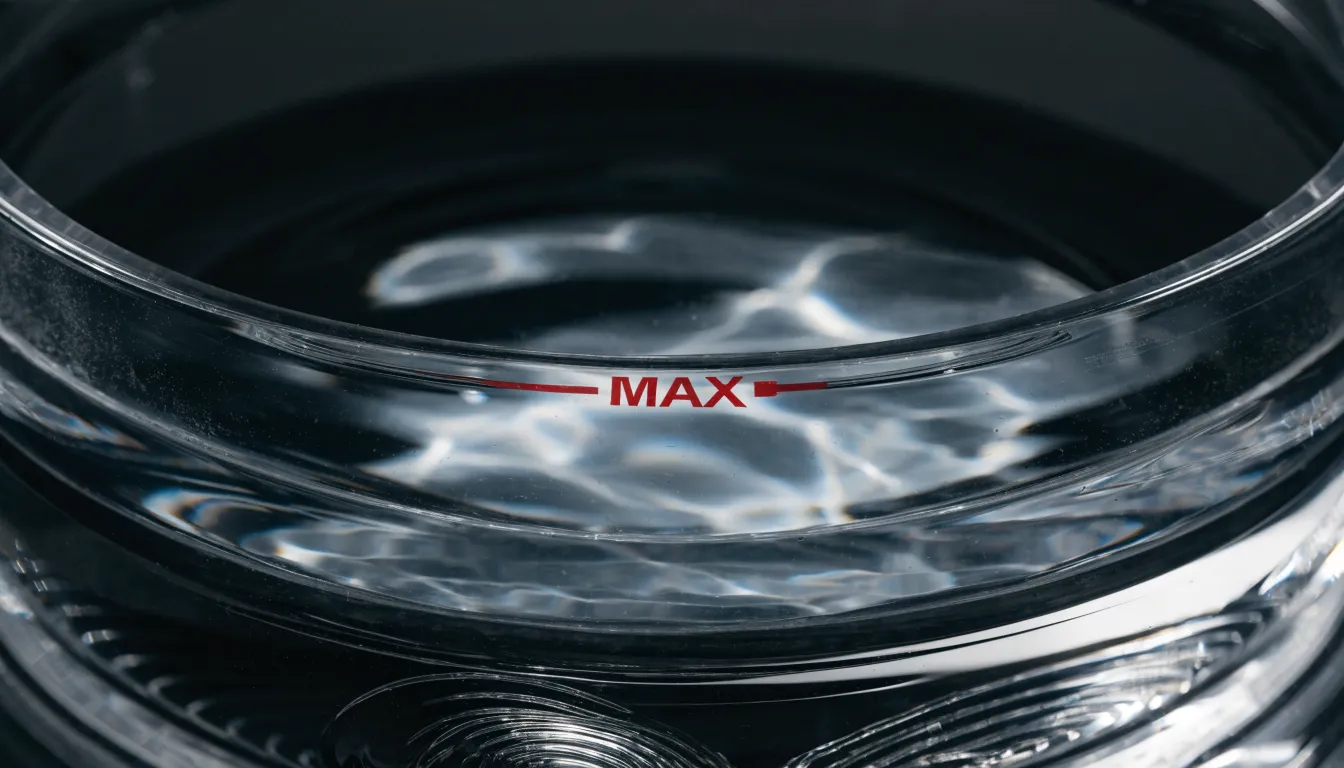
- Too much water: water above the max line dampens the vibrations at the surface, so mist output drops sharply or stops altogether.
Pour water in or out until it sits between the min and max lines. If yours has a little float, make sure it moves freely and isn’t stuck with residue.
Fix 2: Reseat the Lid and Inner Cap
Most diffusers rely on a small fan that pushes air through the tank and carries the mist up and out of the nozzle. If the outer cover is crooked, that air escapes through the gap, and the mist swirls around inside instead of leaving through the top.
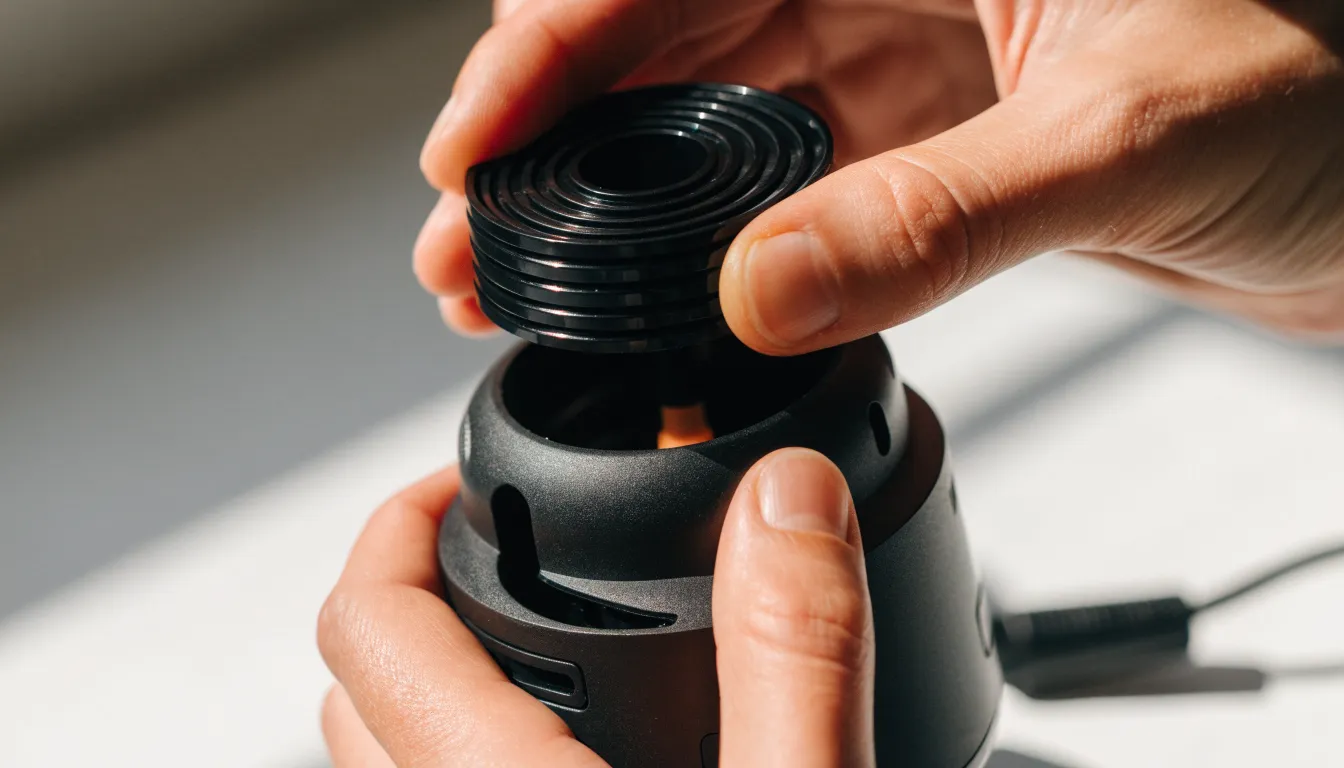
Many models also have an inner cap over the water tank. If it isn’t pressed down fully, the airflow path is broken and mist stays trapped. Take both pieces off and put them back on carefully, until they click or sit flush.
Fix 3: Check the Timer and Mist Mode
Plenty of “broken” diffusers are just following their settings.
- Intermittent mode turns the mist on and off on a cycle, often around 30 seconds on and 30 seconds off. During a pause it looks dead.
- Timers (commonly 1, 3, or 6 hours) shut the unit off when the time runs out.
On most models, the mist button cycles through the modes and timers with repeated presses. If you want it to run until the water is gone, choose continuous or “on” mode and let the low-water shut-off do its job. If you’re not sure what your button presses do, check the manual for your model.
Fix 4: Check the Power Cord and Adapter
If there are no lights and no sound at all, start with the outlet. Plug a lamp or phone charger into the same socket. If that doesn’t work either, the problem is the outlet or circuit breaker, not the diffuser.
If the outlet is fine, check the diffuser’s power path:
- Cord: look for sharp kinks, fraying, or cracked insulation.
- Adapter: look for discoloration or bulging, and smell for anything burnt.
- Connections: push the barrel plug firmly into the diffuser base. A loose plug is a common culprit.
Damaged cords and adapters are cheap to replace. Match the voltage, amperage, and plug size printed on the original adapter.
Fix 5: Clean the Ultrasonic Plate
If the lights are on but mist is weak or missing, this is the fix that works most often. Oil residue and mineral film build up on the plate, often in a layer too thin to see, and stop it from vibrating properly.
- Unplug the diffuser and empty the tank.
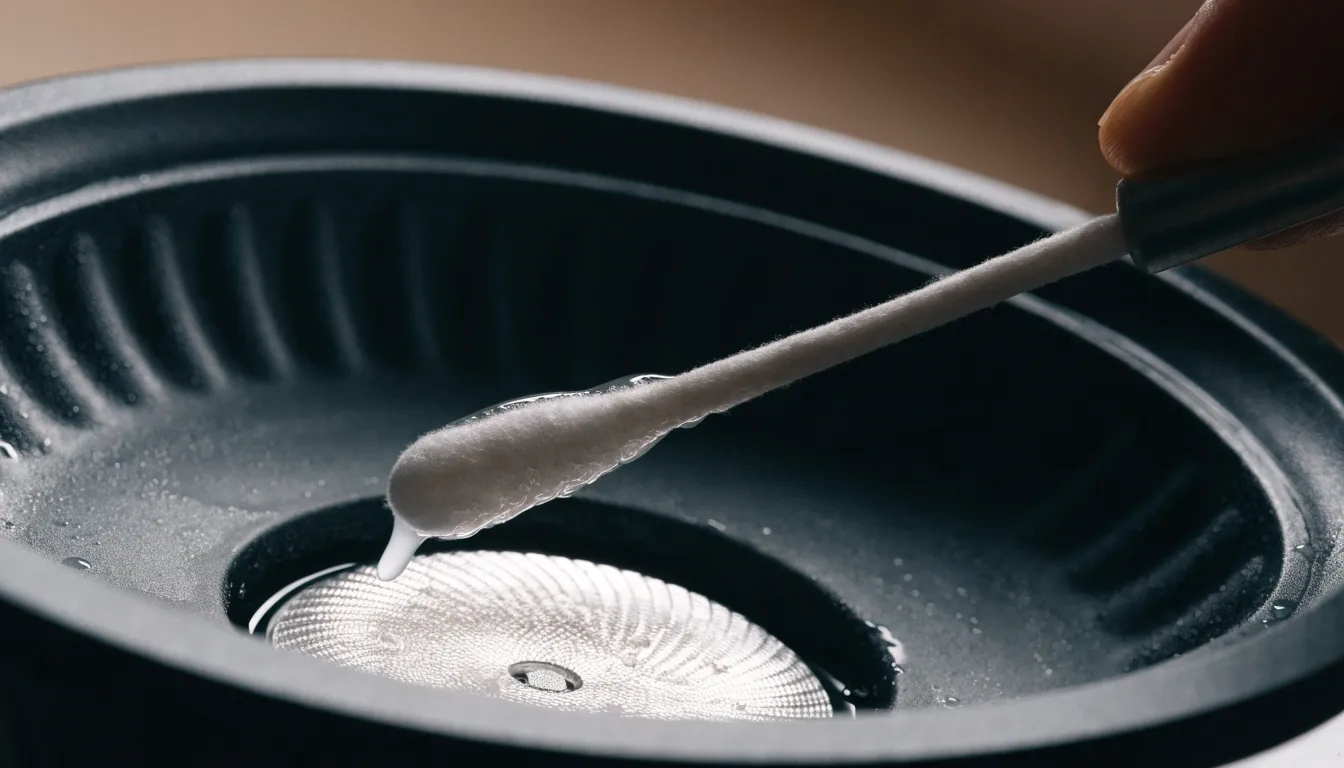
- Dip a cotton swab in rubbing alcohol.
- Gently wipe the plate in small circles, turning the swab to keep using a clean side. Use light pressure. The plate is fragile, so never scrape it with anything metal or hard.
- Dry it with a fresh swab and let it air dry for a few minutes before refilling.
Fix 6: Dissolve Mineral Scale With Vinegar
If you use hard tap water, the calcium and magnesium in it stay behind as the water turns to mist. Over time they form a chalky white crust on the plate and in the tank, and alcohol alone won’t remove it.
- Unplug the diffuser and empty it.
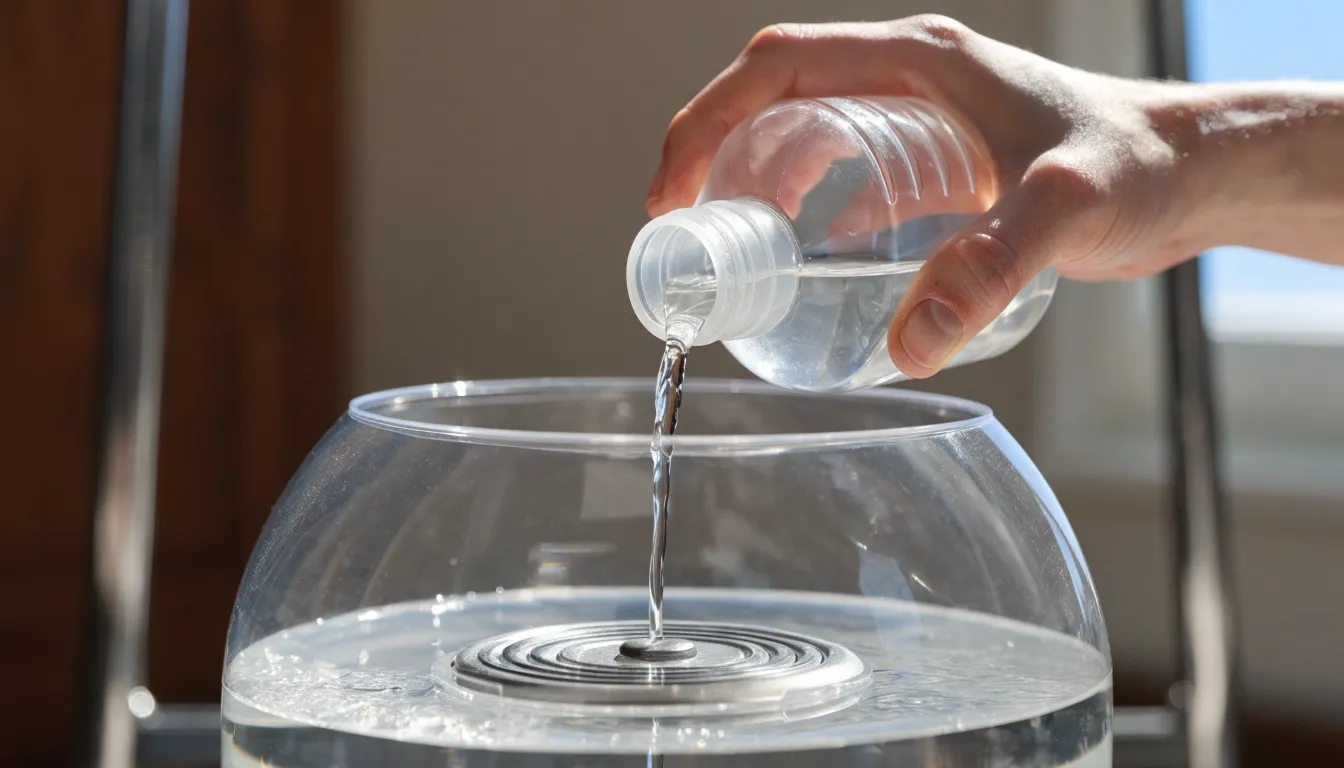
- Pour in enough white vinegar to cover the plate. Use it undiluted for heavy scale, or about half vinegar and half water for lighter buildup. If your manual specifies a dilution, follow that instead.
- Let it sit for 30 to 60 minutes.
- Pour it out, then gently wipe the plate and tank with a cotton swab or soft cloth.
- Rinse several times with clean water, refill, and run it for a few minutes to clear any vinegar smell.
To stop the scale from coming back, use filtered or distilled water if you have hard water. A few manufacturers recommend plain tap water for their models, so check your manual first.
Fix 7: Clear the Air Intake and Fan
The symptom here is usually water that ripples or buzzes, so the plate is clearly working, but little or no mist comes out the top. That points to the fan.
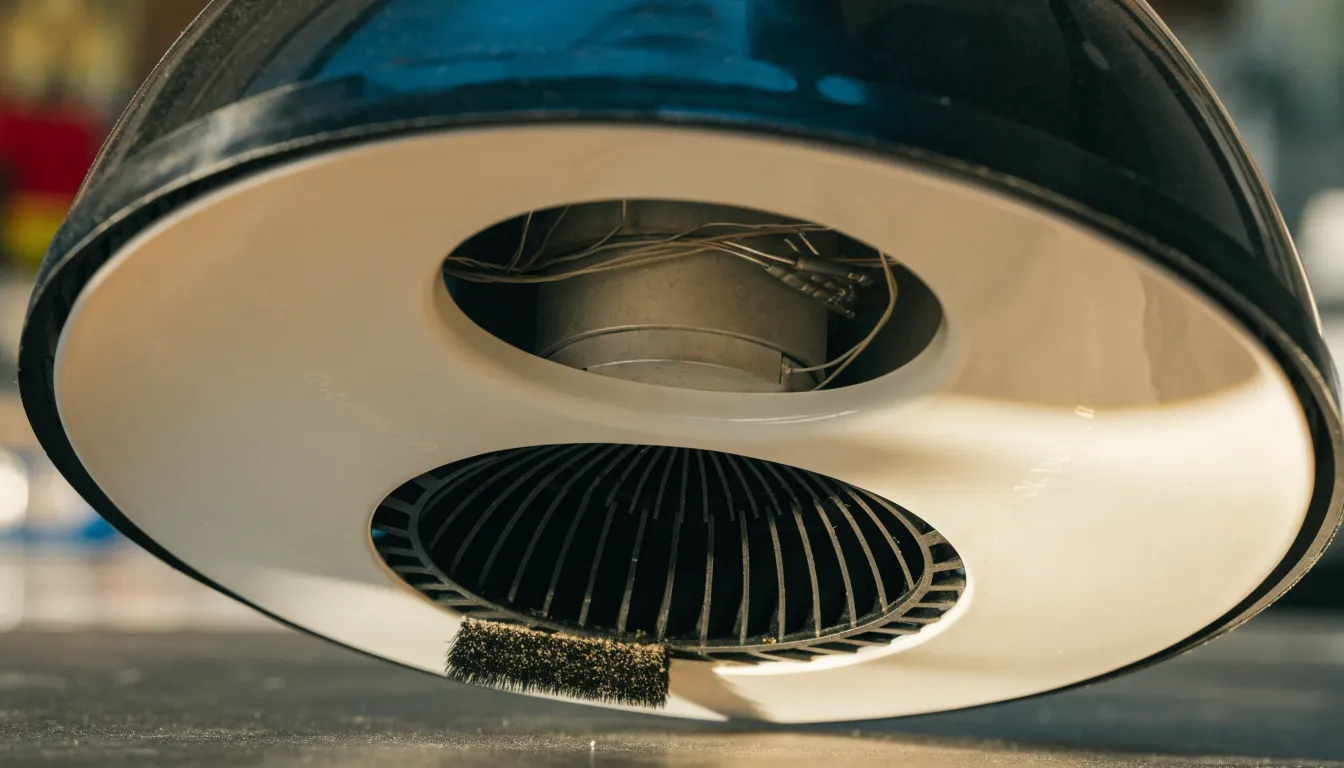
The fan pulls air in through a vent, usually on the bottom of the diffuser. Dust, lint, and pet hair clog the grate over time, and the fan can’t move enough air to carry the mist out.
Unplug the diffuser, empty it, and turn it over carefully. Clear the vent with a dry soft brush, a cotton swab, or a short blast of compressed air. Also make sure the diffuser isn’t sitting on a towel or rug that blocks the vent.
Fix 8: Go Easy on Thick Oils
Heavy, resinous oils such as patchouli, sandalwood, vetiver, frankincense, and myrrh leave a sticky film on the plate much faster than light oils like citrus or eucalyptus. If you diffuse these often, mist output will drop sooner.
You don’t have to give them up. Use fewer drops, blend them with a lighter oil, and wipe the plate with alcohol every few uses instead of waiting for the mist to fade. Using more oil than you need also speeds up the gunk. See what happens if you use too much essential oil.
Fix 9: Check the Room, Not the Diffuser
Sometimes the diffuser is working fine and you just can’t see the mist.
- High humidity: in a damp room, fine droplets blend into the air almost immediately and don’t form a visible plume. You’ll usually still smell the oil.
- Drafts: a ceiling fan, AC vent, or open window scatters the mist before it can form a visible stream.
Hold your hand a few inches above the nozzle. If you feel cool dampness, the diffuser is working. It’s still freshening the room even if the mist is invisible. For more on that, see natural home freshening with essential oils.
Also use cool or room-temperature water, never hot. Hot water can damage some units and doesn’t improve misting.
Fix 10: Know When It’s Dead
If you’ve worked through every fix above and nothing changes, a part has probably failed:
- No lights, no sound, no hum on a known-good outlet with a known-good adapter: the circuit board or internal wiring has likely failed, especially if there’s a burnt smell.
- Lights on, clean plate, correct water level, but the surface doesn’t ripple at all: the ultrasonic plate has probably cracked or burned out. Some cracks are visible, but many aren’t.
- Water ripples but the fan makes no sound, even with a clear vent: the fan motor has likely failed.
Replacement plates exist for some popular models, but swapping one means opening the unit and soldering, so for most people it isn’t worth it. Check your warranty first. If the diffuser isn’t covered, buying a new diffuser is usually cheaper and quicker than a repair.
How to Keep It From Happening Again
- After each use: pour out leftover water. Don’t let oily water sit in the tank overnight.
- Weekly: wipe the tank with a damp cloth, swipe the plate with an alcohol swab, and rinse.
- Monthly, or as soon as you see white crust: do the vinegar soak from Fix 6.
- Every few months: clear the air intake vent.
A few minutes of maintenance a week keeps the mist strong for years.
Frequently Asked Questions
Why is my diffuser on but not misting?
The most common causes are water above the max line or below the min line, a lid that isn’t sealed, or a dirty ultrasonic plate. Set the water to the fill line, reseat the lid, and wipe the plate with a cotton swab dipped in rubbing alcohol.
Why does my diffuser stop misting after a few minutes?
It’s usually on intermittent mode or a short timer. Press the mist button to cycle to continuous mode. If it still stops early, the water level may be dropping below the low-water sensor, or the sensor or float may be stuck with residue.
Why does my diffuser make noise but no mist?
If you hear buzzing or see the water rippling, the plate is working but the mist isn’t getting out. Check that the lid and inner cap are seated properly, and clear dust from the air intake vent on the bottom.
Can I use vinegar to clean my diffuser?
Yes. A 30 to 60 minute soak in white vinegar dissolves mineral scale from hard water. Rinse well afterward. If your manual specifies a dilution or cleaning method, follow that.
Should I use distilled water in my diffuser?
If you have hard water, filtered or distilled water helps prevent mineral buildup on the plate. Some manufacturers recommend tap water for their models, so check your manual.
Can thick essential oils clog a diffuser?
Yes. Resinous oils like patchouli, sandalwood, and frankincense leave a sticky film on the ultrasonic plate faster than light oils. Use fewer drops, blend them with lighter oils, and clean the plate more often.