
Amla oil is a traditional Ayurvedic hair oil made by infusing Indian gooseberry (amla) into a carrier oil such as sesame or coconut. It is used to condition the scalp, soften and smooth dry hair, reduce breakage, and add shine. Claims that it speeds hair growth come mostly from tradition and small animal studies, so it is best thought of as a nourishing scalp and hair conditioner rather than a proven growth treatment.
Table of Contents
What Is Amla Oil?
Amla oil comes from the Indian gooseberry, known scientifically as Phyllanthus emblica (also listed on labels as Emblica officinalis). This tart, green-yellow fruit grows on a medium-sized tree native to the Indian subcontinent, where it has been valued for centuries.
Amla fruit is not oily, so amla oil is not pressed from the fruit the way olive oil is. Instead, fresh or dried amla, or amla powder, is soaked or gently heated in a carrier oil like sesame or coconut oil. The carrier oil takes on some of the fruit’s plant compounds, color, and scent. That means every amla oil is really two things: the amla extract and the base oil it lives in, and the base oil shapes how the product feels on your hair.
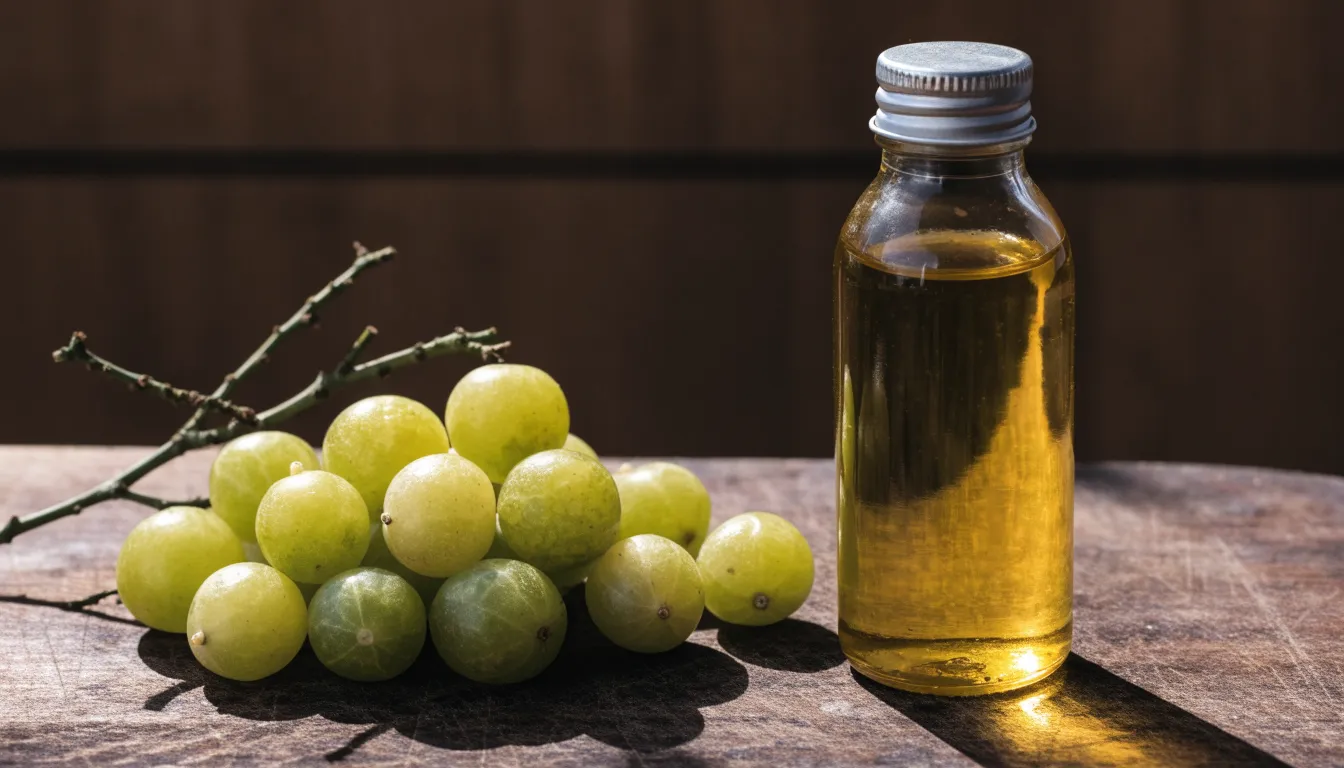
Amla oil has deep roots in Ayurveda, the traditional Indian system of medicine, where it has long been used to care for the scalp, strengthen hair, and keep it dark and glossy. Regular “hair oiling” with amla remains a common routine across South Asia today.
Amla oil is also not an essential oil. It is an infused carrier oil, so it can be used undiluted on the scalp and hair, and it makes a good base for adding a few drops of essential oils.
Benefits of Amla Oil for Hair
Scalp Conditioning
Amla fruit is rich in polyphenols, tannins, and flavonoids, plant compounds with antioxidant and anti-inflammatory activity. When infused into oil, some of these compounds carry over and can help soothe a dry, tight, or flaky scalp. The oil itself also softens dead skin and product buildup so they wash away more easily.
The fruit is famous for its vitamin C content, but vitamin C is water-soluble and breaks down with heat, so very little of it ends up in an oil infusion. The scalp benefits of amla oil come mainly from its plant compounds and from the carrier oil, not from vitamin C.
Less Breakage
Oiling hair before washing reduces how much water the strand absorbs and swells, which lowers stress on the hair and helps prevent breakage over time. Coating the lengths also reduces friction from brushing and styling.
How deeply the oil penetrates depends on the carrier. Coconut and sesame oil bases can absorb into the hair shaft to some degree, while mineral oil bases mostly coat the surface. Either way, regular use tends to leave hair feeling stronger and less prone to snapping and split ends.
Moisture and Shine
When hair is dry or damaged, the cuticle (the outer layer of each strand) lifts and lets moisture escape. Amla oil coats and smooths the cuticle, which slows moisture loss, softens rough strands, and improves flexibility.
A smoother cuticle also reflects light more evenly, so hair looks shinier. This is especially helpful for color-treated hair, which has extra cuticle damage from chemical processing, and for coarse or porous hair that loses moisture quickly.
What the Research Actually Says
Amla oil’s reputation for faster hair growth is mostly traditional. The scientific support so far is limited:
- Animal studies. A few small studies in rabbits and rats found that herbal oils containing amla increased fur growth compared with controls.
- Lab studies. Amla extracts show antioxidant and anti-inflammatory activity in test-tube research, which is a plausible reason they may support scalp health.
- Human trials. Well-designed studies of amla oil on its own for human hair loss are lacking.
So it is reasonable to use amla oil as a conditioning scalp and hair treatment, but don’t expect it to reverse hair loss or regrow thinning areas. If you are losing hair suddenly or in patches, see a dermatologist, since many causes of hair loss need medical treatment.
Choosing the Right Product
Because amla oil is an infusion, the label tells you most of what you need to know. A good product lists amla extract, or Emblica officinalis, near the top of the ingredients, alongside a plant-based carrier oil such as sesame, coconut, or sunflower.
Many popular commercial amla hair oils use mineral oil (sometimes listed as paraffinum liquidum) as the main base, with amla and other extracts in smaller amounts. Mineral oil seals in moisture well and is very shelf-stable, but it doesn’t offer the fatty acids of vegetable oils. Other blends add almond, jojoba, or argan oil for extra conditioning.
When you check the label, look for:
- Amla extract listed high on the ingredient list
- A plant-based carrier oil as the first ingredient if you want a natural option
- A short, clearly named ingredient list
Avoid blends where mineral oil is first or second if you specifically want a vegetable-oil base.
How to Use Amla Oil
Pre-Shower Scalp Treatment
Warm a small amount of amla oil by setting the bottle or a small bowl of oil in hot water for a few minutes. Warm oil spreads more easily and feels soothing on the scalp. Test the temperature on your wrist first.
Part your hair into sections and apply the oil directly to your scalp with your fingertips, covering the hairline, nape, and sides. Massage with small, circular motions and mild to medium pressure for 5 to 10 minutes. This loosens dead skin and buildup and feels relaxing.
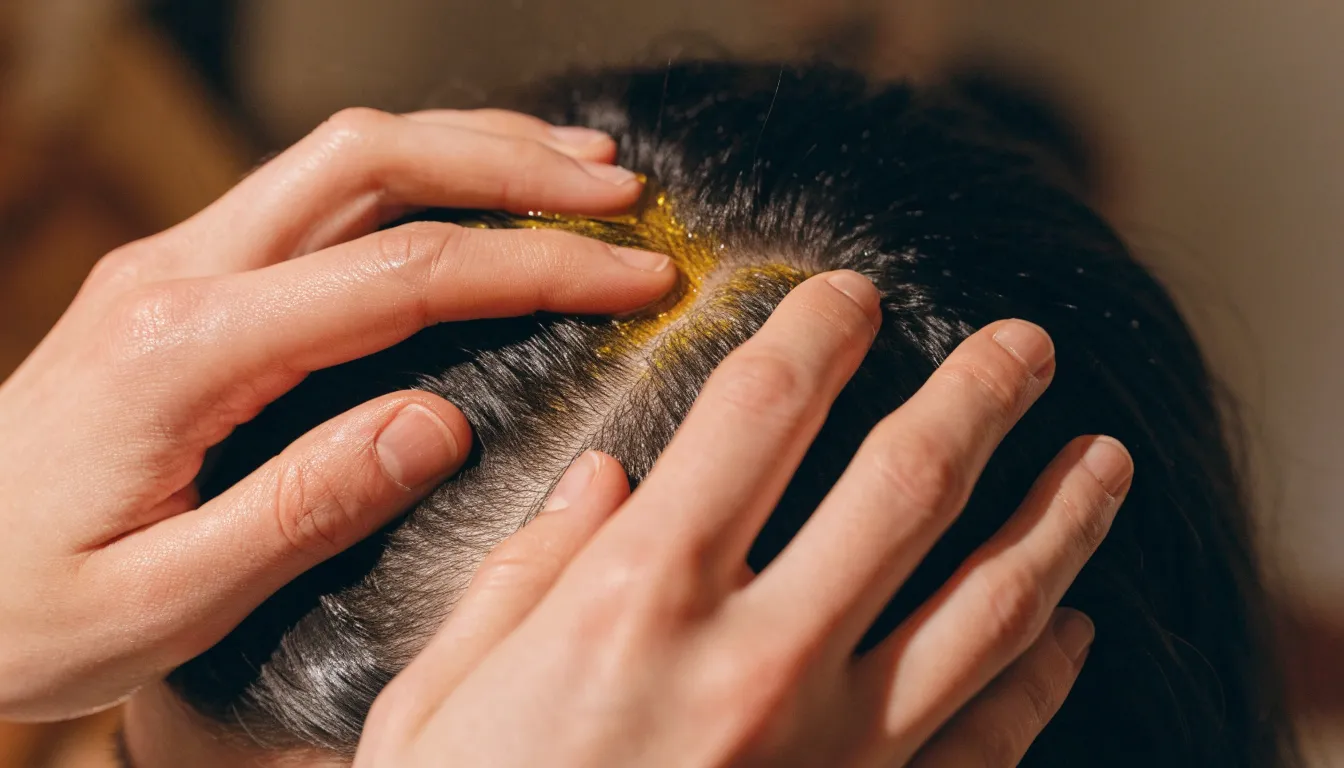
Leave the oil on for at least 30 minutes before washing, then follow with your usual shampoo and conditioner.
Overnight Leave-In Routine
Leaving amla oil on overnight gives it more time to soften and condition your hair. Warm a little oil between your palms, massage it into your scalp, then smooth it through your lengths, focusing on dry ends. Use enough to coat, not soak, your hair.
Cover your hair with a shower cap to protect your bedding. A silk or satin wrap or pillowcase also reduces friction, which helps prevent breakage and frizz.
In the morning, wash it out as usual. Your hair should feel softer and look shinier.
Split End Smoother
Amla oil also works as a light finishing serum for dry ends and frizz. After styling, rub one or two drops between your fingertips and press them gently into the very ends of your hair.
The oil smooths the raised, damaged cuticle at the tips, which makes split ends less visible and gives dull ends a polished look. It also helps keep out humidity, so styled hair stays sleeker. Keep the amount small, especially on fine hair, and remember that oil can only disguise split ends. The only way to remove them is a trim.
DIY Amla Hair Mask
A homemade amla mask lets you combine amla oil’s conditioning with essential oils for added benefits and a nicer scent.
Rosemary essential oil is a popular addition for scalp care, and it has some early research behind it for hair growth. Lavender essential oil adds a calming scent and helps soften the earthy smell of amla.
To make the mask:
- Pour two to three tablespoons of amla oil into a small bowl, using more for long hair.
- Add about five drops of rosemary essential oil and five drops of lavender essential oil. This keeps the essential oils at a safe dilution of roughly 1 to 1.5 percent.
- Warm the mixture slightly.
- Massage it into your scalp and work it down to your ends.
- Leave it on for at least 30 minutes, or overnight for an intensive treatment.
- Rinse with a mild shampoo and follow with conditioner.
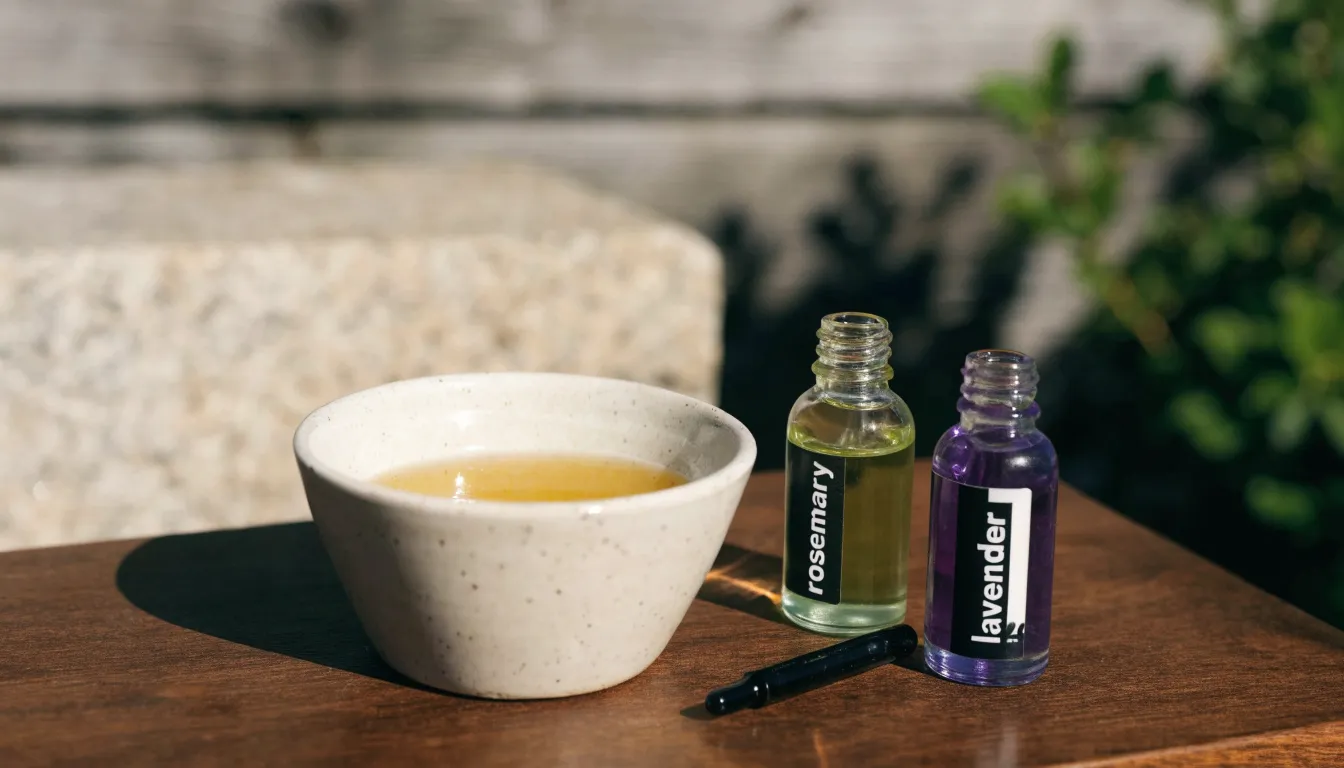
Used regularly, this mask can leave hair softer, shinier, and easier to manage.
How Much and How Often
Proper Application Amount
The right amount depends on your hair. Highly porous hair absorbs oil quickly and can handle more. Low-porosity hair gets oversaturated easily, so it needs only a light amount to avoid looking greasy.
Density and length matter too. Fine or thin hair usually needs only a few drops to a dime-sized amount, while thick, dense, or long hair may need a quarter-sized amount or more to cover every strand.
Start with about half a teaspoon, massage it into your scalp and through your hair, and add more only if needed. Building up gradually keeps fine hair light instead of flat and oily.
Optimal Weekly Schedule
- Fine or oily hair: about once a week, to avoid buildup and keep hair light.
- Normal hair: about twice a week, to keep hair conditioned and shiny.
- Dry, coarse, or highly porous hair: up to three times a week, for extra moisture and frizz control.
Watch how your hair responds and adjust as needed.
Patch Test First
Before adding amla oil to your routine, do a simple patch test. This checks whether your skin reacts to the oil, the carrier, or any added herbs or fragrance.
Clean a small area on the inside of your forearm or behind your ear, pat it dry, and apply a pea-sized drop of oil. Let it sit without rubbing it in.

Leave it on for 24 hours and watch for redness, itching, swelling, or stinging. If any of these appear, wash the area with soap and water and don’t use the product. If there’s no reaction after 24 hours, it’s generally safe to use on your scalp and hair. Repeat the test if you add essential oils to the blend.
Handling the Scent
Amla oil has a strong, earthy, herbal smell that some people dislike. The easiest fix is to blend in a fragrant essential oil.
For a fresh, bright scent, try citrus essential oils like sweet orange, lemon, or grapefruit. Use these in rinse-out treatments, since some citrus oils, especially cold-pressed lemon and grapefruit, can make skin more sensitive to sunlight. For a softer, calming scent, lavender works well, and rose or ylang-ylang add a more floral note.
Add two to three drops of essential oil to one tablespoon of amla oil right before applying, and stir to mix. Start low and adjust to taste.
Amla Oil vs. Other Hair Oils
Amla Versus Coconut Oil
Coconut oil is better studied for preventing protein loss. Its main fatty acid, lauric acid, can penetrate the hair shaft and reduce protein loss during washing, which makes it helpful for damaged or breakage-prone hair. Amla oil’s effect on the inside of the strand depends on its carrier oil. Amla oils made with a coconut base share this benefit, while mineral oil–based ones mostly coat the surface.
Both oils are good for the scalp. Coconut oil moisturizes deeply and can soothe a dry, flaky scalp. Amla oil adds plant compounds that may support scalp health, and it is traditionally used to keep hair dark, though this hasn’t been proven.
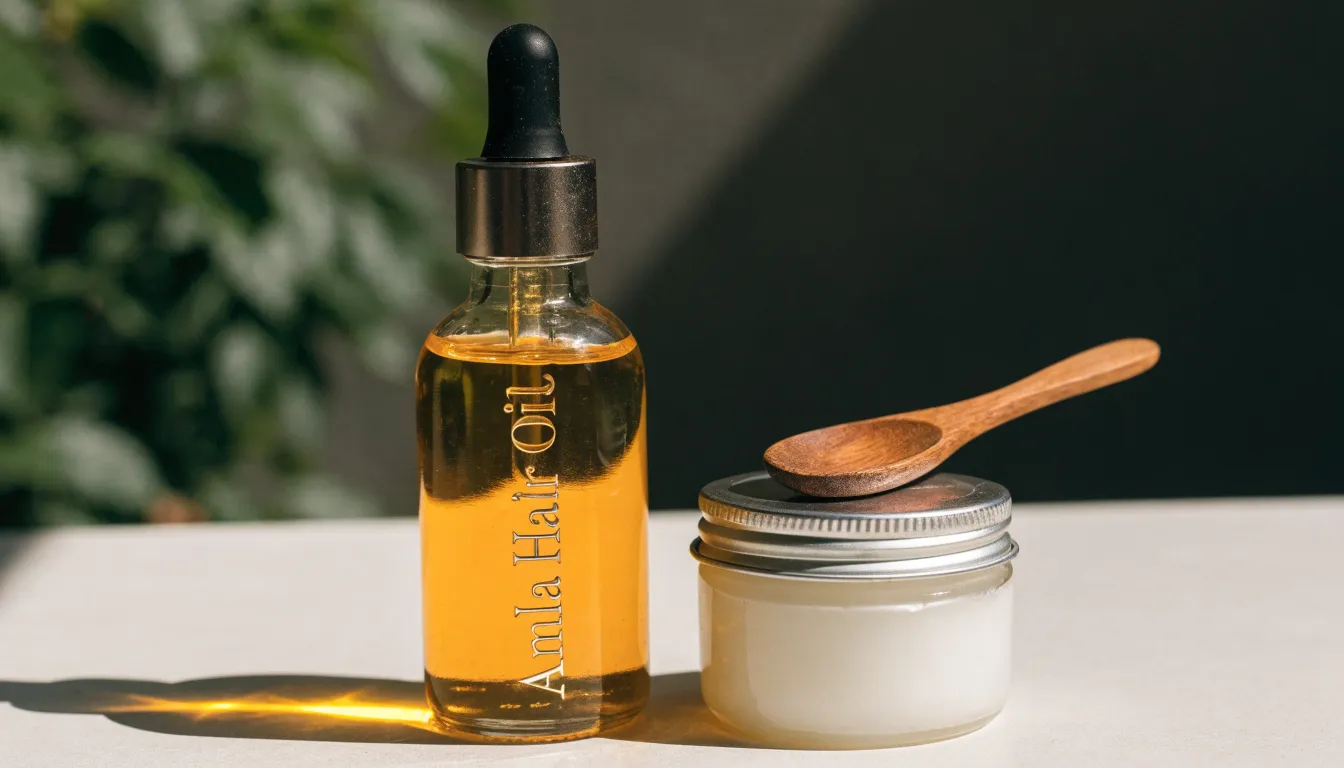
Coconut oil is solid at cool room temperatures and can feel heavy on fine hair. How heavy amla oil feels depends on its base, but sesame and mineral oil blends are usually liquid and easy to spread. Coconut oil is a strong choice for dry, thick, coarse, or chemically treated hair. Amla oil is a good all-around conditioning oil for dull, dry, or breakage-prone hair, and for anyone who wants a traditional scalp-oiling routine.
Amla Versus Rosemary Oil
These two are often mentioned together, but they are different kinds of products. Amla oil is an infused carrier oil you can apply generously to your scalp and hair. Rosemary essential oil is highly concentrated and must be diluted in a carrier before use.
Rosemary oil has a little more research behind it for hair growth, including a small human study comparing it with minoxidil, while amla’s growth evidence comes mainly from animal studies. Amla oil’s strengths are conditioning, softness, and shine.
You don’t have to choose. Adding a few drops of rosemary essential oil to amla oil, as in the DIY mask above, gives you both: amla as the conditioning base and rosemary for scalp stimulation.
Easy Wash Out Methods
Removing amla oil well matters as much as applying it. The goal is to wash out the oil completely without stripping hair dry.
One effective method is double cleansing. Massage a little shampoo into dry or slightly damp hair before adding much water, so the shampoo can break down the oil directly. Add a bit of water to make a light lather and rinse thoroughly. Follow with a smaller second shampoo on wet hair to clear any leftover residue.
Another option is a sulfate-free clarifying shampoo, which lifts heavy oil and buildup without being harsh. Rinse with lukewarm water, since hot water can over-dry hair and cold water doesn’t lift oil well. Be extra thorough at the scalp and nape, then follow with conditioner on your lengths.
Frequently Asked Questions
Is amla oil an essential oil?
No. Amla oil is an infused oil, made by soaking amla fruit or powder in a carrier oil such as sesame, coconut, or mineral oil. It can be used undiluted on the scalp and hair, unlike essential oils, which must always be diluted. It also makes a good base for adding a few drops of essential oil.
Does amla oil really help hair grow?
The evidence is limited. Amla has long been used in Ayurveda for hair growth, and a few small animal studies found that amla-containing oils increased fur growth, but there are no strong human trials. Amla oil is best used as a conditioning scalp and hair treatment. For noticeable or sudden hair loss, see a dermatologist.
Can amla oil darken hair or prevent gray hair?
Amla is traditionally used to keep hair dark and delay graying, and amla powder is sometimes mixed with henna to deepen hair color. However, there is no good evidence that amla oil prevents or reverses gray hair. Graying is largely determined by genetics and age.
Can I leave amla oil in my hair every day?
You can use a drop or two on the ends daily as a finishing serum. For full scalp treatments, once to three times a week is usually enough, depending on your hair type. Leaving heavy oil on the scalp every day can lead to buildup, especially for fine or oily hair.
Is “alma oil” the same as amla oil?
Yes. “Alma oil” is a common misspelling of amla oil. Both refer to oil infused with Indian gooseberry (Phyllanthus emblica).
How can I choose a good quality amla hair oil?
Look for amla extract, or Emblica officinalis, near the top of the ingredient list, and a plant-based carrier oil like sesame, coconut, or sunflower if you want a natural option. Many popular brands use mineral oil as the base, which seals in moisture but lacks the fatty acids of vegetable oils.
Do I need to patch test amla oil?
Yes. Apply a pea-sized drop to the inside of your forearm or behind your ear and wait 24 hours. If you notice redness, itching, swelling, or stinging, wash it off and don’t use the product.