
Anointing oil is a sacred oil used to consecrate, set apart, and bless a person, object, or space for divine service. It symbolizes divine protection, favor, and God’s anointing, signifying purification, healing, and renewal. Historically, it connected the physical act with spiritual meaning in religious, medical, and political contexts.

Table of Contents
Ancient Roots
Sacred oils have been used since ancient times. Far more than pleasant scents, they were central to religious, medical, and political life, standing for purity, honor, and divine favor. People across early civilizations learned how plant oils worked and used them in many rituals.
In ancient Egypt, priests used fragrant oils made with myrrh, frankincense, and resins to honor statues of gods, bless temples, and prepare bodies for the afterlife. Oils were also used to anoint new pharaohs, showing they had divine authority. These oils were thought to cleanse, protect, and bring divine power. Egyptians also used medicinal oils from plants like castor and sesame to heal sickness and support health.

In Mesopotamia, the Sumerians, Babylonians, and Assyrians used sacred oils for cleansing rituals, offerings to gods, and protection from evil spirits. Healers and priests applied them to treat wounds and ease suffering. Kings and officials were anointed at ceremonies to mark their high rank and connection to the divine. These ancient uses show how widely oil was valued for both sacred and practical purposes, shaping its lasting importance.
Purpose and Symbolism
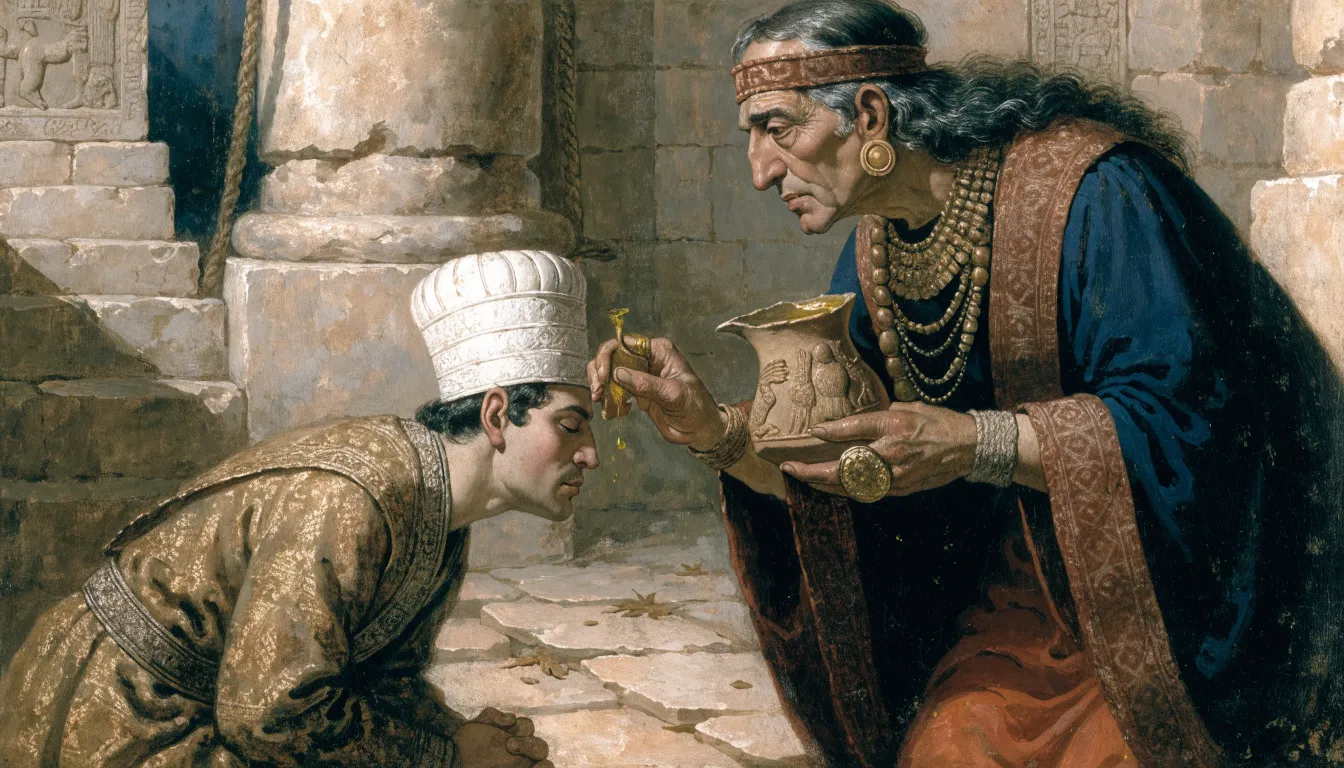
Anointing oil represents consecration: it sets apart a person, object, or space for sacred use, marking it as holy and dedicated to God. This visible act turns the ordinary into something set apart for divine service.
It also symbolizes divine protection and favor. The oil is seen as a spiritual shield that guards against harm and evil, while also expressing trust in God’s watchful care. At the same time, it signifies God’s blessing and approval, showing that the recipient is chosen, empowered, and supported.

Finally, anointing oil points to physical sanctification. Though deeply spiritual, its use extends to the body and material world, representing purification, healing, and renewal. Together, these meanings show the oil as a bridge between physical action and divine presence, making spiritual truth tangible.

Frequently Asked Questions
What is anointing oil used for?
Anointing oil represents consecration, setting apart a person, object, or space for sacred use and dedicating it to God. It also symbolizes divine protection and favor, acting as a spiritual shield and signifying God’s blessing. Furthermore, its use extends to physical sanctification, representing purification, healing, and renewal.
What did ancient Egyptians use anointing oil for?
In ancient Egypt priests used myrrh, frankincense and resins to honor statues of gods, bless temples, and prepare bodies after death. Egyptians also used medicinal plant oils like castor and sesame to heal sickness and support health.
When did people start using anointing oil?
Sacred oils have been used since ancient times across early civilizations like Egypt and Mesopotamia. These oils were central to religious, medical, and political life, valued for both sacred and practical purposes.
What does anointing oil symbolize?
Anointing oil symbolizes consecration, setting apart something for sacred use and dedicating it to God. It also signifies divine protection and favor, representing a spiritual shield and God’s blessing. Additionally, it points to physical sanctification, encompassing purification, healing, and renewal.
How was anointing oil used in Mesopotamia?
In Mesopotamia, which included the Sumerians, Babylonians, and Assyrians, sacred oils were used for cleansing rituals, offerings to gods, and protection from evil spirits. Healers and priests applied them to treat wounds and ease suffering, and kings and officials were anointed at ceremonies to mark their high rank and connection to the divine.
Does anointing oil offer protection?
Yes, anointing oil symbolizes divine protection and favor. It is seen as a spiritual shield that guards against harm and evil, while also expressing trust in God’s watchful care.