
Arnica oil is a topical oil made by infusing Arnica montana flower heads in a carrier oil such as olive or sunflower. It contains anti-inflammatory compounds, chiefly sesquiterpene lactones like helenalin, plus flavonoids. People use it on bruises, sore muscles, stiff joints, and minor skin irritation. The research is promising for bruises and hand arthritis and mixed for workout soreness, and arnica must only ever go on unbroken skin.
Quick safety note: Arnica is for external use only, never on broken skin, and not for people allergic to daisy-family plants or who are pregnant or breastfeeding. Full safety rules below.
Table of Contents
- What Is Arnica Oil?
- Arnica Oil vs. Arnica Essential Oil
- Active Compounds and How Arnica Works
- What the Research Shows
- Does Arnica Oil Help Bruises?
- Arnica Oil for Joint Pain and Stiffness
- Arnica Oil for Sprains and Swelling
- Arnica Oil for Sore Muscles
- Arnica Oil for Skin Irritation
- Arnica Oil for the Scalp
- Arnica Massage Oil Recipes
- Oil vs. Salve vs. Cream vs. Gel
- How to Apply Arnica Oil
- Arnica Oil Side Effects and Safety
- How to Choose a Good Arnica Oil
- Frequently Asked Questions
- References
What Is Arnica Oil?
Arnica montana is a bright yellow, daisy-like flower that grows wild in the mountains of Europe, including the Alps, the Pyrenees, and parts of Scandinavia. It favors subalpine meadows and open forest, and it belongs to the Asteraceae (daisy) family. That family connection matters for allergies, as covered in the safety section.
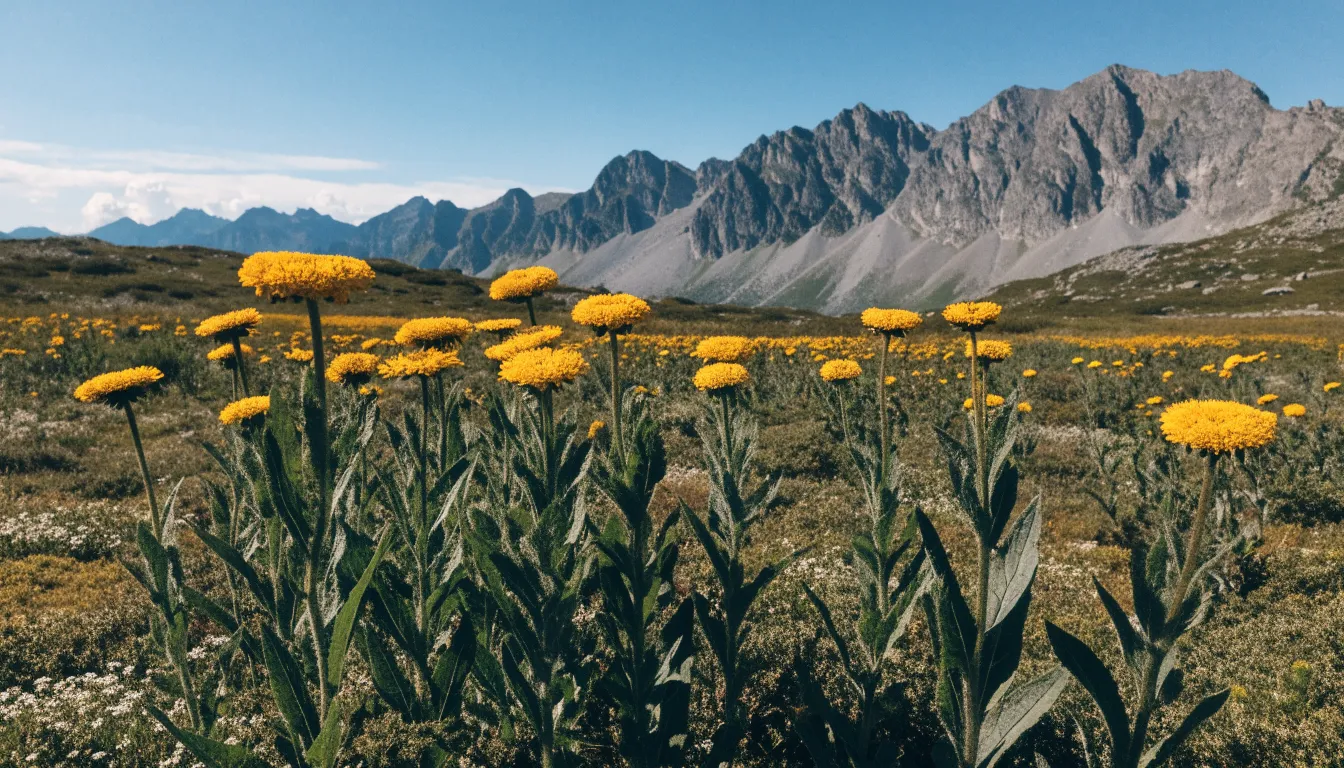
The flower heads hold most of the plant’s active compounds, so they are harvested at full bloom and then dried.
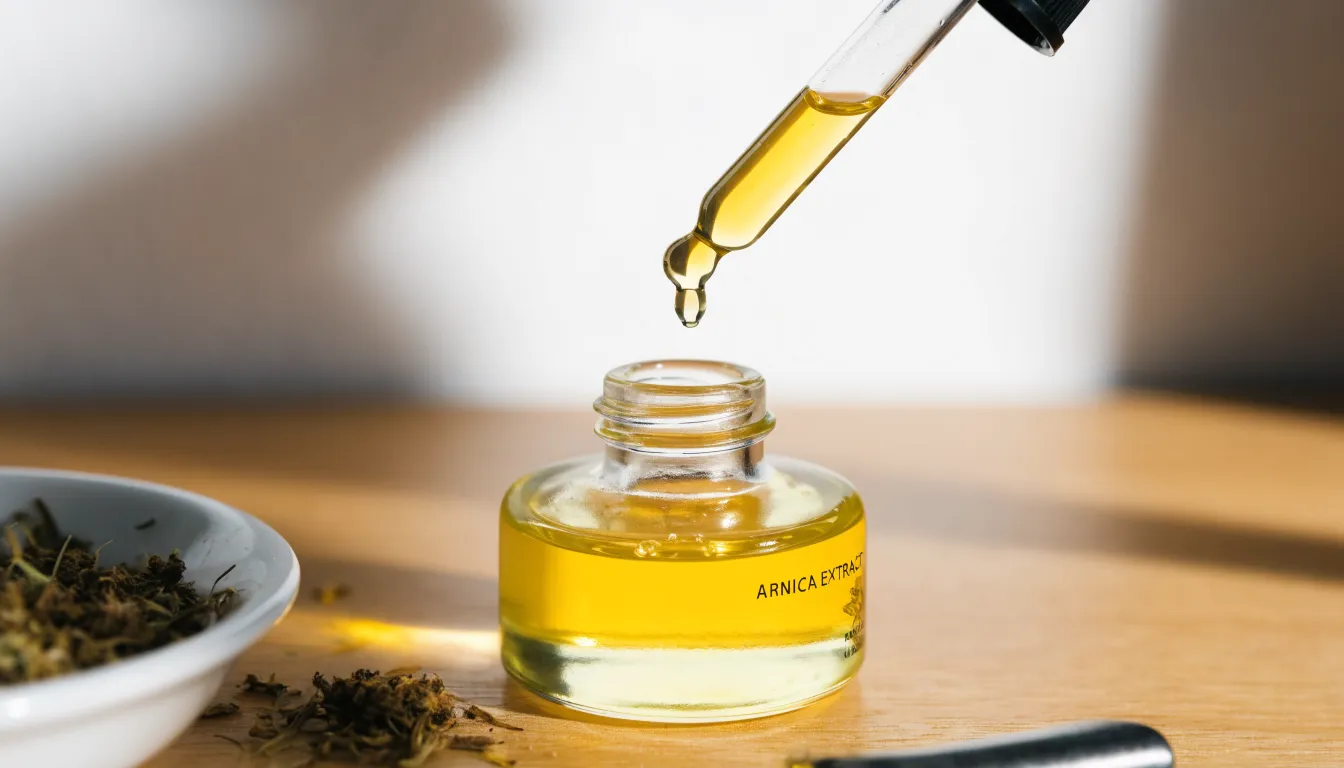
To make arnica oil, the dried flowers are steeped in a neutral carrier oil such as olive, sunflower, or sweet almond for several weeks. The oil draws out the fat-soluble compounds, and the mixture is then strained. The finished product is mostly carrier oil carrying a small amount of arnica extract.
Arnica Oil vs. Arnica Essential Oil
This distinction trips up a lot of buyers and blog posts. Arnica oil is an infused oil, not an essential oil. An essential oil is a concentrated, steam-distilled aromatic compound that you would normally dilute to a few percent. An infused oil is already diluted by design, since it is a carrier oil that has absorbed the plant’s compounds.
What that means in practice:
- Ready-to-use infused oils (the most common kind) can usually be applied as they are. Check the label to confirm.
- Concentrated extracts or tinctures sold for blending should be diluted according to the manufacturer’s directions.
- True arnica essential oil is rare and potent. It isn’t recommended for home use.
Because arnica oil is already a carrier-based product, it works well as the base of a massage blend, with a few drops of essential oil added for scent and feel (see the recipes below).
Active Compounds and How Arnica Works
Arnica’s main active compounds are sesquiterpene lactones, especially helenalin and its relatives. In lab studies, helenalin interferes with NF-κB, a protein complex that switches on many inflammatory genes. This is the leading explanation for why arnica may calm swelling and tenderness. Arnica also contains flavonoids, which have antioxidant activity.
Two caveats are worth knowing:
- Most of the mechanism evidence comes from lab and cell studies, not from measuring what happens inside human tissue after you rub oil on your skin.
- Helenalin is also the main reason arnica can cause allergic skin reactions and is toxic if swallowed. The same compound drives both the benefits and the risks.
What the Research Shows
Here’s an honest summary of the human studies on topical arnica:
| Use | Evidence | What studies found |
|---|---|---|
| Hand osteoarthritis | Moderate | In a randomized trial of 204 people, arnica gel matched 5% ibuprofen gel for pain and hand function over 3 weeks.1 A Cochrane review rated this as moderate-quality evidence but noted side effects were not lower with arnica.2 |
| Bruising | Limited but positive | 20% arnica ointment helped laser-induced bruises fade faster than a placebo in a small randomized trial.3 Other trials, mostly after surgery, found no benefit. |
| Post-workout soreness (DOMS) | Mixed | One trial found arnica cream increased calf pain 24 hours after exercise.4 Another found modestly less pain at 72 hours, with no effect on performance or muscle damage markers.5 |
| Scalp and hair growth | None | No meaningful human research. |
Most studies used standardized gels or ointments, not home-style infused oils. Infused oils vary widely in strength, so results with a given bottle may differ.
Does Arnica Oil Help Bruises?
Bruises are the use with the most traditional support and some positive research. In the best-known trial, 20% arnica ointment applied twice daily made bruises fade faster than plain petroleum jelly.3
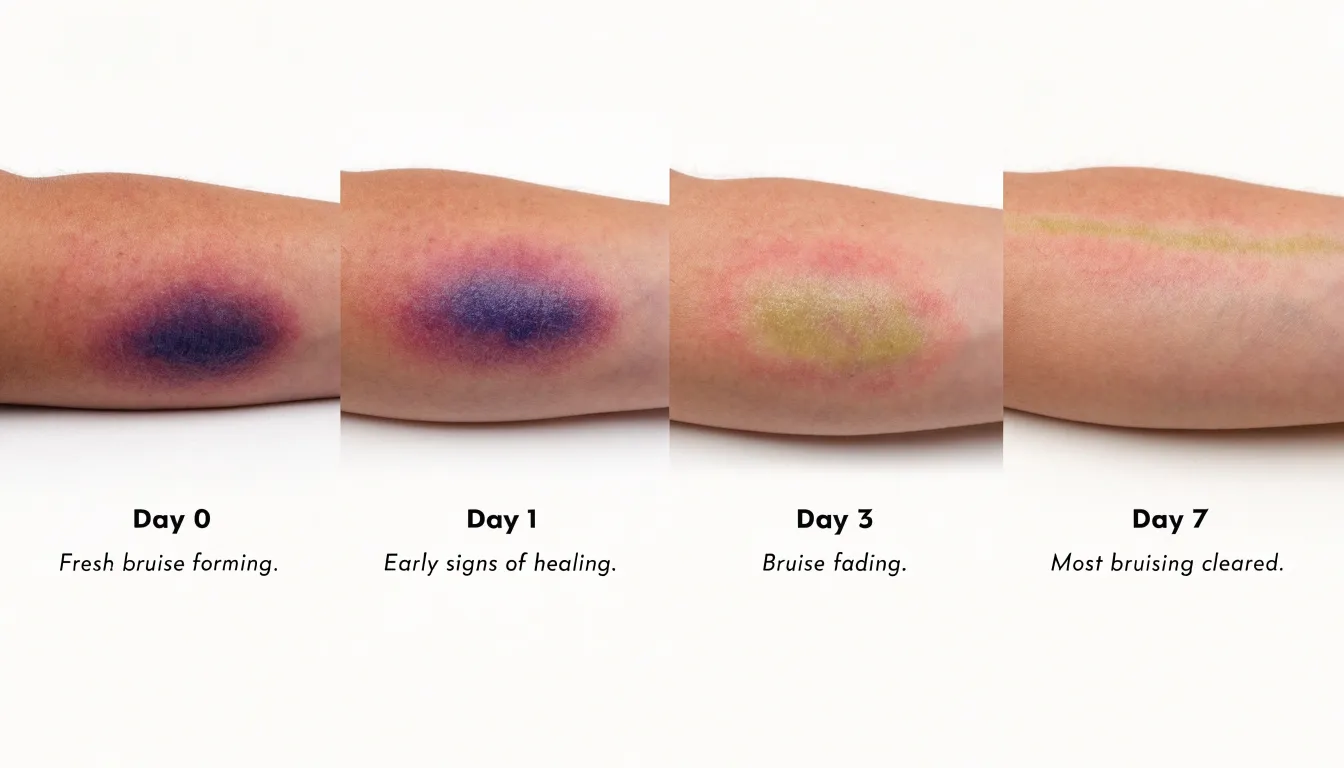
To use it on a bruise:
- Make sure the skin over the bruise isn’t broken.
- Apply a thin layer two to three times a day, using light pressure. Bruises are tender, and rubbing hard doesn’t help.
- Stop if the skin turns red, itchy, or blistered.
See a doctor if you bruise easily or for no clear reason, if a bruise is very large or painful, or if it hasn’t improved in two weeks.
Arnica Oil for Joint Pain and Stiffness
Hand joints have the strongest evidence for arnica. In the 204-person hand osteoarthritis trial, arnica gel worked as well as ibuprofen gel for pain and function over three weeks.1 An older open trial in knee osteoarthritis also reported improvement, but it had no placebo group.
Many people use arnica oil on hands, knees, and ankles that ache after a long day. A gentle massage into the joint two to three times a day is the typical approach. The massage itself helps loosen stiffness too, so arnica pairs naturally with that routine.
If your joints are hot, very swollen, or suddenly painful, or if pain wakes you at night, get them checked rather than self-treating.
Arnica Oil for Sprains and Swelling
For minor closed injuries like a mildly twisted ankle or wrist, arnica oil is traditionally used to ease tenderness and swelling. Confirm the skin is intact, then apply a small amount with light, circular strokes. Two to three times a day is plenty.
Arnica isn’t a substitute for basic injury care. Rest, ice, compression, and elevation come first. If you can’t bear weight, the joint looks deformed, or swelling is severe, see a clinician.
Arnica Oil for Sore Muscles
Delayed onset muscle soreness (DOMS) is the most popular use for arnica and the one with the weakest evidence. One trial found that arnica cream made calf pain slightly worse the day after exercise.4 Another found modestly less pain three days out.5 Neither study found any effect on muscle damage or performance.
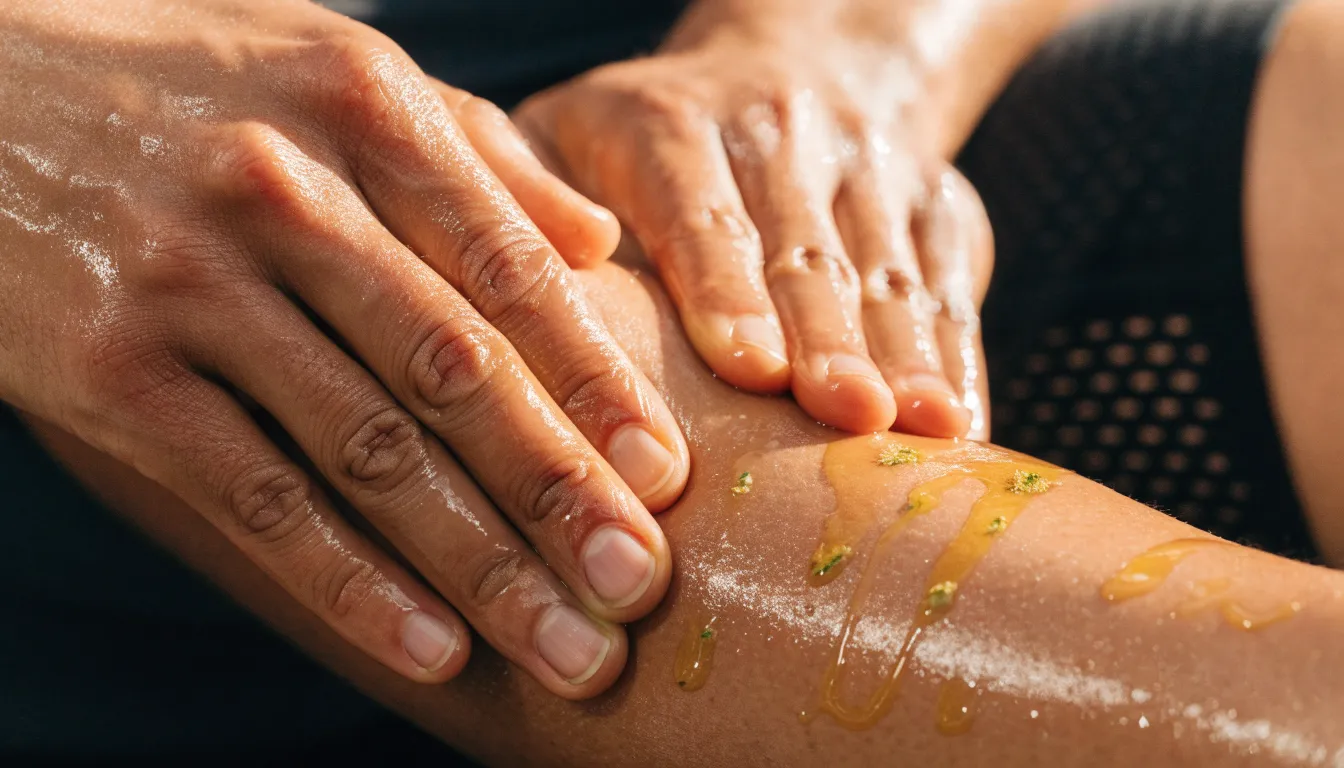
Arnica oil still makes a pleasant massage oil, and massage itself can ease the feeling of tightness after a hard workout. If you like using it:
- Warm a small amount between your palms and massage tired muscles for five to ten minutes after your cool-down.
- Use long strokes on large muscles and small circles on tight spots.
- Apply after a warm shower, when skin is clean.
- If you foam roll, use the oil afterward, not before, so you don’t slide around.
Just set your expectations accordingly. The massage is doing a good share of the work.
Arnica Oil for Skin Irritation
On unbroken skin, arnica oil may calm itchy bug bites and minor redness. A small dab on the area can take the edge off the urge to scratch.
Don’t use arnica on scrapes, cuts, burns, blisters, or any skin that is raw or weeping. Broken skin absorbs more of the compounds and is more likely to react. For those, use plain wound care instead.
Arnica Oil for the Scalp
Some people massage arnica oil into the scalp as a pre-shampoo treatment for dryness. The carrier oil can help soften a dry, flaky scalp, and the massage feels good.
Claims that arnica strengthens hair or boosts hair growth haven’t been tested in meaningful human studies. If you try it, patch test first, avoid broken or inflamed scalp skin, and wash it out thoroughly. If you’re dealing with real hair loss, a dermatologist is a better first stop.
Arnica Massage Oil Recipes
Because arnica oil is already a carrier-based product, you can use it as the base of a blend. These recipes use ready-to-use infused arnica oil and keep the essential oil dilution at roughly 1–2%, which is a common range for adult body massage. Mix in a dark glass bottle, label it, and use it within a few months. For more on combining oils, see our beginner’s guide to blending essential oils.
Cooling post-workout blend (about 1.5%)
- 30 ml (1 oz) arnica-infused oil
- 5 drops peppermint essential oil
- 4 drops lavender essential oil
Peppermint adds a cooling sensation, and lavender softens the scent. Avoid this blend on the face, and keep peppermint away from young children.
Calming evening blend (about 1%)
- 30 ml (1 oz) arnica-infused oil
- 6 drops lavender essential oil
This is a gentle option for a relaxing shoulder, neck, or leg massage before bed.
Unscented option
- Use arnica oil on its own, or cut it 50/50 with jojoba for a lighter feel.
Oil vs. Salve vs. Cream vs. Gel
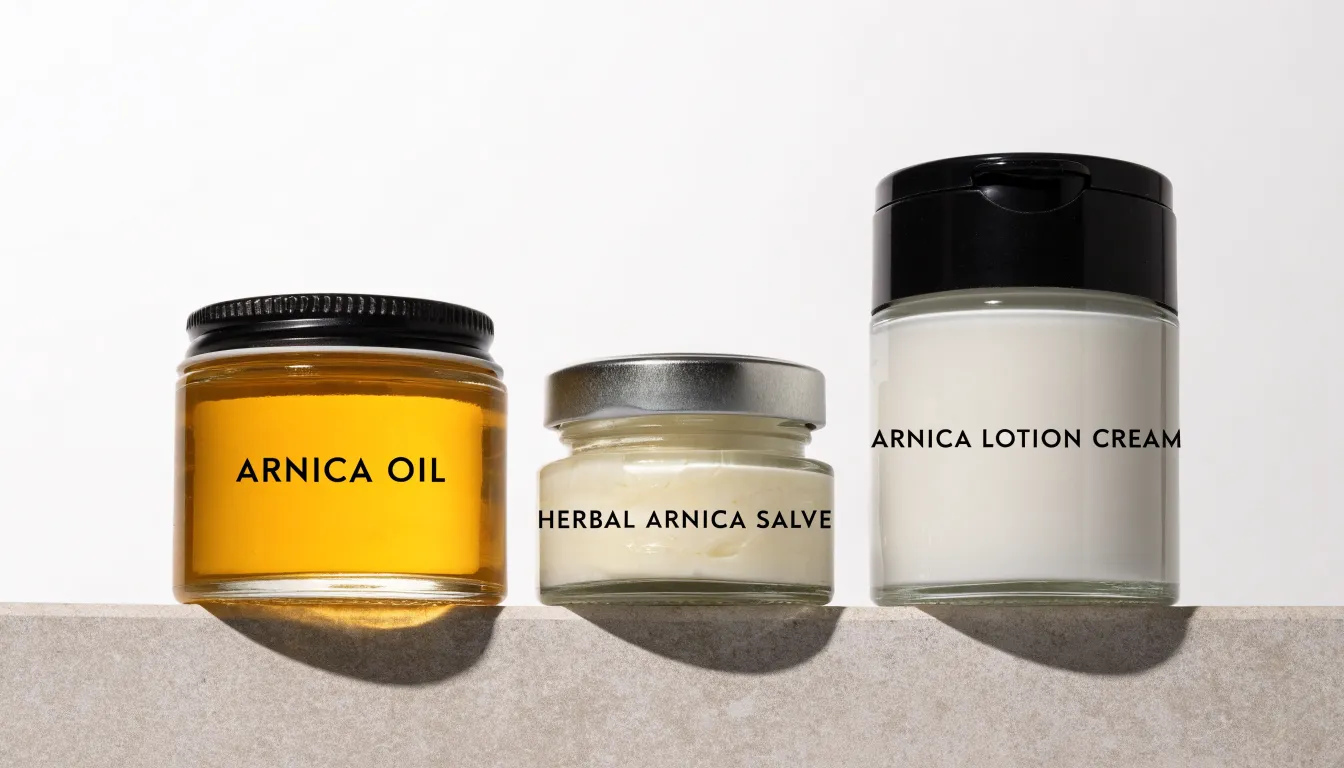
- Oil: Smooth and slow to absorb, so it’s best for massaging larger areas like legs and shoulders.
- Salve or balm: Thick and wax-based. It stays put on small, specific spots like a bruise or a knuckle.
- Cream: Light and water-based. It absorbs quickly, so it’s handy when you need to get dressed right away.
- Gel: Fast-absorbing and non-greasy. Gels are the form used in the hand arthritis research.1
In short, choose oil for massage, a salve for one spot, and a cream or gel for quick, clean application.
How to Apply Arnica Oil
- Patch test first. Apply a small amount to your inner forearm and wait 24 hours. If you get redness, itching, or burning, don’t use it. (How to patch test properly.)
- Check the label for dilution. Ready-to-use infused oils can go on as-is. Concentrated extracts should be diluted per the manufacturer’s directions.
- Apply to clean, dry, unbroken skin. Use a thin layer and massage gently.
- Use two to three times a day, for short periods. More oil or more frequent use won’t work better and raises the risk of irritation. If there’s no improvement after about two weeks, stop.
- Wash your hands afterward so you don’t get it in your eyes or mouth.
Arnica Oil Side Effects and Safety
Follow these essential oil safety rules whenever you use arnica:
- Never swallow it. Arnica plant preparations are toxic when taken by mouth and can cause vomiting, dizziness, heart rhythm problems, and bleeding. Ingesting oils is never a good idea, and with arnica it’s especially dangerous. Keep it away from children and pets. Homeopathic arnica pellets are a different, extremely diluted product and shouldn’t be confused with the oil.
- Unbroken skin only. Keep it off cuts, scrapes, burns, open wounds, eczema, dermatitis, eyes, and mucous membranes.
- Daisy-family allergies. If you react to ragweed, marigolds, chrysanthemums, or daisies, you’re more likely to react to arnica. Skip it or patch test very carefully.
- Pregnancy and breastfeeding. Its safety hasn’t been established. Avoid it during pregnancy and nursing unless your healthcare provider says otherwise.
- Short-term use. Long, continuous use raises the chance of skin sensitization.
- Stop if you react. Redness, itching, swelling, or blistering mean you should wash the area and stop using it.
How to Choose a Good Arnica Oil
- Botanical name: It should list Arnica montana.
- Type of product: It should say “infused oil” or “extract in [carrier],” and name the carrier oil (olive, sunflower, almond, and so on).
- Strength: Good brands state the flower-to-oil ratio or extract percentage. This is often missing, so its presence is a quality signal.
- Directions: Check whether the product is ready to use or needs diluting.
- Clean ingredients: Avoid added synthetic fragrance, vague “fragrance” or “parfum” listings, and fillers. Real arnica oil smells mildly herbal.
- Packaging: Dark glass protects the oil from light.
- Sourcing: Wild arnica is protected in parts of Europe, so cultivated or responsibly sourced flowers are a plus.
Frequently Asked Questions
What is arnica oil used for?
Arnica oil is used on unbroken skin to ease bruises, sore or stiff joints, minor sprains, and muscle aches. The best evidence is for hand osteoarthritis and bruising. The evidence for workout soreness is mixed.
How is arnica oil made?
Dried Arnica montana flower heads are steeped in a carrier oil such as olive, sunflower, or almond for several weeks. The oil is then strained.
Is arnica oil an essential oil?
No. Arnica oil is an infused oil, meaning flowers steeped in a carrier oil. It isn’t a steam-distilled essential oil.
Do I need to dilute arnica oil?
Most ready-to-use infused arnica oils can be applied as they are. Concentrated extracts should be diluted according to the label. Always patch test first.
Can arnica oil be applied to broken skin or open wounds?
No. Use arnica only on intact skin. Keep it off cuts, scrapes, burns, and areas of eczema or dermatitis.
Does arnica oil help bruises heal faster?
It may. A small randomized trial found that 20% arnica ointment helped bruises fade faster than a placebo, although some other studies found no benefit.
Does arnica oil help sore muscles after a workout?
The evidence is mixed. One study found it slightly increased soreness the next day, while another found modest relief three days after exercise. Massage with the oil may still feel helpful.
Is arnica oil safe to swallow?
No. Arnica is toxic if taken by mouth and should only be used on the skin.
References
- Widrig R, Suter A, Saller R, Melzer J. Choosing between NSAID and arnica for topical treatment of hand osteoarthritis in a randomised, double-blind study. Rheumatology International. 2007;27(6):585–591. doi:10.1007/s00296-007-0304-y
- Cameron M, Chrubasik S. Topical herbal therapies for treating osteoarthritis. Cochrane Database of Systematic Reviews. 2013. CD010538
- Leu S, Havey J, White LE, et al. Accelerated resolution of laser-induced bruising with topical 20% arnica: a rater-blinded randomized controlled trial. British Journal of Dermatology. 2010;163(3):557–563. PubMed
- Adkison JD, Bauer DW, Chang T. The effect of topical arnica on muscle pain. Annals of Pharmacotherapy. 2010;44(10):1579–1584. doi:10.1345/aph.1P071
- Pumpa KL, Fallon KE, Bensoussan A, Papalia S. The effects of topical Arnica on performance, pain and muscle damage after intense eccentric exercise. European Journal of Sport Science. 2014;14(3):294–300. Abstract
This article is for general information and isn’t medical advice. Talk to a healthcare provider before using arnica if you have a medical condition, take blood thinners, or are pregnant or breastfeeding.