
To make linen and pillow spray, combine distilled water with essential oils and a solubilizer like high-proof alcohol or witch hazel in an amber or cobalt glass spray bottle. This creates a natural, customizable fragrance that can promote relaxation or freshness, avoiding synthetic chemicals found in commercial sprays.
Table of Contents
- Fresh Sheets Every Night
- Essential Base Ingredients
- Sleepy Time Aromas
- Clean Crisp Fragrance
- Pure Oil Standards
- Bottle Selection Guide
- The Mixing Secret
- Simple Lavender Mist
- Custom Sleep Blends
- Odor Eliminating Blends
- Precision Pouring Steps
- Fabric Patch Testing
- Proper Spray Technique
- Common Spray Fixes
- Bedroom Wellness Routines
Fresh Sheets Every Night
Homemade linen sprays make the feeling of fresh sheets possible every night, not just on laundry day. By blending essential oils with a few simple ingredients like distilled water and a solubilizer, you can make many batches for a fraction of the cost of commercial air fresheners, so the luxury of fresh-smelling bedding becomes an affordable daily habit.
Unlike store-bought sprays filled with synthetic chemicals and artificial fragrances, DIY versions rely on pure essential oils from plants. This keeps the spray natural and non-toxic, reducing indoor air pollution and avoiding ingredients that might irritate sensitive people, giving you peace of mind about what touches your sheets and fills your bedroom.
The biggest benefit is the freedom to customize your own scent. Essential oils let you create exactly the atmosphere you want—calming lavender and chamomile for bedtime, an invigorating citrus blend for mornings, or warm cedarwood and frankincense for a cozy evening. With homemade spray, you are the one in control, crafting a fragrance that supports your rituals and makes your home truly feel like yours.
Essential Base Ingredients
Essential oils don’t naturally mix with water, so a linen spray needs a solubilizer to keep them evenly dispersed. Without one, the oils float on top and every spray becomes inconsistent. High-proof alcohol or witch hazel solves this by helping the oil molecules blend fully into the water, so the aroma reaches every spritz.
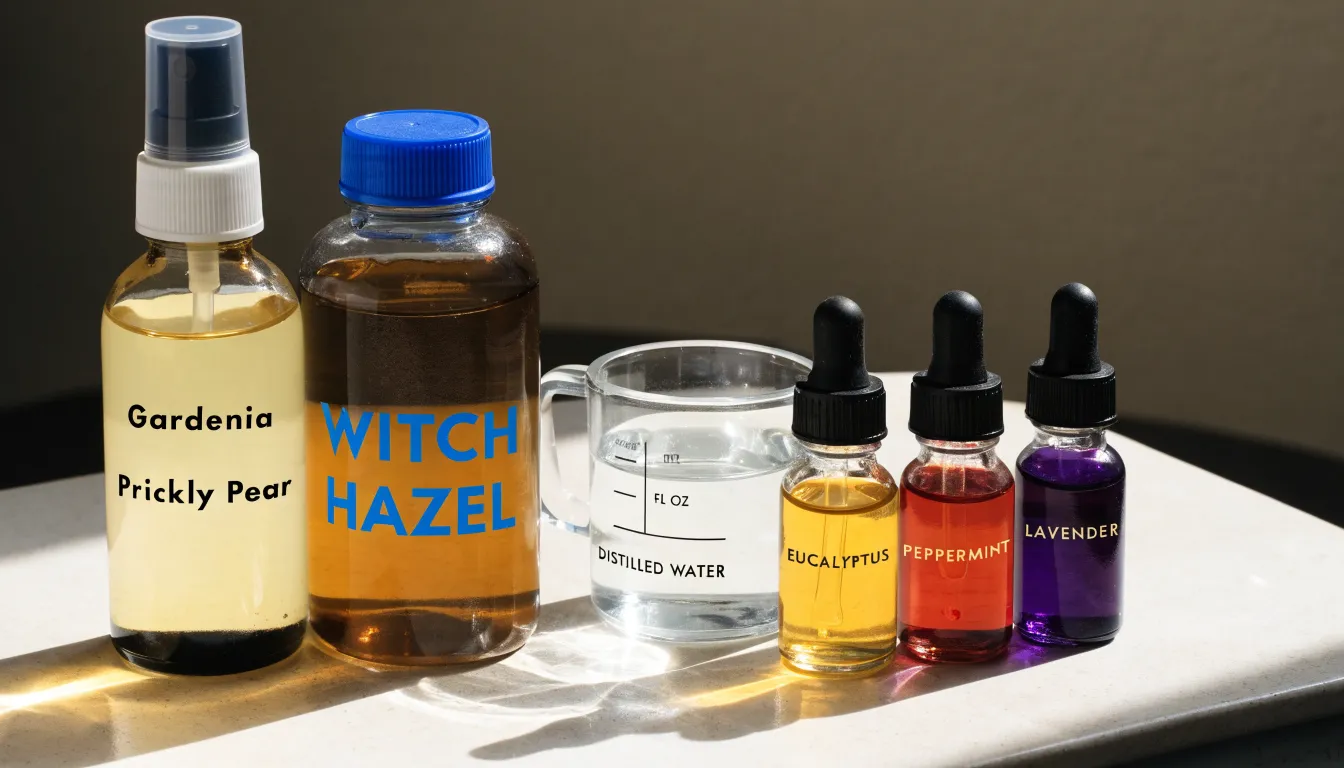
High-proof alcohol—like clear vodka at 120 proof or higher—works especially well. It bonds with both oil and water, creating a uniform mixture that prevents concentrated oil spots from staining fabric. It also evaporates cleanly, leaving only the essential oil scent behind, and helps the fragrance release gradually instead of all at once.
Witch hazel is a gentler option that still blends oils effectively, making it a good choice if you want less alcohol in your spray. Both ingredients create a stable, fine mist without separation. Using distilled water completes the formula by giving you a pure base, free from minerals or contaminants that could interfere with the blend.
Sleepy Time Aromas
Deep, restful sleep often starts with the right scents. Certain essential oils can send calming signals to your mind and body, helping you relax, let go of nighttime worries, and ease into sleep. These oils work naturally to create the right conditions for a peaceful night.
Lavender essential oil is the most well-known choice for relaxation. Its soft floral scent has calming and sedative effects that reduce anxiety and promote a sense of ease. Diffusing lavender in the bedroom or misting it onto linens can support deeper sleep cycles and improve overall sleep quality.
Roman chamomile essential oil has a gentle, apple-like scent and is valued for its soothing power. It acts like a natural sedative, calming the nervous system and helping people with restless minds settle down. Its mild nature makes it safe for children and sensitive individuals. Cedarwood essential oil adds a warm, woody, grounding aroma that encourages a secure and tranquil environment. It is popular at bedtime for easing tension and creating emotional stability. Together, these oils offer a simple, natural way to encourage deep relaxation and better sleep.
Clean Crisp Fragrance
Lemon essential oil brings a bright, citrusy energy that instantly makes linens feel clean and sun-fresh. Its cheerful scent lifts the mood of any room, while its natural purifying qualities add to that crisp, just-washed impression.
Eucalyptus essential oil adds a clear, cool, and slightly medicinal aroma. It gives fabrics that spa-like freshness associated with deep cleansing, clearing the air and awakening the senses with a balance of stimulation and calm.
Peppermint essential oil contributes a sharp, minty coolness that revitalizes and refreshes. Together, these three oils—lemon, eucalyptus, and peppermint—create a balanced laundry-fresh fragrance: bright, clean, and invigorating. Perfect for sheets, towels, and curtains, this blend turns everyday fabrics into a daily source of uplifting comfort.
Pure Oil Standards
Using pure essential oils is key to protecting your fabrics. Impure or diluted oils often contain carrier oils, synthetic additives, or other fillers that don’t evaporate fully. These substances can leave greasy marks or permanent stains on linens, pillows, and upholstery. In contrast, pure essential oils are volatile and evaporate completely, so they leave behind only their natural scent and no residue.
Purity also matters for real aromatherapy benefits. True essential oils contain a complex mix of natural plant compounds that create their specific effects, like lavender’s calming power or peppermint’s invigorating lift. When oils are cut with synthetic fragrances or lower-grade fillers, those beneficial compounds are weakened or missing. A fake oil may smell similar, but it can’t deliver the same positive effects on your mind and body.
Choosing certified pure essential oils means you get the full power of nature without compromise. This turns your linen spray into more than just a pleasant fragrance — it becomes a wellness tool that supports relaxation, mood, and overall comfort while keeping your fabrics clean and fresh.
Bottle Selection Guide
Choosing the right bottle matters because essential oils are fragile. Ultraviolet light from the sun can break down their chemical structure, which weakens their therapeutic benefits, fades their aroma, and shortens the shelf life of your spray. Amber or cobalt glass filters out much of this UV radiation, helping the oils stay stable and effective for longer.
Glass is also a safer choice than plastic. Essential oils are concentrated and can react with plastic over time, causing tiny particles or chemicals to leach into your spray. That can contaminate the blend, reduce its purity, and affect its safety. Glass, on the other hand, does not react with the oils, so your spray stays clean and true to what you originally made.
Investing in good glass bottles means every spritz delivers the full, untainted benefits of your chosen essential oils. The oils keep their natural power and aroma, and you get the intended calming or freshening effect without any unwanted interference.
The Mixing Secret
Essential oils are hydrophobic, so they naturally repel water and won’t mix into a spray on their own. Instead, they form floating droplets, which means each spritz could be mostly water or an overly strong burst of oil. That unevenness can irritate skin, stain fabrics, or leave residue.
The mixing secret is an emulsifier, which acts as a bridge between oil and water. Emulsifier molecules have a water-loving head and an oil-loving tail, so they surround tiny oil droplets and let them spread evenly through the water. This keeps the oil safely suspended so every spray is consistent and gentle.
High-proof grain alcohol, such as 190-proof, works well as a natural emulsifier for many essential oil blends. Specialized solubilizers are also designed for this job. Either way, the emulsifier ensures your linen and pillow spray delivers a stable, even mist, spreading the aroma safely and effectively without irritation or residue.
Simple Lavender Mist
The Simple Lavender Mist is a great beginner project for making your own home and linen products. It uses only three ingredients and is nearly foolproof, giving bedding a quick refresh and helping create a calmer, more restful sleep space.
Lavender essential oil is the key active ingredient, valued for its soothing and calming effects. Its soft floral scent is linked to relaxation and less stress, so just a few drops can add a gentle, comforting aroma to your fabrics. The liquid base is distilled water, which is important because it lacks the minerals and impurities in tap water that could leave residue on cloth or shorten the spray’s shelf life. Distilled water creates a clean, neutral base for the oil.
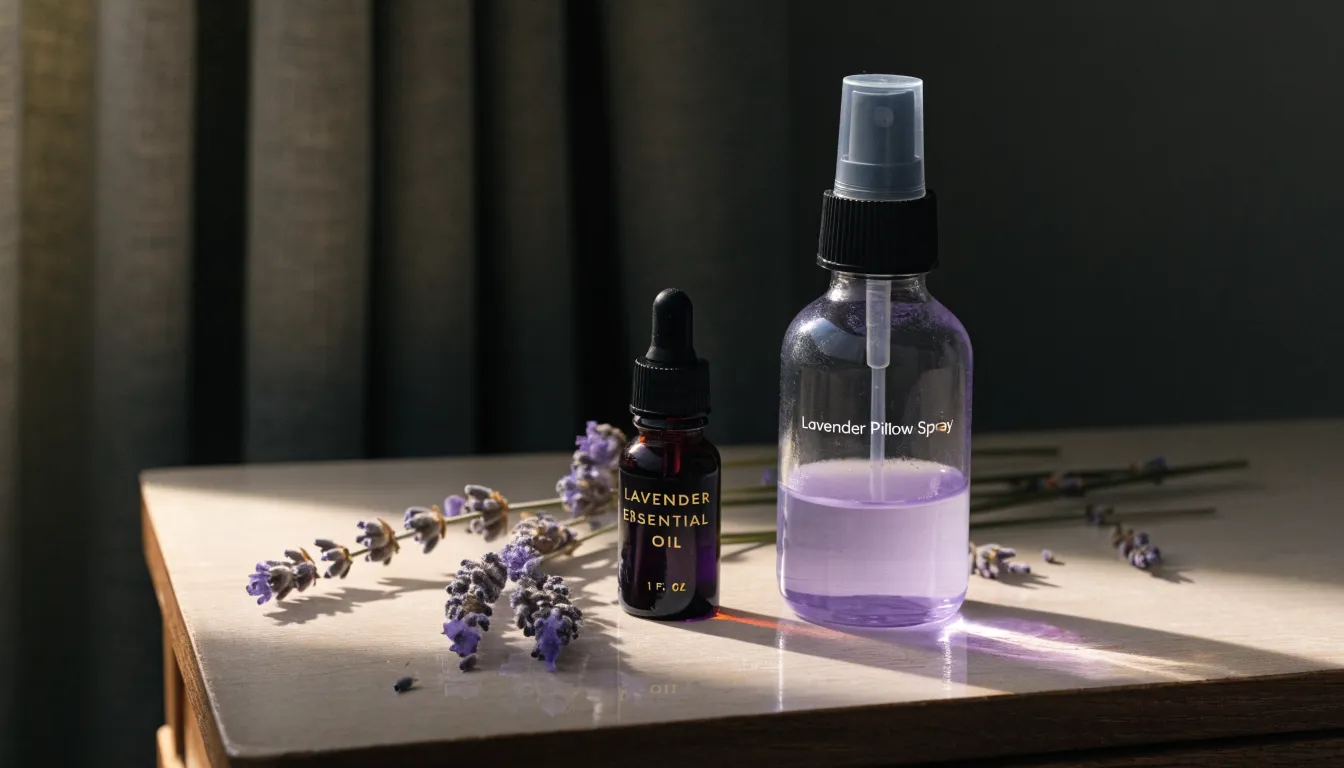
Witch hazel completes the mix by acting as a mild emulsifier, helping the lavender oil blend with the water instead of sitting on top. It also has gentle preserving qualities that keep the homemade mist fresh longer, and it adds no harsh chemicals. In a spray bottle, you simply shake the lavender drops with a little witch hazel, add distilled water, and shake again before each use. Then lightly spritz your pillows and linens before bedtime to create a relaxing, sleep-friendly atmosphere.
Custom Sleep Blends
Custom sleep blends let you tailor a pillow spray to your own taste. Instead of one oil, mixing different aromatic families creates a richer, more relaxing scent. The goal is a signature fragrance that tells your body it’s time to unwind, helping you feel calmer and sleep more restfully.
Each oil family has a role. Floral oils like lavender or Roman chamomile soothe and ease tension. Woody oils like cedarwood or sandalwood add a grounding, secure base. Herbal oils like marjoram or clary sage bring a fresh, calming quality that quiets a busy mind.
A simple ratio works well: start with 5–7 drops of a floral oil, like lavender, as the main note. Add 3–4 drops of a woody oil, such as cedarwood or vetiver, for depth. Finish with 1–2 drops of an herbal oil, like bergamot or marjoram, for a unique, calming twist. Adjust from there to find your perfect sleep-inducing blend.
Odor Eliminating Blends
Tea tree, grapefruit, and bergamot work well together to tackle stubborn odors that get trapped in bedding and furniture. Tea tree oil is known for its strong antibacterial and antifungal properties, so it helps fight the bacteria and microbes that cause stale smells in fabric. Grapefruit oil adds a fresh, citrusy scent while also offering natural cleansing benefits that help keep the environment feeling clean.
Bergamot brings a bright, slightly floral citrus aroma and has natural deodorizing qualities that help purify both the air and soft surfaces. Together, these three oils do more than just cover up bad smells—they actively break down odor-causing compounds and neutralize them at the source.
This blend is especially useful for linen and pillow sprays meant to refresh upholstery, mattress covers, and other soft furnishings. The combination leaves behind a clean, invigorating fragrance while helping your whole home feel fresher and more welcoming.
Precision Pouring Steps
Getting the essential oil ratio right is the key to a good linen and pillow spray. Precise measurements keep the spray safe, give it a pleasant and balanced scent, and help protect your fabrics. If you add too much oil, it can irritate sensitive skin or breathing, and the smell may become overpowering. If you add too little, the spray won’t have enough fragrance or effectiveness. Also, Also, undiluted oils can leave oily marks or stains on delicate materials.
For a 2-ounce bottle, which holds about 60 milliliters, aim for a 1–2% dilution. That means about 12 drops of essential oil for a 1% mix, or 24 drops for a stronger 2% mix. It’s best to start with fewer drops, test the scent, and then add more if you want a stronger aroma.
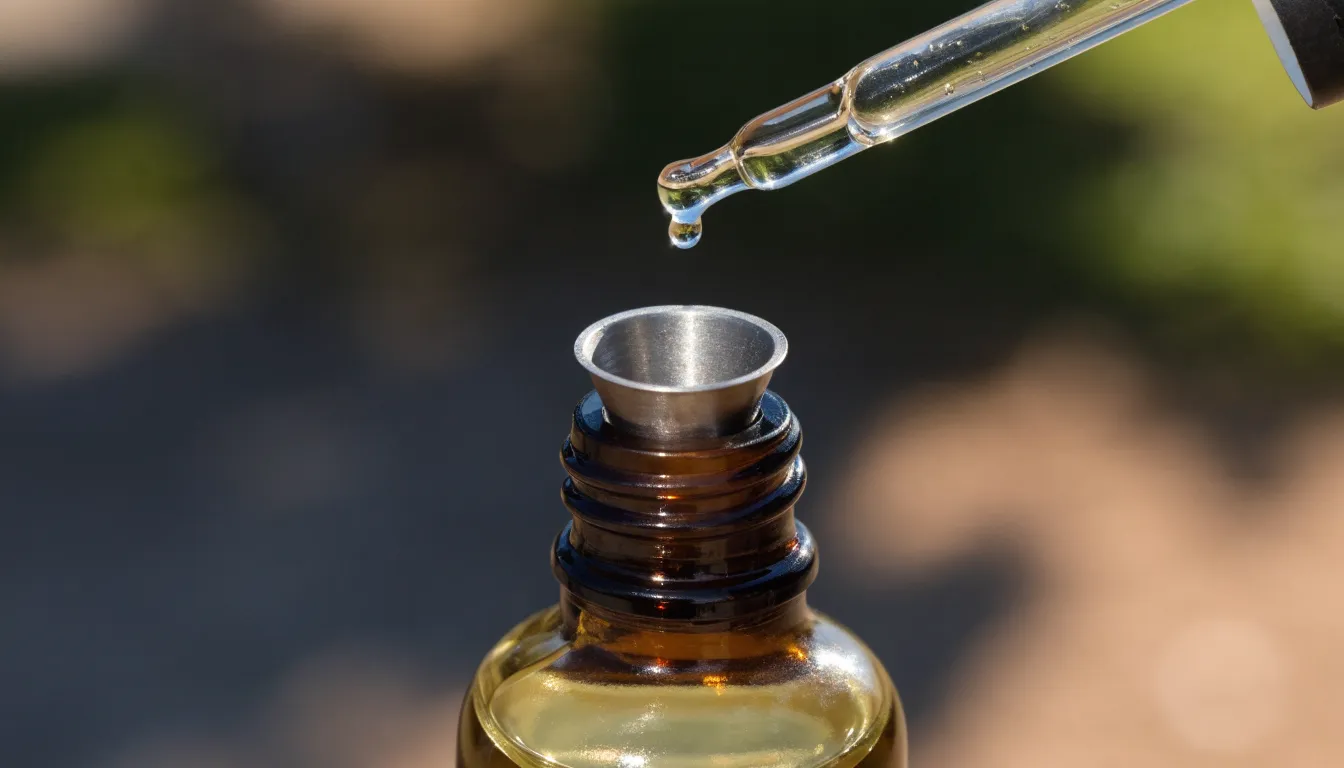
For a larger 4-ounce bottle, about 120 milliliters, simply double the amounts: roughly 24 drops for 1%, and 48 drops for 2%. Use a fine-tipped dropper for accuracy, and remember that drop sizes can vary slightly based on the oil and dropper. These amounts are a reliable starting point. Following these steps gives you a gentle, pleasant spray that is safe for both your fabrics and your home.
Fabric Patch Testing
Before you generously mist your fresh sheets and pillows with a new DIY essential oil spray, Before you generously mist your fresh sheets and pillows with a new DIY essential oil spray, always do a fabric patch test first. This simple step helps protect your fabrics from damage. Its main purpose is to make sure the essential oils and carrier liquids in your spray won’t leave greasy stains or cause any color changes. Fabrics react differently to different ingredients, and even natural things like essential oils can interact unexpectedly with dyes or fibers.
To test, choose a hidden spot on your bedding—like an inside seam, under a pillowcase flap, or a part of the sheet that tucks under the mattress. Lightly spray just a small amount there, only enough to slightly dampen the fabric. Then let it dry completely; this can take a few minutes or up to an hour, depending on the fabric and humidity.
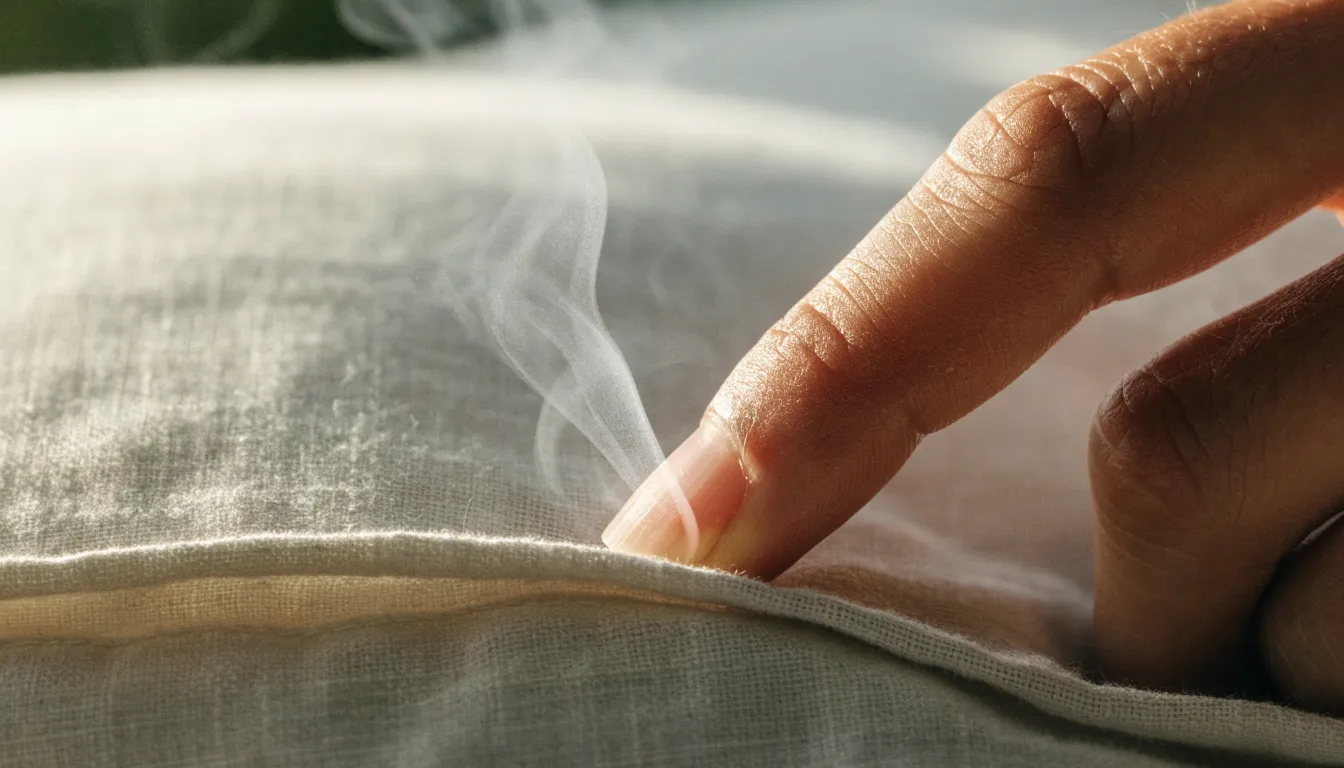
Once dry, examine the spot in good light. Look for dark or oily marks, fading, or any change in the original color. Also feel the fabric to check for stiffness or stickiness. If the area looks and feels unchanged, your essential oil linen spray is safe to use on your bedding with confidence.
Proper Spray Technique
To get the most from your homemade linen and pillow spray, hold the bottle about 6 to 12 inches away from the fabric. This distance creates a fine, even mist instead of wet drops. If you spray too close, the essential oils concentrate in one area and leave the fabric damp; from farther away, the droplets spread into a light, gentle veil of fragrance.
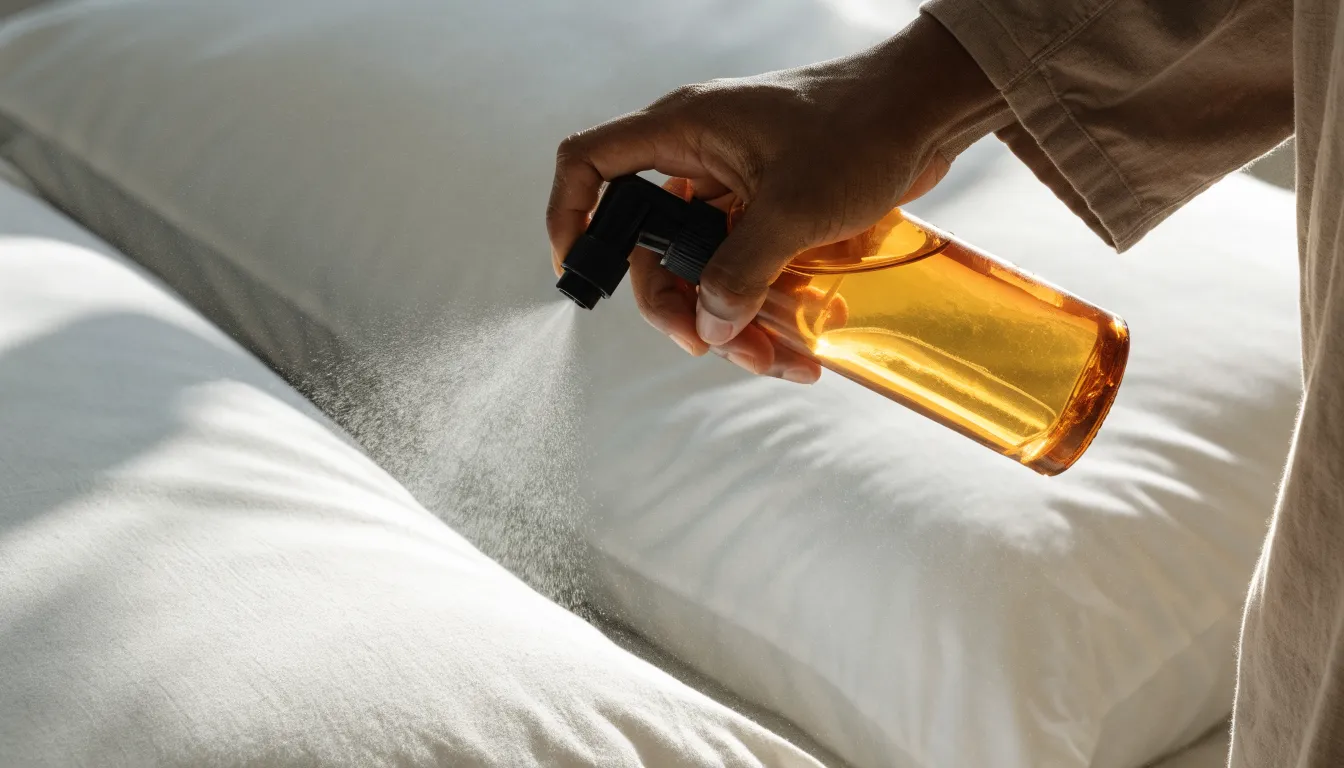
Use a light, sweeping motion across your pillows, sheets, or blankets. Move the bottle steadily from side to side or in a circular pattern, and avoid aiming at one spot. A few quick pumps are usually enough. This prevents oversaturation, keeps the essential oils evenly distributed, and avoids uncomfortable dampness or residue.
For the best effect, spray your linens about 10 to 15 minutes before bedtime. This gives the mist time to settle, lets the essential oils gently diffuse into the fabric, and allows the liquid base to dry. By the time you get into bed, your bedding will be dry and subtly fragrant—soft and calming rather than overpowering.
Common Spray Fixes
Clogged sprayer nozzles often happen because tiny bits of essential oil residue build up in the fine opening. To fix this, take off the sprayer head and rinse it well under warm running water. If it’s still blocked, gently use a pin or needle to clear the nozzle, then pump warm water through the sprayer a few times before putting it back on. Cleaning the sprayer head every few weeks helps stop clogs and keeps the mist smooth and even.
If your spray’s scent seems too weak, it usually means the essential oil blend isn’t concentrated enough. Try adding 5–10 extra drops of your chosen oils to the bottle, shake it well, and test. If the smell is still faint, keep adding a few drops at a time until it’s as strong as you like. Remember that different essential oils vary in strength, so some blends need more drops to give off a noticeable fragrance.
Always shake your linen and pillow spray well before each use. Essential oils don’t naturally dissolve in water—they separate and float on top. A good shake spreads the oils evenly through the liquid, so every mist gives a consistent burst of scent. If you skip shaking, you may end up spraying mostly water or an uneven, weak mix of oils, which makes the aroma inconsistent and disappointing. Making shaking a habit greatly improves how well the spray works.
Bedroom Wellness Routines
Bedroom routines make aromatherapy simple to use in daily life. A key part of this is using linen and pillow sprays. A gentle mist of a calming essential oil blend on your sheets gives a soothing sensory signal that tells your mind and body it is time to unwind. This subtle scent becomes a strong cue in your routine, helping to build a peaceful atmosphere before you fall asleep.
To support the aromatherapy, think about your room’s lighting. Turning down bright lights as the evening goes on helps your body make melatonin, the hormone that controls sleep. Using softer lamps or smart bulbs that fade to warmer tones works together with the scent to fully prepare your system for rest.
Finally, add mindful habits like quiet reading, gentle stretching, or a short meditation to move your focus away from screens and stress. By mixing the calming effects of the linen spray, the comfort of dim light, and these intentional practices, you create a complete evening ritual that supports deep, restorative sleep. This full approach ensures you get the benefits of aromatherapy and turn your bedroom into a true sanctuary for relaxation every night.
Frequently Asked Questions
Why should I make my own linen spray instead of buying one?
Homemade linen sprays are natural and non-toxic, avoiding synthetic chemicals found in store-bought options. They allow you to customize scents, reduce indoor air pollution, and offer a cost-effective way to enjoy fresh-smelling bedding daily.
What ingredients are essential for making an effective linen spray?
To make a linen spray, you need essential oils, distilled water, and a solubilizer like high-proof alcohol or witch hazel. The solubilizer is crucial to keep the essential oils evenly dispersed within the water, preventing separation.
Which essential oils are recommended for promoting better sleep?
Lavender essential oil is highly recommended for relaxation due to its calming and sedative effects. Roman chamomile essential oil has a gentle, apple-like scent and acts as a natural sedative, while cedarwood offers a warm, grounding aroma that encourages a tranquil environment.
How can I make sure my DIY linen spray won’t stain my fabrics?
To prevent stains, always use certified pure essential oils, as impure oils can leave greasy marks. It’s also crucial to perform a fabric patch test on a hidden spot of your bedding before widespread use to ensure the spray won’t cause color changes or residue.
How should I properly apply the linen spray for the best results?
Hold the bottle about 6 to 12 inches away from the fabric to create a fine, even mist rather than wet drops. Use a light, sweeping motion across your linens and spray approximately 10 to 15 minutes before bedtime, allowing the mist to settle and the liquid to dry.
What should I do if my linen spray’s scent seems too weak or inconsistent?
If the scent is too weak, try adding 5–10 extra drops of your chosen essential oils to the bottle and shake well. Also, always shake your linen and pillow spray well before each use, as essential oils don’t naturally dissolve in water and will separate, leading to inconsistent scent.