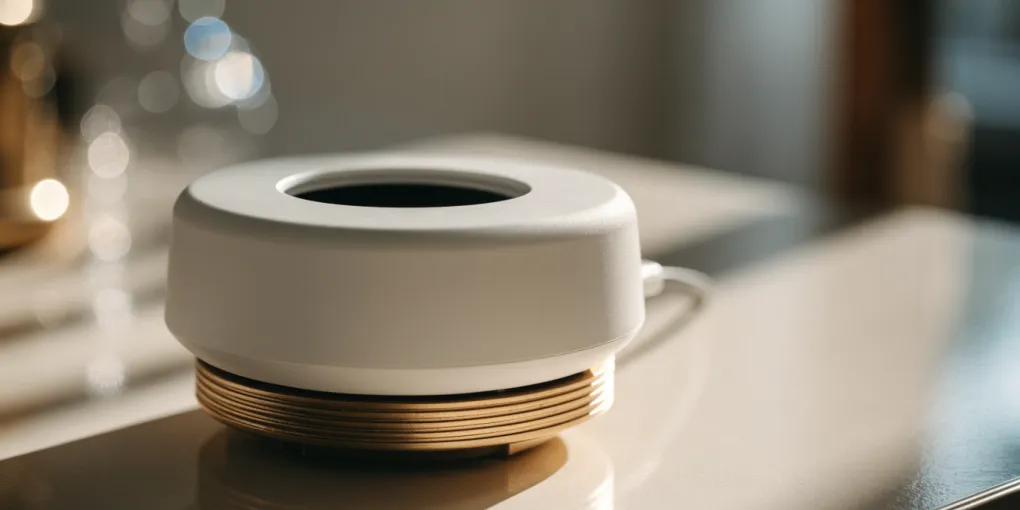
Nebulizing diffusers atomize pure essential oils directly into a concentrated, dry mist using an air pump and Bernoulli’s principle, without water or heat. This creates an exceptionally potent, undiluted aromatherapy experience that quickly saturates large spaces. They require careful cleaning with alcohol and are best used with low-viscosity oils to prevent clogs.
Table of Contents
- Understanding Nebulizing Diffusers
- Nebulizers Versus Ultrasonic Models
- Unmatched Fragrance Potency
- Zero Water Required
- The Cost Factor Explained
- Oil Consumption Reality Check
- Noise Levels and Sound
- Cleaning and Maintenance Basics
- Glassware Fragility Concerns
- Best Oils for Nebulizers
- Essential Oils to Avoid
- Coverage Area Capabilities
- Built In Timers and Controls
- Longevity and Build Quality
Understanding Nebulizing Diffusers
Nebulizing diffusers work differently from other diffusers because they use pure essential oils directly, without any water. They rely on a physics principle called Bernoulli’s principle, which means that when air moves faster, its pressure drops. Inside the diffuser, a small air pump draws in air, compresses it, and pushes it through a narrow jet, creating a fast stream of cold air.
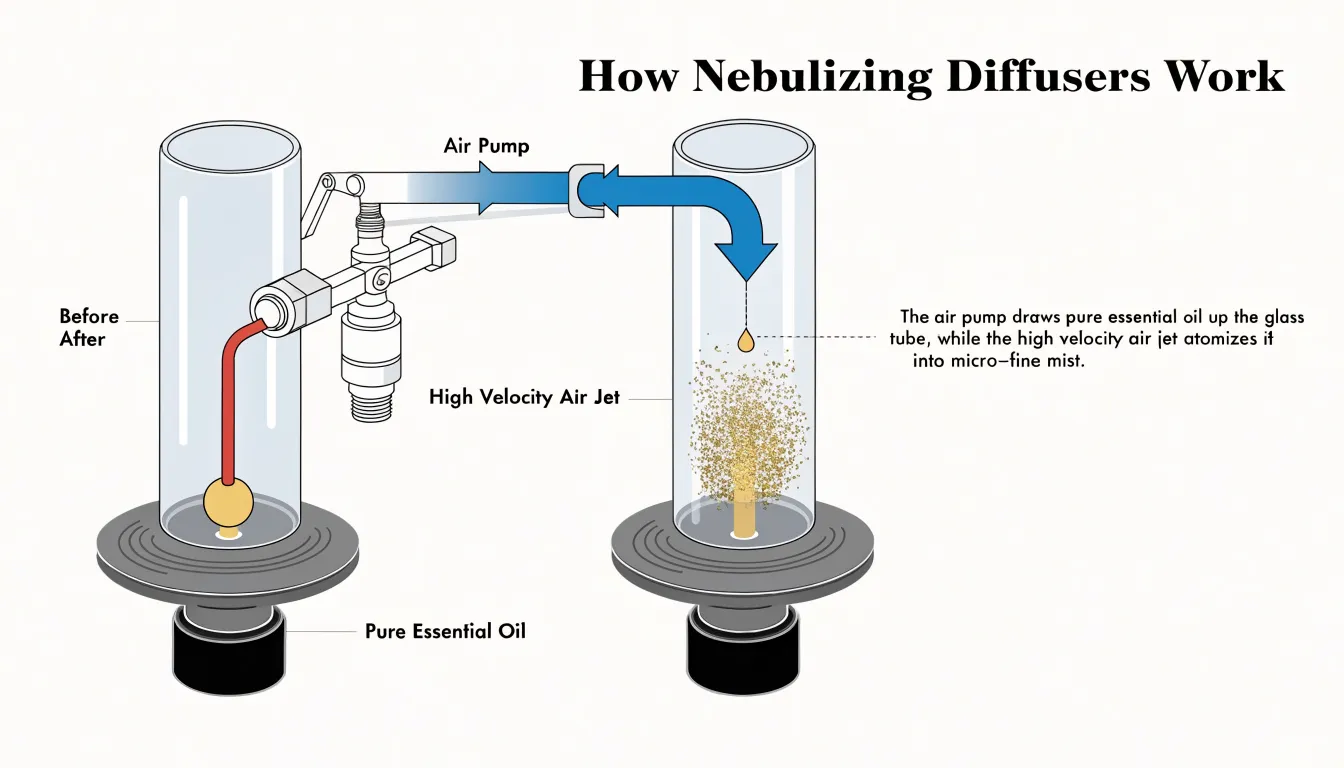
This high-speed air passes over a tube that sits in the essential oil, creating a low-pressure zone that acts like a vacuum. That vacuum pulls the oil upward. When the oil reaches the top, the rushing air hits it and breaks it into extremely tiny particles, turning the liquid oil into a fine, dry mist.
Because no heat or water is used, the oil’s natural therapeutic properties stay fully intact, and the oil is never diluted. What comes out is a highly concentrated, pure essential oil vapor that can be easily inhaled and absorbed. This delivers a strong, undiluted aromatherapy experience directly into the room.
Nebulizers Versus Ultrasonic Models
Understanding the key differences between nebulizing and ultrasonic diffusers is essential before buying. Nebulizing diffusers, also called waterless air-pump models, atomize pure essential oil directly into the air. This creates an exceptionally strong, undiluted scent that hits quickly and intensely. Ultrasonic models, in contrast, mix essential oils with water and use ultrasonic vibrations to disperse a fine mist, producing a softer, more subtle fragrance that spreads gradually through the room.
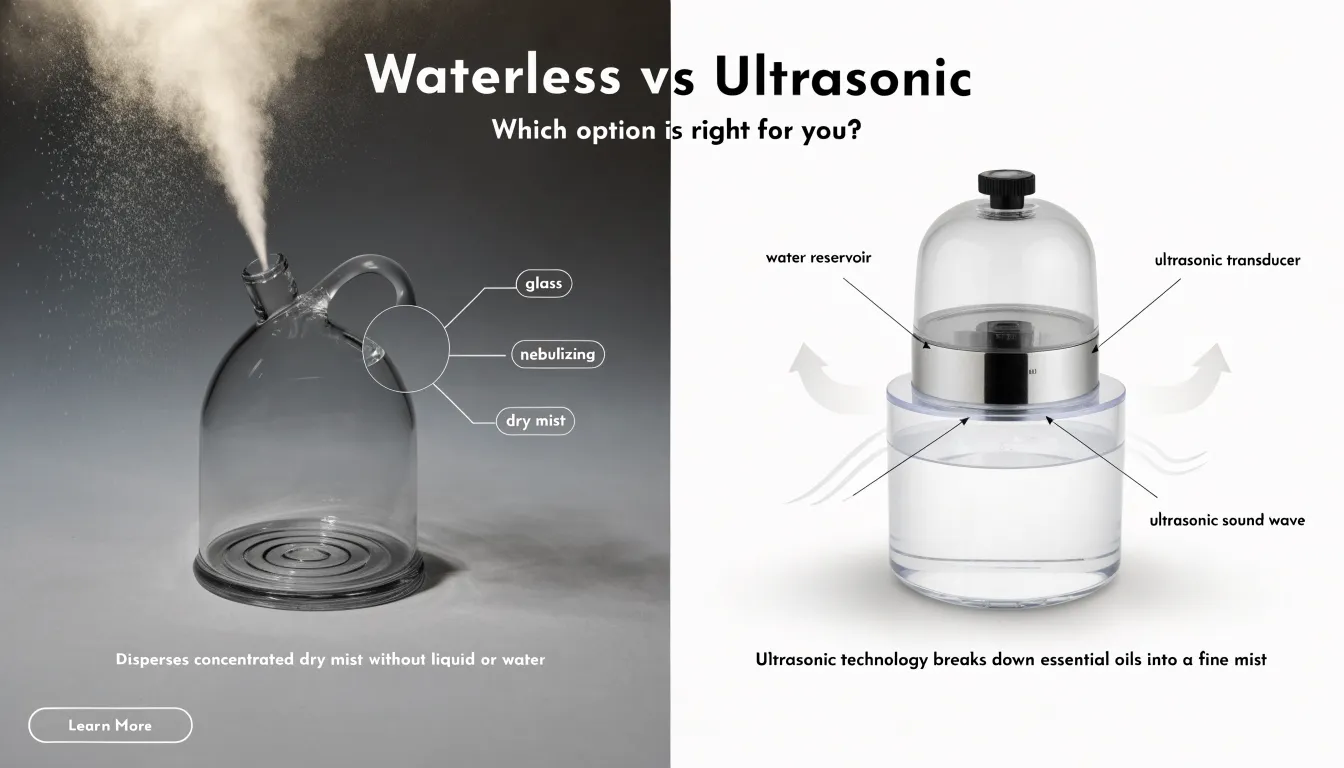
The two types also differ in how they affect the air around them. Because ultrasonic diffusers use water, they release moisture into the space and gently raise the humidity, which can be helpful in dry rooms or during colder months. Nebulizing diffusers add no moisture at all, making them a better choice for humid climates or anyone who does not want to change their indoor humidity levels.
Maintenance needs are also tied to their design. Nebulizing diffusers require periodic cleaning, often by running rubbing alcohol through the unit, so essential oil residue does not build up and clog the delicate parts. Ultrasonic units need their water tanks cleaned regularly with soapy water to prevent mineral deposits and mold, along with frequent refilling.
Unmatched Fragrance Potency
Nebulizing diffusers provide unmatched fragrance potency by atomizing undiluted essential oils into a pure, concentrated mist. Since no water is added, every particle released is pure essential oil, so the aromatic compounds keep their full strength and integrity from the moment they leave the diffuser.
The instant the nebulizer starts, it generates a highly concentrated aroma. This immediate intensity works besonders well in larger spaces, like high-ceiling rooms, open-concept living areas, or expansive offices, This immediate intensity works besonders well in larger spaces, like high-ceiling rooms, open-concept living areas, or expansive offices, where other diffusers can struggle. The fine mist of pure oil travels widely and quickly, saturating every corner with scent and creating a powerful, immersive aromatic experience almost immediately
Because of this potency, even a short burst of operation can fill a large area with the full aromatic profile of the chosen essential oil. This delivers an instant, lasting ambiance and makes the most of the oils’ natural strength, turning big spaces into fragrant havens quickly and efficiently.
Zero Water Required
Nebulizing diffusers work without any water, so they never add extra moisture to your home. Traditional diffusers mix essential oils with water and release a mist, which can raise humidity levels. That might be helpful in very dry climates, but it can cause problems in many other situations.
Because there’s no water tank, there’s also no place for mold or bacteria to grow. Water-based diffusers need frequent cleaning to prevent germs from spreading into the air. A nebulizer has no standing water, so it diffuses only pure essential oil, making the process cleaner and healthier.
The waterless design also keeps your indoor humidity exactly as it is. In humid conditions or certain seasons, extra moisture can make a room feel sticky and may even damage surfaces or walls. Nebulizing diffusers let you enjoy the full aromatic benefits of essential oils without affecting your air’s moisture, making them a smart choice for comfort and air quality in any climate.
The Cost Factor Explained
Nebulizing diffusers cost more upfront than most other types. That price reflects precision engineering and high-quality glass parts built to handle pure, undiluted essential oils. Even so, the higher initial cost often balances out over time because the diffuser delivers stronger therapeutic results and lasts longer.
The main benefit is how they treat essential oils. Instead of mixing oils with water or using heat, nebulizers release micro-fine particles of pure oil into the air. This keeps the oil’s full chemical makeup intact, so the aroma is more concentrated and the wellness effects are more noticeable. Because the diffusion is so potent, people often need less oil to get the same result, which adds up to savings.
These diffusers also tend to be more durable. Since no water is used, internal parts face less wear and tear than ultrasonic models. That means fewer breakdowns and fewer replacements. Cheaper alternatives may seem like a bargain at first, but they often wear out faster or use oil less efficiently. In the long run, a nebulizing diffuser works like a sturdy, high-performance tool that gives a consistent, powerful aromatic experience for years.
Oil Consumption Reality Check
Nebulizing diffusers create a strong aromatherapy experience by turning pure essential oil into a fine mist without water. Because the oil is not diluted, it is highly potent and travels well through a room. However, this also means it uses up oil quickly. On a medium setting, with one to two hours of daily use, a 10ml bottle may last about five to ten days, while a 15ml bottle might last roughly seven to fifteen days. Actual use depends on oil thickness, diffuser model, and settings.
To make oil last longer, the most effective step is to lower the intensity setting. Most nebulizers let you adjust how much mist is released, and a lower output still provides noticeable aromatic benefits while using much less oil.
Timers and intermittent cycles also help prevent waste. Many diffusers can run in short bursts, such as five minutes on and ten minutes off, rather than continuously. Limiting total use to one or two hours a day allows you to enjoy strong diffusion when needed without draining your essential oil supply quickly.
Noise Levels and Sound
A nebulizing diffuser makes a soft, steady hum or gentle vibration because it uses a built-in air pump to break down and spray essential oils into a fine mist. This sound is not sudden or harsh—it’s just a predictable, low-level drone that comes from the air compression and moving parts inside the machine.
This makes it quite different from an ultrasonic diffuser, which works almost silently by using high-frequency vibrations to spread a mist of water and oil. While an ultrasonic model might only give off a rare faint water gurgle, the nebulizer’s pump adds a slightly more noticeable, yet still subtle, sound to the room.
Most people find that this gentle hum quickly fades into the background, much like the soft whir of a small desk fan or a distant refrigerator. Knowing that this constant, low sound is normal will help you relax and enjoy the strong, pure essential oil benefits without any surprise, making your experience with these powerful diffusers much more pleasant.
Cleaning and Maintenance Basics
Keeping your nebulizing diffuser’s glassware clean is key to keeping it working well and lasting a long time. Regular cleaning stops clogs and makes sure your essential oils diffuse properly, so you get the full aromatic benefits. A quick flush with isopropyl alcohol works great because it dissolves sticky oil residue and keeps the tiny internal tubes clear and free-flowing.
First, make sure the diffuser is turned off and unplugged. Pour out any leftover essential oil, and use a clean cloth to soak up stubborn drops. Then add about 5–10 milliliters of 90% or higher isopropyl alcohol to the glass reservoir—just enough to reach the uptake tube. Let it sit for a few minutes, then swirl it gently. The alcohol will look cloudy as it picks up oil. Reconnect the glassware and run the diffuser on its lowest setting for one to two minutes so the alcohol flushes through the micro-tubes and clears any blockages.
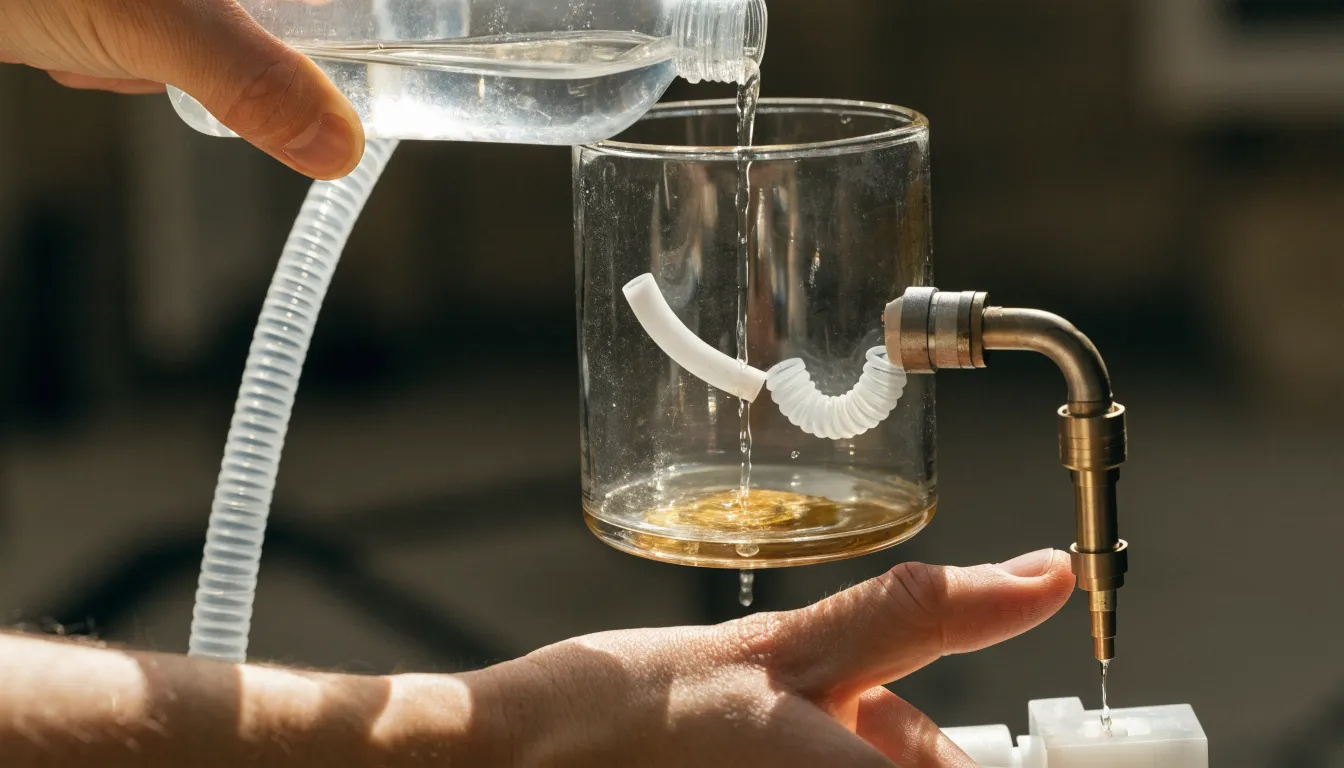
When done, disconnect the glassware, discard the used alcohol, and rinse everything thoroughly with warm water. Let the glassware dry completely before adding new essential oils. Doing this simple alcohol flush once a week, or whenever you switch oils, will prevent clogs and keep your diffuser running smoothly for years of aromatic enjoyment.
Glassware Fragility Concerns
Nebulizing diffusers use delicate glass reservoirs to disperse essential oils effectively, but that glass needs careful handling. When cleaning, always unplug the diffuser and set it on a flat, stable surface. Detach the glass with a gentle twisting motion, not force. Clean it with a soft cloth or brush, mild soap, and warm water—skip abrasive scrubs and harsh chemicals. Let the glass air dry fully, or dry it with a lint-free cloth, so it stays ready for clean oil delivery.
When refilling, set the glass on a firm, non-slip surface. Pour essential oils in slowly, straight into the reservoir, and avoid spilling oil on the outside of the glass—wet glass gets slippery. Never fill past the recommended line, since overfilling can cause spills or make the diffuser work poorly. Steady pouring keeps your oil use neat and efficient.
Finally, place the whole diffuser on a stable, level surface, away from busy areas, table edges, children, and pets. When you reattach the glass to the base, make sure it sits firmly and correctly. Taking these simple precautions protects the fragile glass and helps your diffuser keep releasing essential oils reliably.
Best Oils for Nebulizers
Choosing the right essential oils is key to keeping your nebulizing diffuser working well. The most important thing to consider is viscosity, or how thick and slow-moving an oil is. These diffusers use air pressure to turn oil into a fine mist, and they work best with thin liquids. Low-viscosity oils flow smoothly through the diffuser, so they don’t cause clogs or leave behind sticky residue.
For the best results, choose low-viscosity oils like lemon, peppermint, and lavender. Lemon is light and has a bright, uplifting citrus smell that atomizes easily. Peppermint has an invigorating, refreshing scent and a thin texture that creates a steady, fine mist. Lavender is a favorite for relaxation, and its low viscosity prevents buildup, so the diffuser runs smoothly and stays clean over time.
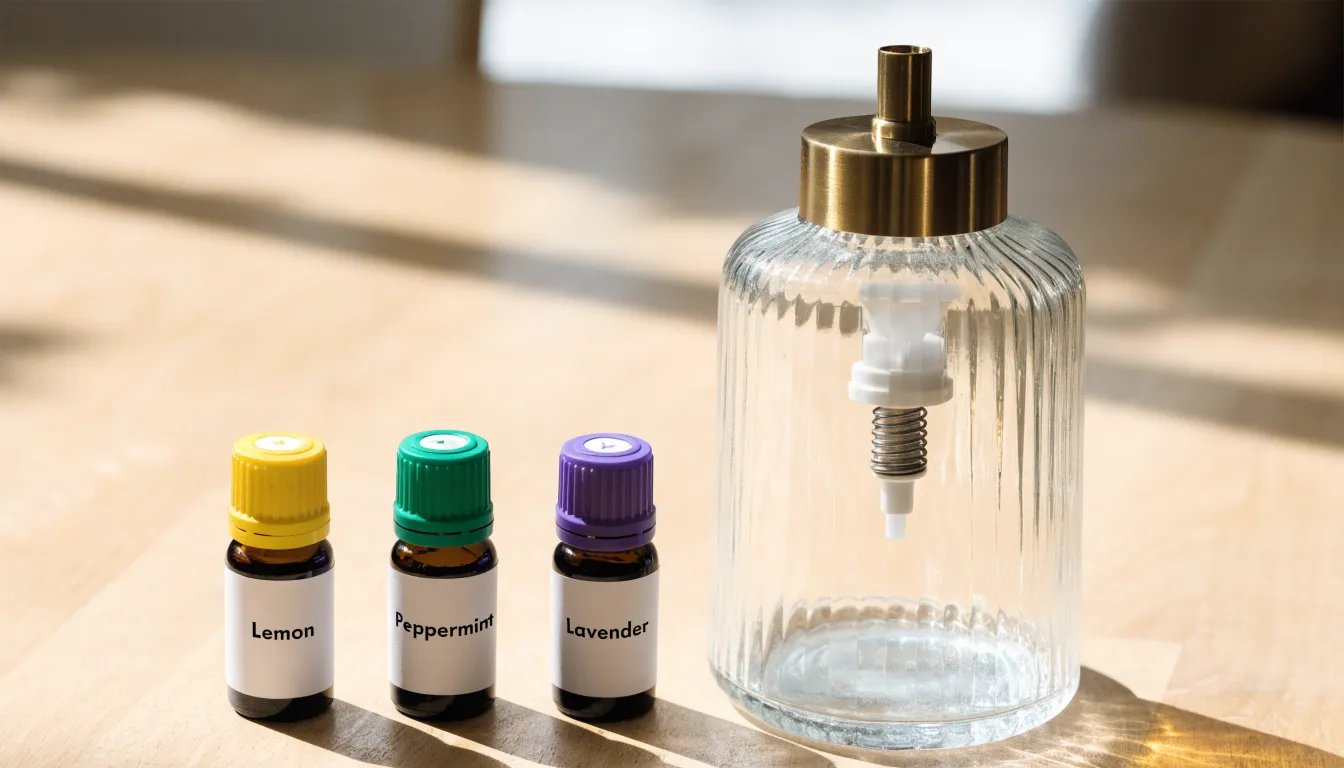
Using these thin, free-flowing oils means you get the full aromatic benefits without harming your diffuser. This keeps your aromatherapy experience pleasant and nearly maintenance-free.
Essential Oils to Avoid
Nebulizing diffusers give you a strong, pure experience of essential oils by releasing their aroma directly into the air. But to keep the diffuser working well, you need to choose oils carefully—some can harm the delicate inner parts.
Thick, resinous oils like vetiver, patchouli, sandalwood, myrrh, frankincense, and benzoin are too dense and sticky. They don’t turn into a fine mist properly and instead leave gummy residue inside the tiny glass nozzle.
Over time, this residue blocks the nozzle, lowering the mist output and eventually making the diffuser stop working. Cleaning it out is very hard and might not fix it. To protect your diffuser, avoid using these thick oils in it and use other methods for them instead.
Coverage Area Capabilities
Nebulizing diffusers are the best choice for open concept homes because they use pure essential oils without water. Instead of diluting the oils like ultrasonic models do, they break them into a concentrated micro-fine mist. This lets the scent molecules travel farther and stay strong, making them very effective at covering large, connected living spaces.
These devices are rated by square footage, typically covering between 400 and over 800 square feet, with some commercial models handling even more. To get the most out of the oil, placement is crucial. Put the diffuser in a central spot—like the living room, near a kitchen island, or along a main hallway—so the mist can spread out with natural air currents.
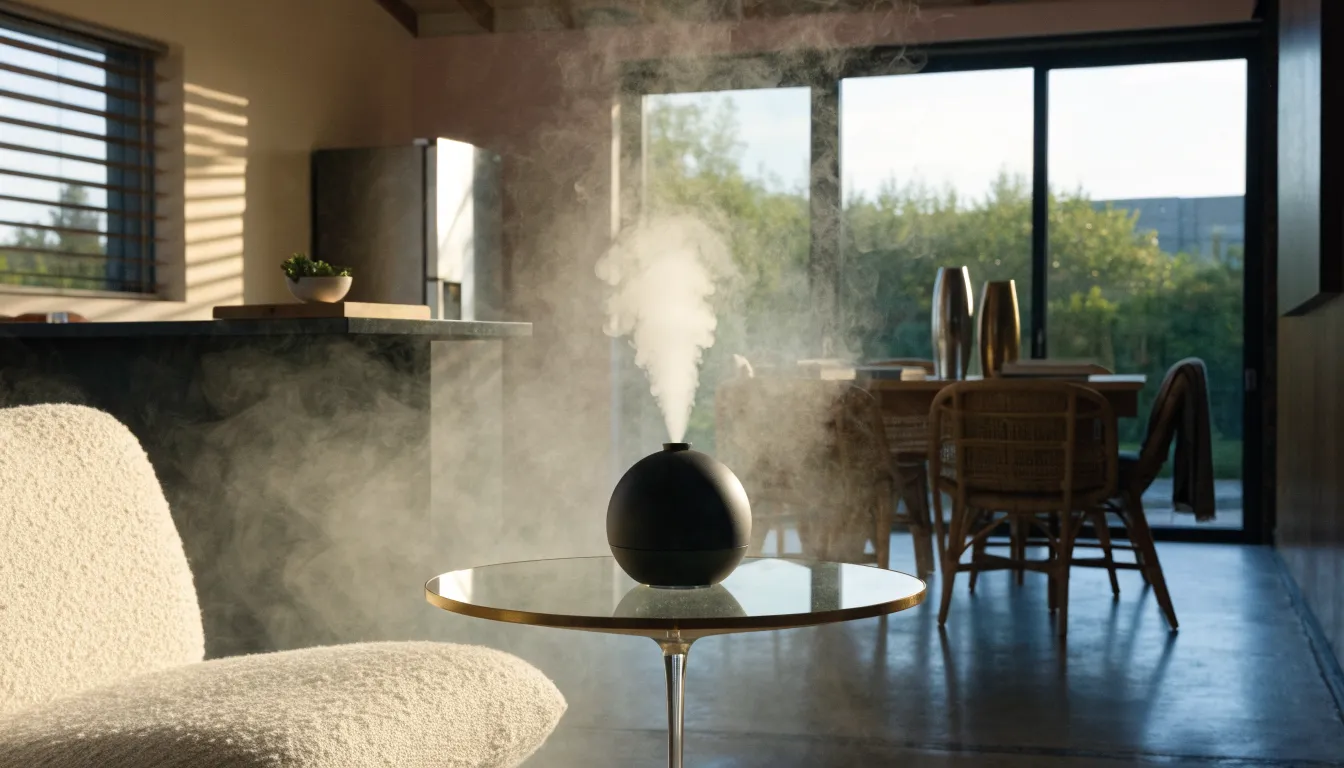
Avoid corners or spots behind big furniture, which block airflow and limit the scent’s reach. By watching how air moves in your home and placing the diffuser where it can catch gentle drafts, you’ll get an even, pleasant aroma throughout the entire interconnected area. This turns the whole space into a consistently fragrant environment.
Built In Timers and Controls
Built-in timers and controls make a nebulizing diffuser much more customizable for aromatherapy. With adjustable duty cycles, you can set it to run for short bursts, like five minutes on and ten minutes off. This keeps a steady, pleasant scent in the room without overwhelming it, and it helps your essential oils last longer since the diffuser isn’t running constantly.
Auto-shutoff features add convenience and prevent waste. The diffuser can turn itself off after a set time, like one or two hours, or when the oil runs out. This means you don’t have to keep checking on it, and you avoid over-diffusing or using up oils unnecessarily. You can simply set it and leave it, knowing it will stop at the right time.
Mist intensity controls let you adjust how strong the aroma is, from a light background scent to a stronger burst. So, you can have a subtle lavender feel in a bedroom or a more energizing peppermint in a living room. Together, timed diffusion, auto-shutoff, and mist control make it easy to use essential oils effectively while getting the most out of every drop.
Longevity and Build Quality
A nebulizing diffuser is an investment meant to last, so build quality matters. A solid real wood base adds stability and durability, helping the device stay put and resist everyday wear, so it keeps working reliably for years.
Inside, a durable pump is the key to good performance. It keeps the mist fine and consistent, running quietly and efficiently over many hours, so your essential oils are diffused evenly without losing power or breaking down.
Hand-blown glass reservoirs are another important feature. Glass won’t react with concentrated essential oils, which protects the aroma and keeps the material from degrading. It’s also easy to clean and resists scratches and stains, so the diffuser continues to deliver pure, effective aromatherapy session after session.
Frequently Asked Questions
How do nebulizing diffusers work?
Nebulizing diffusers use an internal air pump that compresses air and pushes it through a narrow jet, creating a low-pressure zone that pulls pure essential oil upward. This rushing air then breaks the oil into extremely tiny particles, forming a fine, dry mist without the use of heat or water. This process ensures the oil’s natural therapeutic properties remain fully intact and undiluted.
What is the main difference between nebulizing and ultrasonic diffusers?
Nebulizing diffusers atomize pure essential oil directly into the air, creating an exceptionally strong, undiluted scent. In contrast, ultrasonic models mix essential oils with water and use vibrations to disperse a fine mist, producing a softer fragrance and adding moisture to the room.
Do nebulizing diffusers add moisture to the air?
No, nebulizing diffusers work without any water, so they never add extra moisture to your home. This waterless design makes them a smart choice for humid conditions or for anyone who does not want to change their indoor humidity levels.
What types of essential oils should I avoid using in a nebulizing diffuser?
You should avoid thick, resinous oils like vetiver, patchouli, sandalwood, myrrh, frankincense, and benzoin. These oils are too dense and sticky, and they can leave gummy residue inside the tiny glass nozzle, causing clogs and eventually making the diffuser stop working.
How long does essential oil typically last in a nebulizing diffuser?
On a medium setting, a 10ml bottle can last 5-10 days, while a 15ml bottle might last roughly seven to fifteen days. Actual use depends on the oil’s thickness, the diffuser model, and the specific settings used.
How do I clean a nebulizing diffuser?
To clean, unplug the diffuser and pour out any leftover oil, then add about 5–10 milliliters of 90% or higher isopropyl alcohol to the glass reservoir. Let it sit for a few minutes, swirl gently, then run the diffuser on its lowest setting for one to two minutes to flush the tubes. Afterwards, disconnect the glassware, discard the used alcohol, rinse thoroughly with warm water, and let it dry completely.