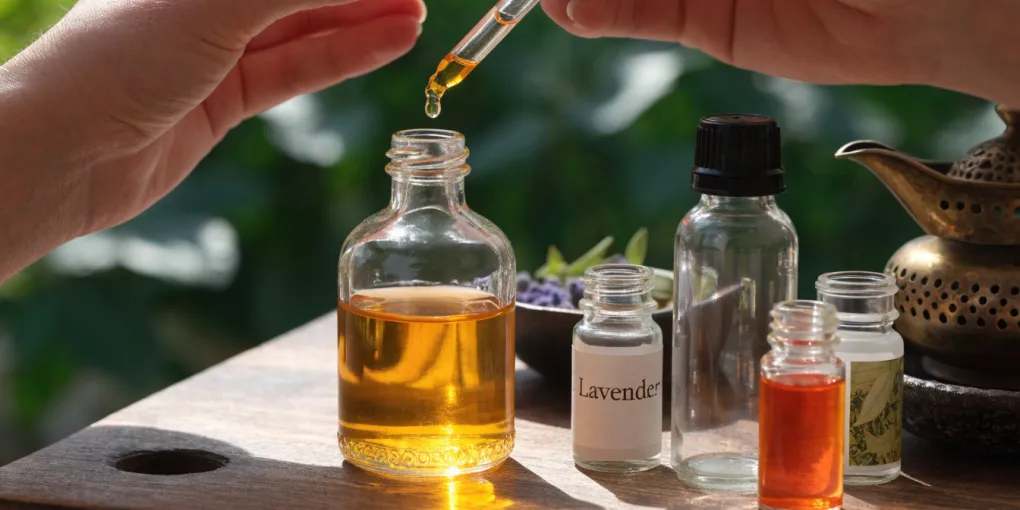
Perfume oils are natural, plant-based fragrances crafted from essential oils, offering a holistic alternative to synthetic perfumes. Blending involves three layers—top, middle, and base notes—that unfold over time, creating a dynamic scent profile. Carrier oils dilute and anchor the fragrance, while precise ratios ensure a balanced aroma that deepens during a two-to-four-week curing process.
Table of Contents
- The Magic of Natural Scents
- Understanding Fragrance Notes
- Essential Oils Versus Synthetic Perfumes
- Gathering Your Supplies
- Choosing the Right Carrier Oil
- Decoding Fragrance Families
- The Science of Scent Ratios
- The Fresh Citrus Sunrise Recipe
- The Golden Floral Bloom Recipe
- The Earthy Woodland Drift Recipe
- The Warm Vanilla Spice Recipe
- The Serene Lavender Dreams Recipe
- How to Fix Off Scents
- The Curing Process
- Building Your Scent Library
The Magic of Natural Scents
Embracing plant-based scents is a big shift from regular perfumes. Traditional fragrances often use synthetic chemicals from petroleum, like phthalates, parabens, and synthetic musks. These can cause skin sensitivity and worries about long-term effects. Homemade essential oil perfumes offer a pure, natural choice, made only from plant essences—flowers, leaves, barks, resins—so what touches your skin comes straight from nature’s chemistry, in harmony with your body.
The benefits go beyond avoiding bad ingredients. Natural essential oils have unique chemical profiles that work with your sense of smell, directly affecting emotional and thinking centers in the brain. For example, lavender helps you relax and sleep better. Citrus oils like bergamot or sweet orange lift your mood and reduce stress. Peppermint brings mental clarity, boosts focus, and relieves tension headaches.
Using these natural scents in daily self-care turns wearing perfume into a healing experience. Breathing in these aromas stimulates the limbic system—the brain area that controls emotions, memory, and motivation. This direct pathway lets essential oils gently but powerfully shift how you feel: bringing calm, energy, or peace. Choosing homemade essential oil perfume means consciously caring for both body and mind with nature’s real power, creating balance and boosting well-being through a truly holistic sensory experience.
Understanding Fragrance Notes
A perfume oil’s character comes from three distinct layers of notes—top, middle, and base—which evaporate at different speeds. This structure gives the scent its evolving personality and determines how long it lasts on the skin.
Top notes hit first: they are light, extremely volatile, and fade within minutes (think citrus, crisp herbs, or light fruits), providing a quick, attention-grabbing burst. As they vanish, middle notes emerge—softer and rounder, lasting several hours. These heart notes carry the main theme of the fragrance, such as rich florals or warm spices, and define the oil’s true body.
Base notes are the heaviest and slowest to evaporate, often lingering for a full day. Ingredients like deep woods, musks, resins, or vanilla anchor the blend, adding depth and leaving a long-lasting impression. Because these note layers unfold step by step, a perfume oil is never a static scent but a continuous journey that reveals new aspects throughout the day.
Essential Oils Versus Synthetic Perfumes
Essential oils are pure plant extracts made up of hundreds of natural chemical compounds. Because of this complex makeup, they can interact strongly with the skin. Many are gentle, but some people may be sensitive to certain active ingredients, so these oils should be used carefully and with attention to their potency.
Natural perfume oils also behave differently in terms of scent. Since the plant compounds evaporate at different rates, the fragrance changes and develops over time, with different notes appearing and fading. This makes the scent experience more layered and dynamic compared to synthetic perfumes, which are designed to stay consistent and last longer.
In addition to smell, essential oils may affect the body in other ways. Their chemical makeup can influence mood or create a sense of well-being, which is why they are often used in aromatherapy. Synthetic perfumes, by contrast, are mainly made to provide a specific aroma and are less likely to produce these broader physical effects.
Gathering Your Supplies
Dark glass roller bottles are essential for storing your perfume oil blends. Their dark color blocks light, which can break down delicate aromatic compounds over time, and the glass itself is inert, so it won’t react with your oils. The rollerball applicator makes it easy to apply your blend a little at a time, whether for personal use or as a gift.
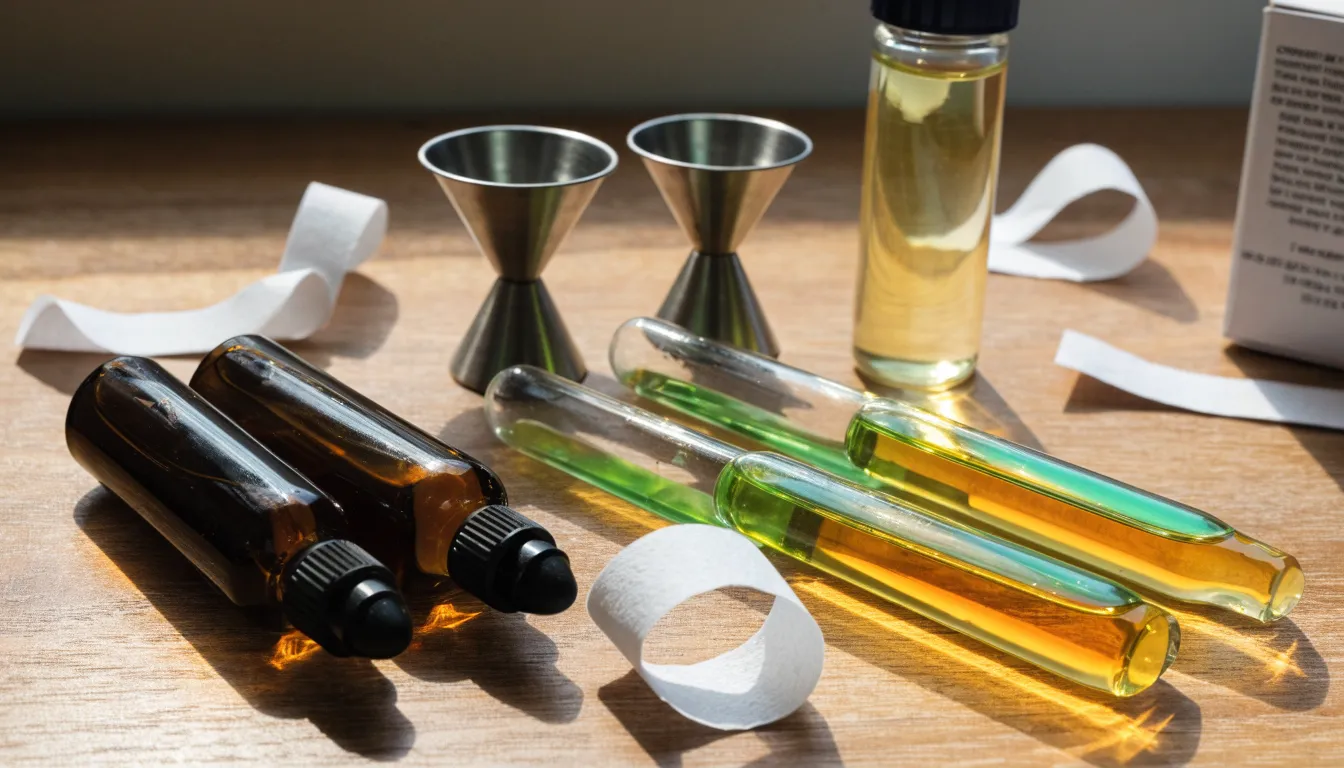
Glass pipettes give you precision when working with essential oils. They let you measure and transfer very small, exact amounts of each fragrance component, so your formulas stay consistent and reproducible. They are reusable and easy to clean, which reduces waste and makes them a practical, eco-friendly choice for accurate blending. Small funnels also help by guiding your oil mixture from larger containers into roller bottles or vials without spills, keeping your work area clean and saving every last drop.
Test strips are your go-to tool for evaluating blends as you work. By dipping a strip into a single oil or an evolving mixture, you can smell the scent on a clean surface without putting oils on your skin. This helps you track how the aroma develops over time, identify top, middle, and base notes, and decide what to add next. With these supplies, making perfume oils becomes a smooth and satisfying process.
Choosing the Right Carrier Oil
Choosing the right carrier oil is essential for making perfume oils that smell great and last. Carrier oils do two main jobs: they dilute strong fragrance compounds to safe levels for skin, and they anchor the more delicate aromatic molecules. A good carrier oil helps the scent unfold slowly and steadily throughout the day.
Jojoba oil is a top choice because it closely resembles the skin’s natural oils. It absorbs easily, hydrates deeply, and leaves no greasy residue. It also resists oxidation, which helps preserve fragile scent notes, while its smooth, emollient texture lets fragrance molecules cling to the skin and release gradually.
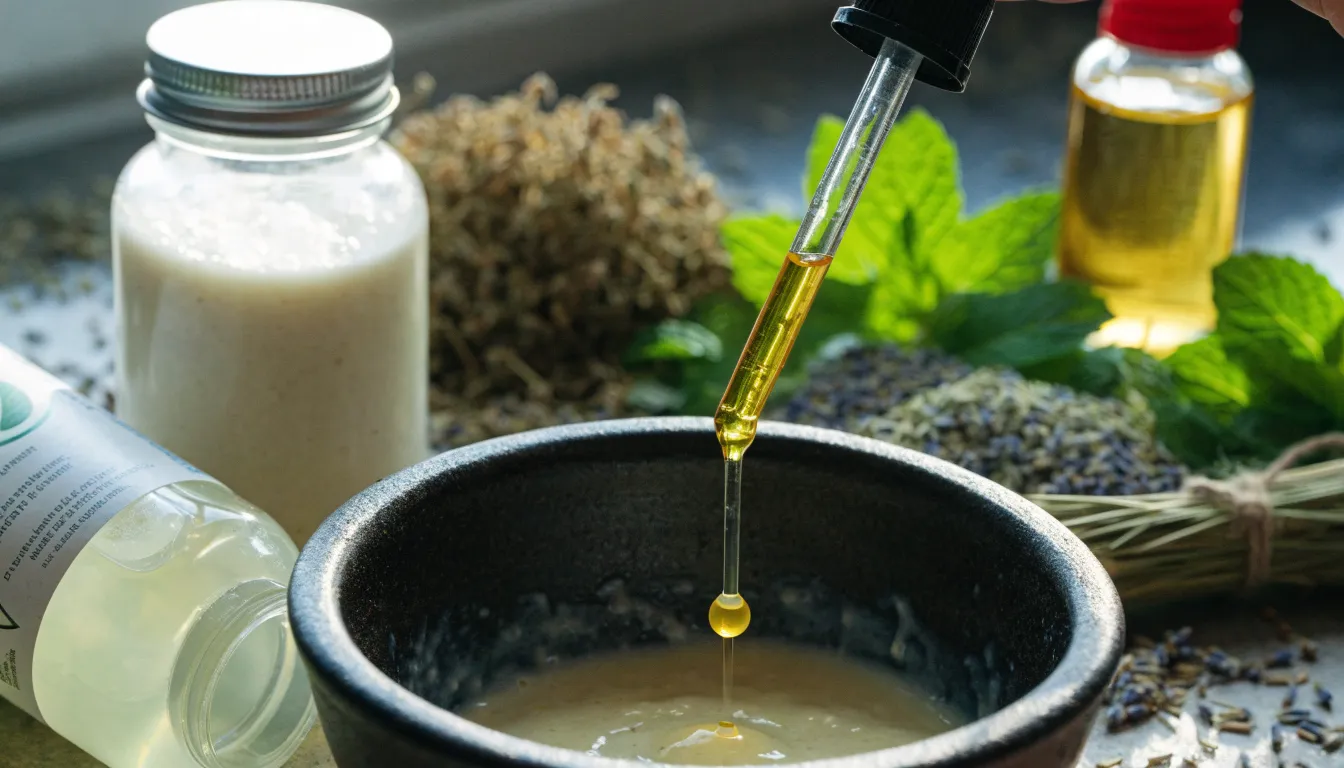
Fractionated coconut oil is another favorite, valued for its light, non-greasy feel and lack of scent, so it won’t change the perfume’s aroma. It moisturizes well and absorbs quickly, yet it is stable enough to hold fragrance compounds and extend their life. Meadowfoam seed oil is especially stable and antioxidant-rich, forming a protective barrier that locks in moisture and prevents fragrance breakdown. Together, these carrier oils nourish the skin while keeping scents vibrant and long-lasting.
Decoding Fragrance Families
Knowing how fragrance families work together is key to making good perfume oil blends. Floral oils give a blend a romantic, rich heart. Adding woody oils like sandalwood or cedar gives those flowers more depth and makes the scent feel grounded and longer-lasting. Citrus oils, such as bergamot or lemon, bring a bright, fresh sparkle that lifts the whole blend and makes it feel more alive.
Other oil families also have clear roles. Herbaceous oils like lavender and rosemary add a clean, green, calming note that helps connect bright citrus with deeper woods. Spicy oils like cardamom or cinnamon bring warmth and a touch of the unexpected. A little spice can make a woody blend richer or give a floral mix a bold, inviting twist.
The main idea is to choose oils that support each other instead of competing. Each one should add something good to the overall scent. This way, you can create personal perfume oil blends that feel balanced, unique, and fit your own style.
The Science of Scent Ratios
Crafting a great perfume oil means balancing scents carefully, not just mixing things that smell nice. The classic 30-50-20 rule helps with this: use about 30% top notes, 50% heart notes, and 20% base notes. This keeps the fragrance balanced so no single oil takes over.
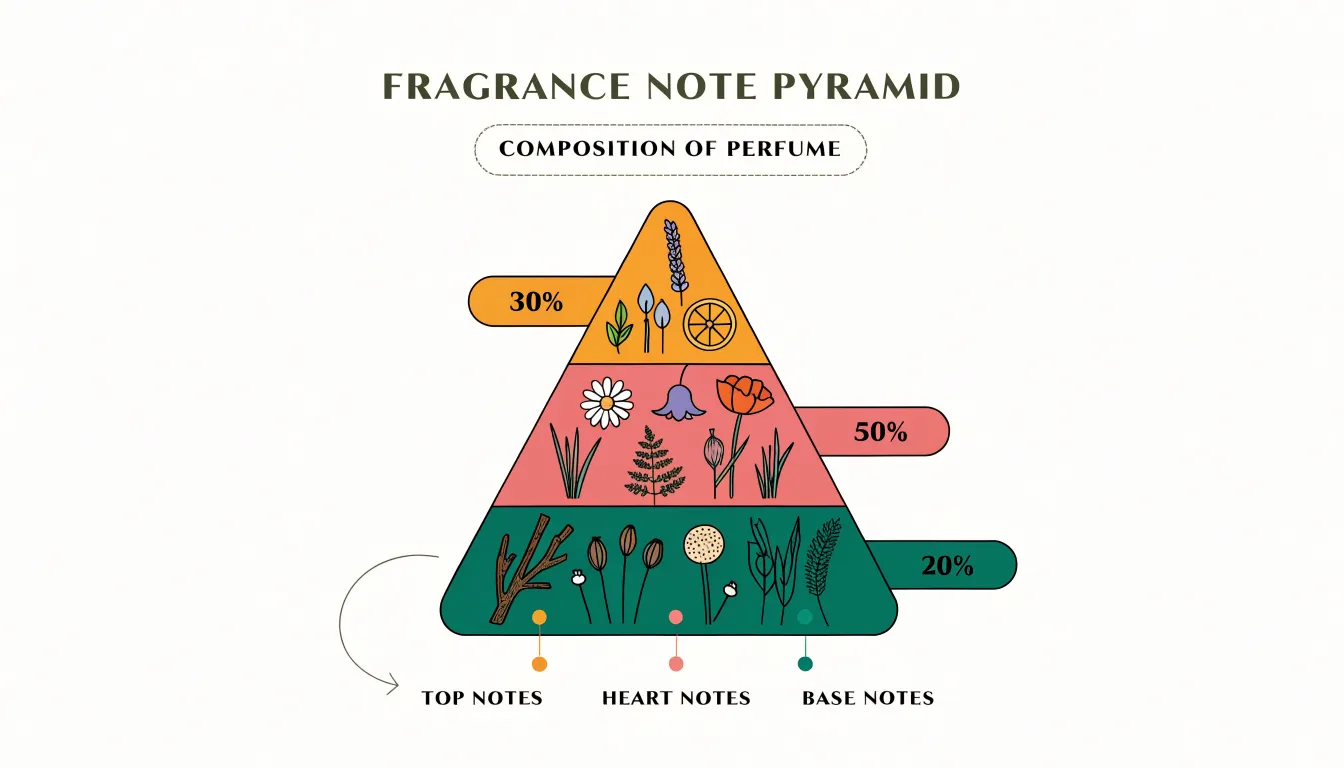
Top notes are the first smell you notice—light, fresh, and quick to fade. Keeping them at 30% creates a bright opening that doesn’t linger too long. Heart notes are the main body of the scent, appearing as the top notes disappear. They give the perfume its personality, so their 50% share is essential. Base notes are the deep, lasting foundation that anchors everything; their 20% amount leaves a lasting impression without smothering the other layers.
Using these ratios prevents strong oils, like patchouli, from covering up delicate ones, like bergamot. Each note gets its moment to shine, and the perfume unfolds smoothly from first spray to final dry-down.
The Fresh Citrus Sunrise Recipe
The Fresh Citrus Sunrise Recipe uses bright citrus oils to awaken your senses and give you an energizing morning boost. This lively, uplifting blend helps you start the day with a clean, fresh scent that feels both stimulating and balanced.
Cedarwood plays a key supporting role by adding a subtle woody depth. It grounds the lighter citrus notes and helps the fragrance last longer on your skin, so the aroma stays with you through the morning.
Making this perfume oil at home is simple and requires only a few ingredients. It lets you know exactly what touches your skin, while giving you the freedom to customize your daily scent for a natural, personalized pick-me-up.
The Golden Floral Bloom Recipe
The Golden Floral Bloom Recipe is built on sandalwood essential oil, which acts as the base. It gives a smooth, creamy, and woody foundation that anchors the lighter floral notes. Sandalwood also works as a fixative, helping the whole perfume last longer on the skin while adding quiet elegance and depth.
The heart of the blend combines jasmine, rose, and ylang-ylang. Jasmine brings an intensely sweet, rich, and sensual floral note that feels romantic and warm. Rose adds a soft, sweet, slightly spicy classic floral character, giving the perfume a luxurious and universally loved quality.
Ylang-ylang rounds out the blend with its sweet, creamy, slightly fruity scent. It helps connect the jasmine and rose smoothly, making the overall aroma richer and more balanced. When making the perfume, start with the sandalwood base, then add the other oils little by little until you get the right mix of sweet floral brightness and romantic warmth.
The Earthy Woodland Drift Recipe
Vetiver oil forms the earthy base of this blend. Its rich, smoky, and slightly sweet root scent brings to mind damp soil and a forest floor. Known for its calming and stabilizing qualities, it helps the wearer feel grounded, centered, and secure.
Frankincense adds a warm, balsamic, and lightly peppery note. This ancient resin brings a quiet, sacred depth to the scent, like the stillness of an old woodland. It lifts the heavier earthy tones and creates a sense of spiritual peace and sanctuary.
Black spruce contributes the fresh, crisp character of the forest canopy. Its green, pine-like, and slightly camphorous aroma mimics clean air and spruce needles. This oil adds an uplifting energy that balances the deeper notes, completing the feeling of breathing in fresh woodland air. Together, the three oils create a harmonious, immersive scent that invites a calm escape into nature.
The Warm Vanilla Spice Recipe
The Warm Vanilla Spice Recipe is a cozy blend for cooler days, built around three essential oils: vanilla absolute, cinnamon leaf, and cardamom. Vanilla absolute acts as the base and heart of the blend, providing a rich, creamy, sweet aroma that anchors the fragrance. Its deep, lingering warmth creates a sense of comfort and security, while also serving as a smooth canvas that lets the other spices unfold gently.
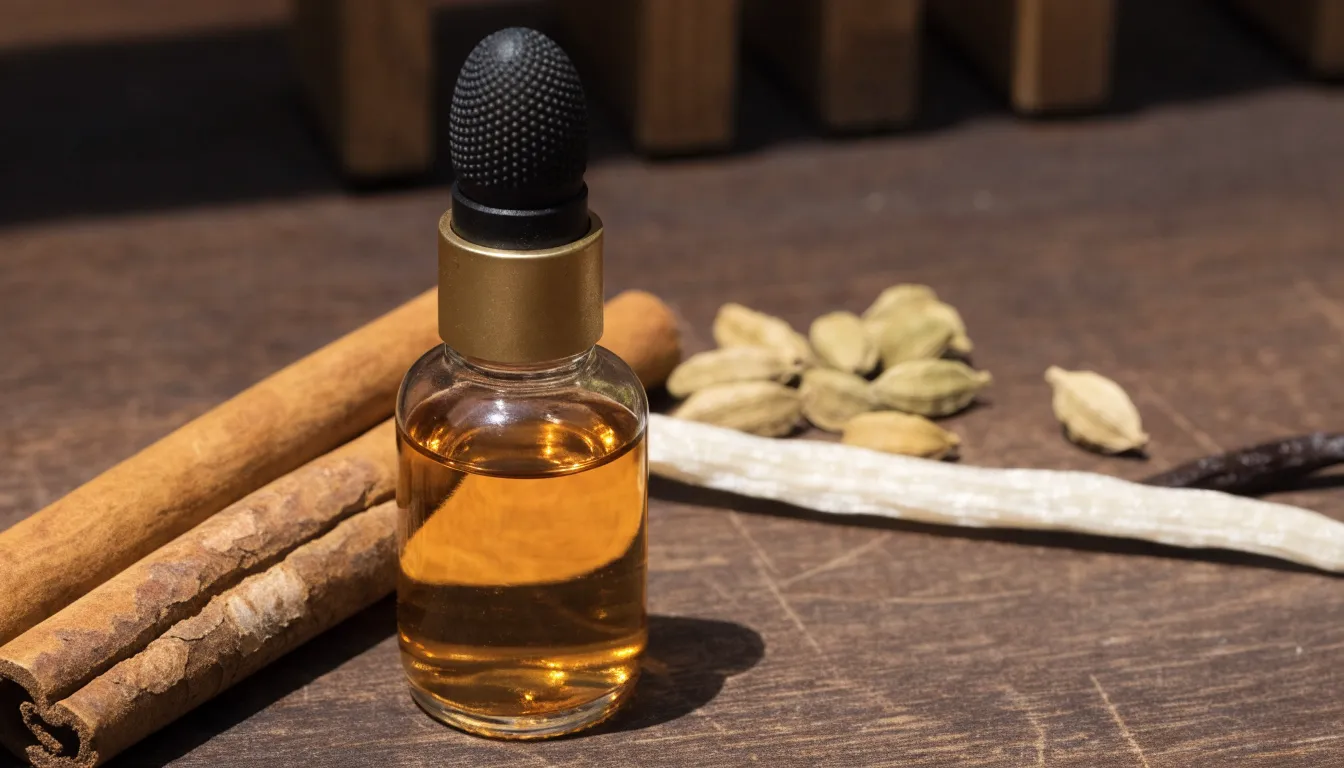
Cinnamon leaf oil adds a vibrant, invigorating spice. It brings a sharper, slightly peppery, and herbaceous warmth that lifts the vanilla without overpowering it. This spicy note adds energy and brightness to the blend, preventing it from becoming too heavy or sweet—like a sprinkle of spice on a warm dessert.
Cardamom oil weaves in an exotic, subtle complexity. Its sweet-and-spicy scent has soft balsamic undertones and a hint of green freshness, adding depth and sophistication. To balance the blend, use a larger amount of vanilla absolute as the base, a moderate amount of cinnamon leaf for warmth, and only a small touch of cardamom. The result is a warm, inviting fragrance perfect for wrapping yourself in coziness during the colder months.
The Serene Lavender Dreams Recipe
The Serene Lavender Dreams Recipe is a bedtime blend that helps you unwind and prepare for sleep. It uses French lavender, which is known for its calming effects. Its floral scent soothes the nervous system and helps reduce stress, making it easier to relax after a long day.
Roman chamomile adds a sweet, apple-like scent and works as a gentle sedative. It helps quiet an overactive mind and releases tension, supporting a deeper sense of peace so you can drift off more easily.
Clary sage brings earthy, herbal notes and helps balance emotions while promoting a feeling of calm and well-being. Together, French lavender, Roman chamomile, and clary sage work as a team, creating a soothing blend that encourages restful, deep sleep.
How to Fix Off Scents
Even well-made perfume oil blends can go wrong, but most problems have simple fixes. If a scent is too strong or sharp, start by adding more carrier oil. This dilutes the mixture and softens the overpowering note, letting gentler aromas show through. You can also add a soft base note like creamy sandalwood or musk to smooth rough edges, or a light citrus top note to make a heavy blend feel fresher and less intense.
When a blend feels flat or one-note, the key is to build more depth. Add grounding base notes like cedarwood, patchouli, amber, or frankincense to give the fragrance staying power. Then, bring in richer heart notes such as ylang-ylang, jasmine, or rose to add warmth and body. Mixing contrasting textures—like an earthy note in a light floral blend—can also create surprising complexity.
If you accidentally pour too much of one oil, fix it by diluting the whole blend with carrier oil. Then, rebalance based on what was overused. If a bright top note is too strong, add more middle and base notes. If a heavy base note is dominating, add lighter top notes and prominent heart notes. The goal is to work with the over-poured scent, using complementary oils to blend it in rather than trying to hide it.
The Curing Process
After you blend perfume oils, the mixture needs time to reach its full potential. Just like food needs time for flavors to combine, perfume notes must rest and mature. This curing stage allows the individual oils to blend into a more balanced, complex fragrance.
Store your fresh blend in a dark place for two to four weeks. Darkness is important because light can damage the delicate aromatic molecules and change the scent. In a cool, dark environment, the oils stay stable and slowly begin to interact. Subtle chemical reactions happen, allowing the compounds to bond and merge.
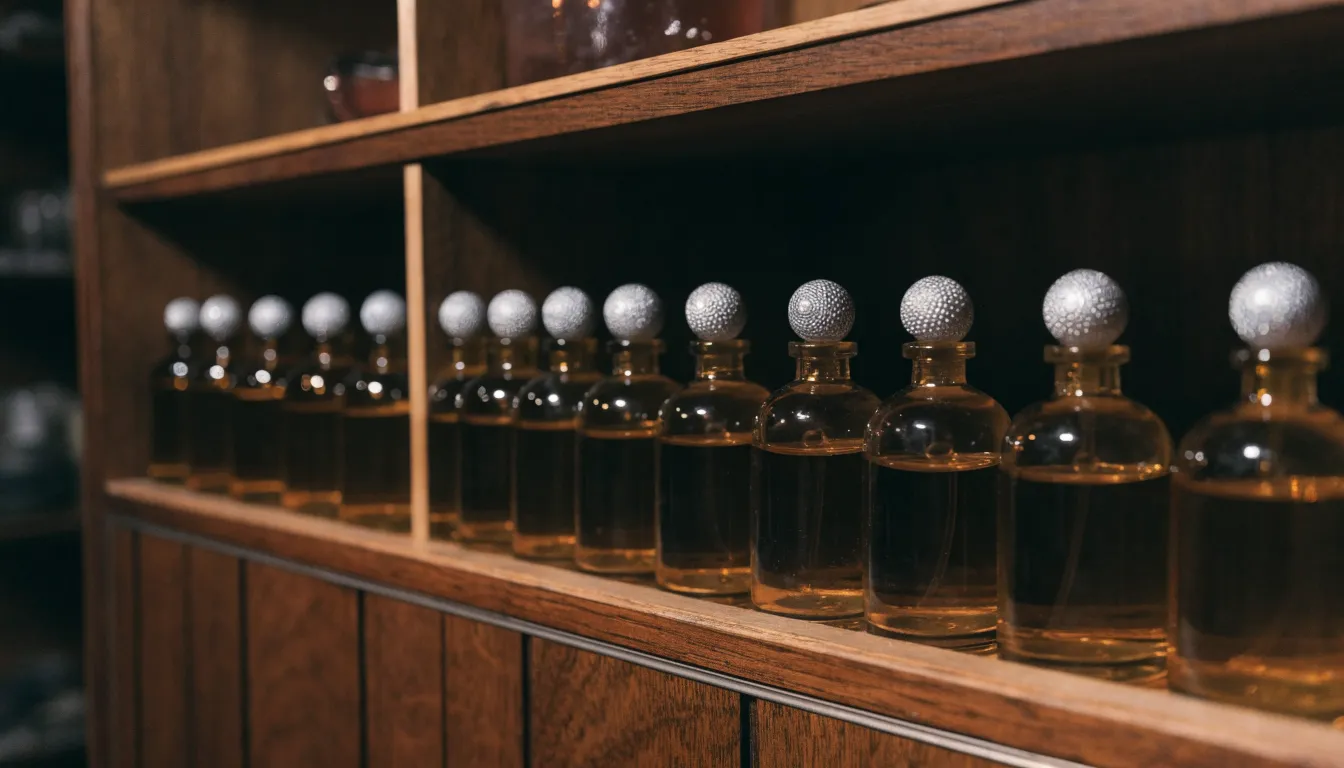
This merging softens the sharp edges of each note, creating one unified scent. Top, middle, and base notes stop feeling separate and become a single experience. Some oils mellow, others become stronger, and the fragrance gains depth, smoothness, and lasting power. Waiting those few weeks unlocks the full richness and true character of your perfume oil.
Building Your Scent Library
Building a good scent library means moving from random buys to a thoughtful plan. Bright citrus oils like bergamot and sweet orange lift any mix, while woody oils like cedarwood and sandalwood add warmth and a solid base. Herbaceous oils such as lavender and rosemary help connect different scent families without taking over. Together, these foundational oils allow countless combinations, from light and airy to deep and grounded.
Once your core collection is strong, you can add rare absolutes. These concentrated extracts—like jasmine, rose, or osmanthus—bring rich, complex aromas that make blends deeper, more luxurious, and longer lasting. Even a small amount works powerfully, so the higher cost can be worth it. Choose absolutes that fill a gap in your collection or open new creative directions. For example, a floral absolute helps create opulent bouquets, while an earthy one can boost chypre or oriental blends.
Every addition should have a purpose. By choosing oils that expand your blending options, you ensure each new bottle adds something meaningful. This approach helps you craft more unique, memorable perfumes as your fragrance world grows.
Frequently Asked Questions
What are perfume oils and how are they different from regular perfumes?
Perfume oils are made from pure plant essences like flowers, leaves, barks, and resins. Unlike traditional fragrances that often use synthetic chemicals such as phthalates and parabens, natural perfume oils offer a pure, plant-based choice, avoiding ingredients that can cause skin sensitivity. Natural perfume oils also develop and change their scent over time, whereas synthetic perfumes are designed to stay consistent.
What are the benefits of using natural essential oil perfumes?
Natural essential oils have unique chemical profiles that can interact with your sense of smell, directly affecting emotional and thinking centers in the brain. They can help with relaxation, mood lifting, stress reduction, and mental clarity, turning wearing perfume into a healing experience that promotes well-being.
How are perfume oil scents structured?
A perfume oil’s character comes from three distinct layers of notes—top, middle (heart), and base—which evaporate at different speeds. Top notes provide an initial burst and fade within minutes, middle notes emerge next carrying the main theme, and base notes are the heaviest, lingering for a full day to anchor the blend. This structure gives the scent an evolving personality and lasting power.
What supplies are recommended for making perfume oils at home?
Essential supplies for making perfume oils include dark glass roller bottles for storage and application, glass pipettes for precise measurement, and small funnels to prevent spills. Test strips are also crucial for evaluating blends, allowing you to track how the aroma develops on a clean surface.
What is a carrier oil and which ones are best for perfume oils?
Carrier oils dilute strong fragrance compounds to safe levels for skin and anchor delicate aromatic molecules, helping the scent unfold slowly throughout the day. Jojoba oil is a top choice due to its resemblance to skin’s natural oils and resistance to oxidation, while fractionated coconut oil is valued for its light, non-greasy feel. Meadowfoam seed oil is also highly stable and antioxidant-rich, helping to preserve fragrance notes.
Why do perfume oil blends need time to cure?
After blending, perfume oils need to cure to reach their full potential, allowing individual oils to blend into a more balanced, complex fragrance. Storing the blend in a cool, dark place for two to four weeks enables subtle chemical reactions to occur, softening sharp edges, unifying the scent, and enhancing its depth and lasting power.