
Cinnamon essential oil, derived from bark or leaves, offers a warm, comforting aroma and diverse benefits. It supports mood and mental clarity, while also aiding digestion, soothing muscles, and promoting healthy skin. Its antimicrobial properties make it useful for natural cleaning and pest control. Always dilute cinnamon oil with a carrier oil before topical application.
Table of Contents
- Cinnamon Essential Oil
- Bark Versus Leaf
- Sweet Spiced Aroma
- Can Cinnamon Oil Support Your Immune System?
- Natural Pain Relief
- Healthy Skin Glow
- Digestive System Comfort
- Household Cleaning Power
- Natural Pest Repellent
- Warm Diffuser Blends
- Safe Dilution Guide
- Topical Application Steps
- Oral Care Booster
- Stress Relief Rituals
- Essential Oil Pairings
Cinnamon Essential Oil
Cinnamon essential oil has become a popular part of natural wellness, valued for its warm, comforting scent and useful properties. It has moved from an ancient spice to a modern health staple, with a long history in cultures like ancient Egypt, traditional Chinese medicine, and Ayurveda. These traditions used it for its warming qualities and to support overall vitality and balance.
Modern research is now backing up some of that traditional knowledge. Scientists have identified key compounds in cinnamon oil that help explain its health-supporting effects. This helps connect old practices with modern, evidence-based wellness, giving cinnamon oil a fresh level of credibility and trust.
Today, cinnamon essential oil is used mainly to promote a sense of warmth, energy, and balance. It is commonly used in aromatherapy and topical applications, where it supports overall well-being and a feeling of harmony. These everyday uses highlight its role as a simple but powerful addition to natural health routines.
Bark Versus Leaf
Cinnamon essential oil comes in two types, depending on which part of the tree it’s distilled from. Understanding the difference is important because their chemical makeup, scent, safety, and best uses are not the same.
Bark oil comes from the inner bark and is very high in cinnamaldehyde, usually 60–75%. This gives it a strong, sweet, spicy aroma similar to culinary cinnamon. Because it is so potent, it can easily irritate the skin, so it must be heavily diluted and is Because it is so potent, it can easily irritate the skin, so it must be heavily diluted and is not recommended for direct skin contact or internal use. It works best in small amounts in diffusers for a comforting atmosphere, or as a warming note in perfume.
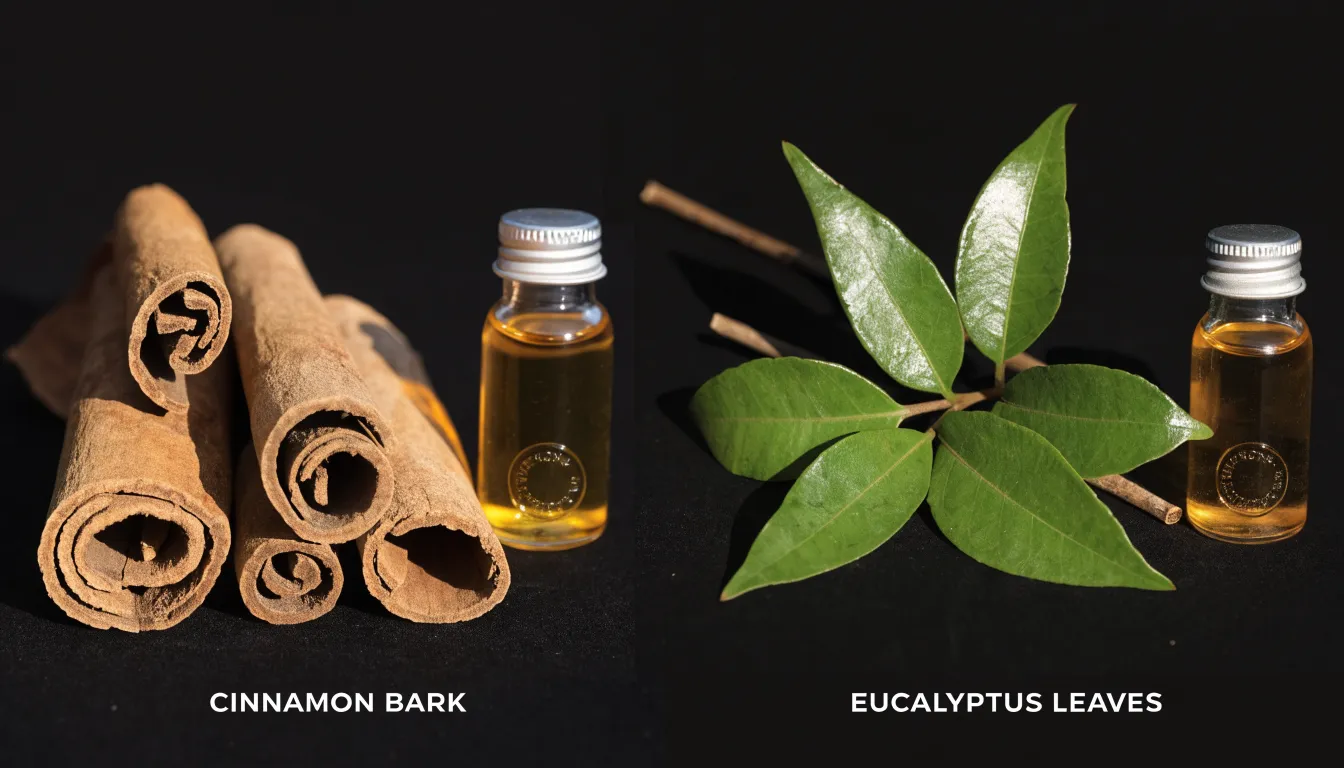
Leaf oil comes from the leaves and is much lower in cinnamaldehyde, usually just 1–5%. Instead, it is rich in eugenol, often 70–85%, which gives it a warm, peppery, clove-like scent. It is gentler for topical use, though dilution is still needed. Leaf oil is commonly used in aromatherapy, diluted massage blends for muscle comfort, and fresh, spicy home blends.
Sweet Spiced Aroma
Cinnamon essential oil’s sweet, spicy scent is more than just pleasant—it supports mental well-being. When inhaled, its warm aroma travels through the olfactory system to the brain’s limbic system, which controls emotions and memory. This can quickly lift your mood and create feelings of warmth and security, making difficult tasks feel less overwhelming.
It also helps boost mental performance. During long work or study sessions, focus often drops and mental fatigue sets in. The oil’s stimulating scent sharpens alertness and concentration, helping you stay on task and think more clearly when handling complex information or creative work.
Using cinnamon essential oil during stressful tasks adds valuable support to your environment. It combines an elevated mood with improved mental clarity, helping you stay positive, avoid feeling overloaded, and work more effectively when you need to put in real intellectual effort.
Can Cinnamon Oil Support Your Immune System?
Cinnamon oil shows antimicrobial activity in lab studies, which is where the “immune support” idea comes from. There’s no human evidence that diffusing or applying cinnamon essential oil strengthens your immune system or helps you avoid colds and flu.
If you enjoy its warm scent in colder months, a drop of cinnamon leaf oil in a diffuser blend is fine. Cinnamon bark oil is one of the strongest skin sensitizers, so don’t use it on skin, and keep both kinds away from cats. For staying well, the basics with real evidence behind them are vaccination, handwashing, sleep, and staying home when you’re sick. If you’re ill and not improving, see a doctor.
Natural Pain Relief
Cinnamon essential oil can naturally ease sore muscles and stiff joints. Used in topical blends, its warming effect creates gentle heat on the skin, which boosts local blood circulation. Better circulation brings more oxygen and nutrients to tense areas and helps flush out waste from overworked muscles, relaxing tight fibers and reducing knots.

The same warming, circulation-boosting action helps with joint discomfort and chronic stiffness. Improved blood flow nourishes tissues around joints, supports flexibility, and makes movement feel less restricted. For ongoing stiffness, regularly applying a diluted cinnamon oil blend can provide lasting comfort and easier movement.
This natural remedy offers comforting warmth that loosens and relaxes the body, making it a simple yet powerful option for managing everyday aches and supporting overall physical well-being.
Healthy Skin Glow
Achieving a healthy skin glow takes a well-rounded approach, and properly diluted cinnamon essential oil can help by cleansing blemishes and refreshing your complexion. One key benefit is its ability to fight acne-causing bacteria. These bacteria grow in pores and cause breakouts. When cinnamon oil is diluted with a carrier oil and applied to the skin, its natural compounds help stop bacteria from thriving, reducing current blemishes and preventing new ones.
Cinnamon oil also helps clear clogged pores. Pores get blocked by dead skin cells, excess oil, and dirt, leading to blackheads and uneven texture. The oil’s gentle action helps loosen and remove these impurities, leaving pores less congested. This allows skin to breathe more easily and look smoother, which supports a more even skin tone.
In addition, cinnamon oil helps bring back radiance to dull skin. Stress and surface buildup can make skin lose its glow. Used properly diluted in a skincare routine, cinnamon oil helps energize the skin’s appearance, leaving it looking refreshed. With clearer pores and fewer blemishes, your complexion can look healthier and truly glow with vitality.
Digestive System Comfort
Cinnamon essential oil is known for helping with digestive comfort. It can calm an upset stomach, reduce bloating, and support healthy digestion. Its natural properties help soothe the digestive tract and ease general stomach discomfort.
One easy way to use it is aromatically. Diffusing cinnamon oil into the air can help stimulate appetite and support the body’s natural digestive processes. Inhaling its warm, spicy scent may help the digestive system get ready to break down food, which can reduce that heavy feeling after a meal.
For more direct relief, topical use works well. Mix 1–2 drops of cinnamon oil with one teaspoon of carrier oil like jojoba or almond oil, then massage it onto the stomach. This can ease bloating, reduce gas, and relieve cramps. The oil’s warming effect helps relax stomach muscles and soothe spasms, supporting a more comfortable and balanced digestive system.
Household Cleaning Power
Cinnamon essential oil is a powerful, natural option for cleaning your home without harsh chemicals. Its antimicrobial properties make it great for making non-toxic surface sprays that fight household bacteria. Unlike many commercial cleaners with synthetic ingredients that can irritate skin and lungs or harm pets and kids, DIY cinnamon oil sprays offer a safe yet just as effective alternative for a Unlike many commercial cleaners with synthetic ingredients that can irritate skin and lungs or harm pets and kids, DIY cinnamon oil sprays offer a safe yet just as effective alternative for a healthier living space.
Making these natural sprays is easy. A simple recipe mixes purified water, a splash of white vinegar, and several drops of cinnamon essential oil in a reusable spray bottle. You can also add a little unscented castile soap or witch hazel to help blend the oil and boost cleaning power. Use the mixture on hard surfaces like countertops, bathroom fixtures, doorknobs, and even children’s toys to remove unseen germs.

Along with sanitizing, cinnamon oil leaves a warm, fresh scent that naturally refreshes any room. It replaces artificial fragrances that only mask odors with a clean, comforting aroma. Using these DIY cinnamon sprays regularly keeps surfaces disinfected and sparkling while improving indoor air quality, making your home safer and more pleasant for everyone.
Natural Pest Repellent
Cinnamon essential oil is a great natural option for keeping pests away without using harsh chemicals in your home. Its strong, spicy scent comes mainly from a compound called cinnamaldehyde. This smell is pleasant to many people, but it overwhelms insects and makes them want to avoid any area where the oil is present.
The oil works by confusing pests’ sensitive sense of smell. Ants, for example, rely on scent trails to find food and communicate. Cinnamon oil disrupts those trails, so ants get lost and stay out of your house. You can use a diluted solution around doorways or along ant paths. Mosquitoes also dislike the scent, so diffusing cinnamon oil or applying a properly diluted version to skin can help reduce bites. It even helps with dust mites in bedding, carpets, and furniture—adding a few drops to laundry or a fabric spray can make those areas less inviting to them.
The main benefit is that cinnamon oil is non-toxic when used correctly and diluted. This makes it a safer choice for homes with children and pets compared to conventional pest control products. It offers a simple, plant-based way to keep your living space pest-free and more comfortable, using nature’s own properties for peace of mind.
Warm Diffuser Blends
Cinnamon essential oil adds natural warmth and a cozy, inviting aroma to any room, making it a Cinnamon essential oil adds natural warmth and a cozy, inviting aroma to any room, making it a great base for diffuser blends. In a living room, mix two drops of cinnamon with three drops of sweet orange and one drop of clove for a rich, spiced citrus scent that feels both comforting and uplifting. In a bedroom, try one drop of cinnamon with two drops of cedarwood and three drops of lavender; the woodsy, floral blend helps promote relaxation and peaceful rest.

For a kitchen or dining area, combine two drops of cinnamon with three drops of lemon and one drop of ginger. This makes a bright, zesty aroma that reminds you of fresh baking, clears lingering cooking odors, and adds clean spicy energy to the space. In an entryway or hallway, use one drop of cinnamon with three drops of fir needle and two drops of wild orange for a crisp, outdoorsy welcome that brings to mind fresh forests and festive holiday cheer.
These simple pairings show how cinnamon oil works well with other oils: citrus adds brightness, woods add grounding, and florals soften the spice. Try these recipes and adjust them to discover your favorite warm, comforting scents for every part of your home.
Safe Dilution Guide
Safeguarding your skin when using warm essential oils like cinnamon requires careful dilution and proactive testing. Applying these potent oils directly can cause redness, burning, and even long-term sensitization. Because cinnamon is naturally warming, its undiluted strength can overwhelm the skin’s protective barrier. Mixing it with a carrier oil creates a gentle buffer, allowing you to enjoy its beneficial properties without irritation. This is a key part of responsible use, helping keep topical application both effective and safe.
For cinnamon essential oil, the recommended starting point is a very low dilution of 0.5% to 1%. This equals about 3 to 6 drops of cinnamon oil per ounce (30 ml) of carrier oil. Good carrier options include jojoba oil, which closely resembles the skin’s natural oils, soothing sweet almond oil, or lightweight fractionated coconut oil. These carriers are gentle and help spread the essential oil evenly, so always measure carefully to maintain a safe ratio and avoid over-concentration.
Before applying a diluted blend to a larger area, always perform a patch test. Apply a small amount to a discreet spot, such as the inner forearm or behind the ear, and leave it for 24 to 48 hours. Watch for any redness, itching, burning, swelling, rash, or hives. If none appear, the blend is likely safe for wider use. If irritation occurs, wash the area gently with mild soap and water, stop using the blend, and avoid further application.

Topical Application Steps
To use cinnamon essential oil on your skin safely, the most important step is to always dilute it with a carrier oil first. Because cinnamon oil is very potent, applying it directly can cause irritation or sensitivity. Good carrier oil choices include jojoba, sweet almond, fractionated coconut, or grapeseed oil. A safe starting ratio is one to two drops of cinnamon oil mixed into one teaspoon of carrier oil—and if you have sensitive skin or are covering a larger area, use an even lower concentration.
Before applying it more widely, do a patch test. Put a small amount of the diluted mixture on an area like your inner forearm and watch for redness, itching, or discomfort over 24 hours. If your skin stays calm, you can proceed. When applying, make sure your skin is clean and dry, then gently massage the oil into the target area using soft, circular motions. For a specific muscle area, focus the massage there without rubbing too hard, so the oil absorbs comfortably and provides its benefits without stressing the skin.
After applying, always wash your hands thoroughly to avoid accidentally getting the oil near sensitive areas like your eyes or other membranes. Throughout the process, pay attention to how your body responds—if any irritation develops, stop using it right away and gently cleanse the affected area.
Oral Care Booster
Cinnamon essential oil can boost daily oral care by helping with fresh breath and clean gums. Its natural antibacterial properties target odor-causing bacteria in the mouth, which often produce bad breath by breaking down food particles. Instead of just masking the smell, cinnamon oil works on the source, leaving the mouth feeling naturally fresh and clean.
The same antibacterial action also supports gum health. Gums can be affected by bacterial buildup, and cinnamon oil helps keep that in check. By using it in a homemade mouthwash, it supports a balanced oral microbiome, which is important for keeping gum tissue healthy and comfortable.
A simple rinse can be made by diluting a few drops of cinnamon essential oil in water. This offers an easy, natural way to enhance oral hygiene while taking advantage of the oil’s protective benefits.
Stress Relief Rituals
Cinnamon essential oil can help you shift from a busy day into a calm state. One simple way is to use it in aromatherapy: add a few drops to a diffuser, and the warm, comforting scent fills the room, helping your mind relax and easing nervous tension.
For quicker relief, inhale the oil directly by placing a drop on a cotton ball or tissue. You can also dilute it with a carrier oil, such as jojoba or almond, and apply it to your wrists or temples. This allows the gentle aroma to stay with you as you unwind.
You can also add cinnamon oil to a warm bath for deeper relaxation. Be sure to mix it with Epsom salts, milk, or a carrier oil first so it disperses safely and doesn’t irritate your skin. The warmth soothes tired muscles while the spicy fragrance calms your nervous system, helping you release the stress of the day and settle into a restful evening.
Essential Oil Pairings
Cinnamon essential oil is warm and sweet, making it a great base for aromatic blends. Paired with sweet orange, its spicy warmth is balanced by bright, uplifting citrus notes. This mix feels both comforting and energizing, promoting cheerfulness and making any space feel welcoming—ideal for diffusing during gatherings or to lift the mood.
Clove essential oil is a natural match for cinnamon. Both share a warm, spicy character, but clove is deeper and more intense, so it strengthens cinnamon’s spicy richness. Together, they create a classic, cozy scent linked to autumn and winter, bringing a sense of tradition and comfort to any blend. Frankincense also pairs well, adding resinous, earthy depth that grounds cinnamon’s warmth, resulting in a soothing, meditative aroma that encourages peace and reflection.
Other oils offer even more options. Ginger boosts the spiciness, cedarwood adds woody depth, and vanilla brings creamy sweetness. Exploring these combinations allows you to craft personalized aromatic experiences tailored to specific moods, with endless possibilities for unique and meaningful blends.
Frequently Asked Questions
What is the difference between cinnamon bark oil and leaf oil?
Cinnamon bark oil is very high in cinnamaldehyde (60–75%) with a strong, sweet, spicy aroma, and is extremely potent, making it highly irritating to the skin. Cinnamon leaf oil is rich in eugenol (70–85%) and much lower in cinnamaldehyde (1–5%), offering a warm, peppery, clove-like scent that is gentler for topical use, though still requires dilution.
Does cinnamon essential oil boost the immune system?
There’s no human evidence that cinnamon essential oil strengthens the immune system. It shows antimicrobial activity in lab studies, but that isn’t the same as protecting you from colds or flu. Use it for its warm scent, avoid cinnamon bark oil on skin, and keep it away from cats.
Is cinnamon essential oil safe to apply directly to the skin?
No, cinnamon essential oil should not be applied directly to the skin as its potent, warming nature can cause redness, burning, and irritation. It must always be heavily diluted with a carrier oil, such as jojoba or sweet almond oil, typically at a very low concentration of 0.5% to 1%.
How can inhaling cinnamon essential oil help with mental well-being and focus?
When inhaled, cinnamon essential oil’s warm aroma travels to the brain’s limbic system, which can quickly lift your mood and create feelings of warmth and security. Its stimulating scent also sharpens alertness and concentration, helping to boost mental performance and stay on task during long work or study sessions.
Can cinnamon essential oil help relieve sore muscles and stiff joints?
Yes, cinnamon essential oil can naturally ease sore muscles and stiff joints when used in diluted topical blends. Its warming effect boosts local blood circulation, bringing more oxygen and nutrients to tense areas and helping to flush out waste, which relaxes tight fibers and reduces discomfort.
What is a simple way to use cinnamon essential oil for digestive comfort?
For digestive comfort, you can diffuse cinnamon oil aromatically to stimulate appetite and support natural digestive processes. For more direct relief, mix 1–2 drops of cinnamon oil with one teaspoon of a carrier oil like jojoba or almond oil, then massage it onto the stomach to ease bloating, gas, and cramps.