Quick answer: for most adults, use 1% for the face (about 6 drops per ounce of carrier oil) and 2% for the body (about 12 drops per ounce). Children, older adults, and sensitive skin need less. Some oils need much less no matter who’s using them.
Download the free printable chart (PDF), or use the chart and calculator below.
Table of Contents
The Dilution Chart
Drops of essential oil to add to each amount of carrier oil. These numbers use the common estimate of about 20 drops per ml (600 drops per fluid ounce). Real drop size varies by oil and dropper, so treat them as close guides, not exact measurements.
| Carrier oil | 0.5% | 1% | 2% | 3% | 5% |
|---|---|---|---|---|---|
| 5 ml (1 tsp) | ½ drop* | 1 | 2 | 3 | 5 |
| 10 ml (2 tsp, roller bottle) | 1 | 2 | 4 | 6 | 10 |
| 15 ml (1 tbsp) | 1–2 | 3 | 6 | 9 | 15 |
| 30 ml (1 fl oz) | 3 | 6 | 12 | 18 | 30 |
| 60 ml (2 fl oz) | 6 | 12 | 24 | 36 | 60 |
| 120 ml (4 fl oz) | 12 | 24 | 48 | 72 | 120 |
*For very low dilutions in small amounts, make a larger batch (for example, 1 drop in 10 ml) and use what you need.
The math: drops = percentage × ml × 0.2. For example, 2% in 30 ml is 2 × 30 × 0.2 = 12 drops.
Download this chart as a printable PDF
Which Dilution to Use
| Dilution | Typical use |
|---|---|
| 0.25%–0.5% | Babies 3 to 24 months (see age chart); very sensitive or damaged skin |
| 1% | Face; daily-use products for sensitive skin; pregnancy (with your provider’s OK); older adults; children 2 to 6 |
| 2% | Most adult body oils, lotions, and massage blends for regular use |
| 3% | Short-term use on a small area, such as a sore muscle, for a week or two |
| 5% | Short-term spot use on a very small area by healthy adults only; avoid the face, broken skin, and sensitizing oils |
Higher isn’t better. Above about 3%, the main thing you gain is a higher risk of irritation and sensitization, an allergy that can build up over repeated use and last for life. Reserve 5% for specific, short-term needs, and never use it on children.
Dilution Calculator
Pick your bottle size and dilution to see how many drops to add.
Add about 4 drops of essential oil.
Based on about 20 drops per ml. Some oils need lower limits; check the table below the chart.
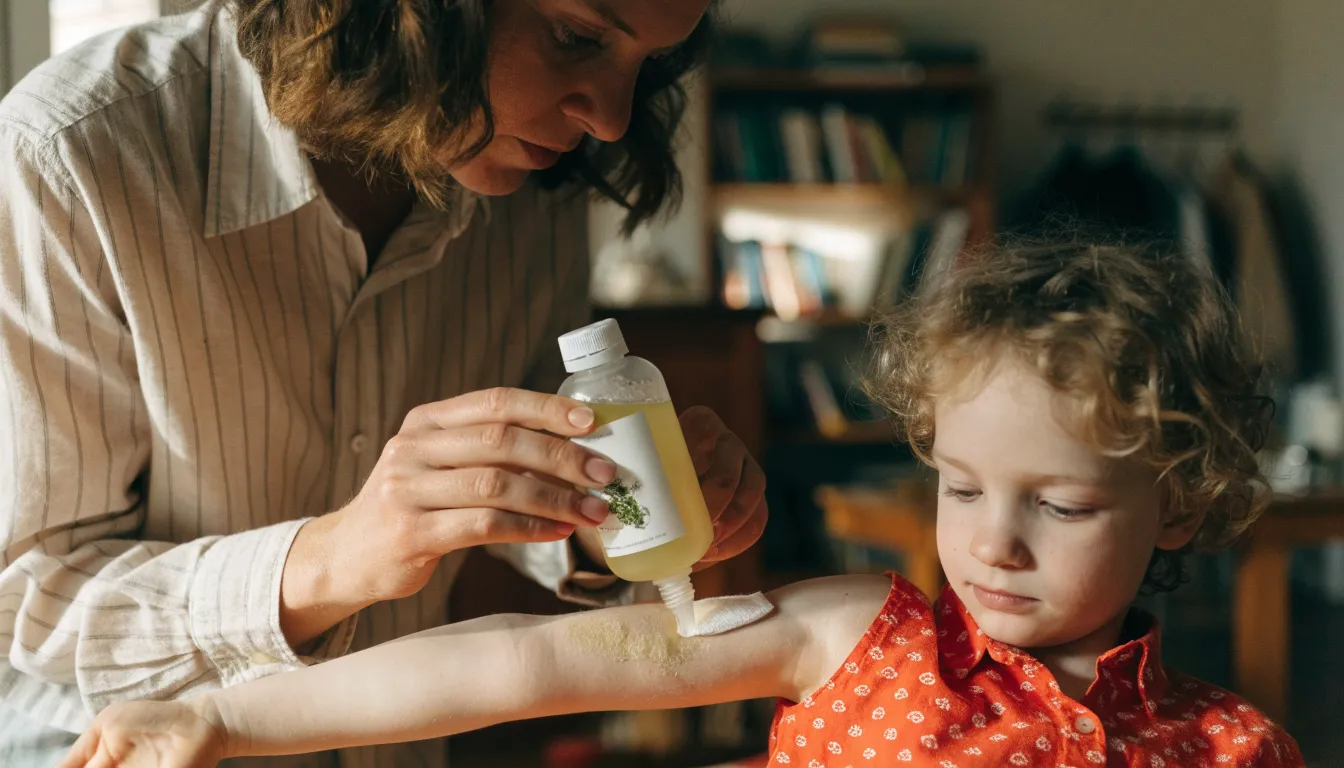
Dilution for Children by Age
Children’s skin absorbs more and reacts more easily, so dilutions start very low and rise with age. These ranges follow the guidance in Tisserand and Young’s Essential Oil Safety, the standard reference.
| Age | Maximum dilution | Drops per 30 ml (1 oz) |
|---|---|---|
| Under 3 months | Don’t apply essential oils | — |
| 3 to 24 months | 0.25%–0.5% | 1–3 |
| 2 to 6 years | 1% | 6 |
| 6 to 15 years | 1.5% | 9 |
| 15 and older | Adult dilutions | — |
Some oils should be avoided in young children altogether, including peppermint and eucalyptus near the face of children under 6 and wintergreen for children of any age. See our guide to using essential oils safely around kids, and ask your pediatrician if you’re unsure.
Older adults: skin gets thinner and more fragile with age, so many aromatherapists use about 1% for older adults, and lower for frail or very sensitive skin.
Pregnancy: many oils are best avoided, and a 1% maximum is a common cautious approach. Ask your healthcare provider first.
Oils That Need Lower Dilutions
The percentages above are general guides. Some oils are irritating, sensitizing, or phototoxic even at low amounts, so they have much lower limits. A few common examples, with approximate adult skin maximums from Tisserand and Young:
| Oil | Approximate maximum | Why |
|---|---|---|
| Cinnamon bark | 0.07% | Strong sensitizer; usually best avoided on skin |
| Clove bud | 0.5% | Irritant; affects blood clotting |
| Bergamot (not bergapten-free) | 0.4% on sun-exposed skin | Phototoxic; can burn or darken skin in sunlight |
| Lime (cold-pressed) | 0.7% on sun-exposed skin | Phototoxic |
| Lemongrass | 0.7% | Sensitizer |
| Ylang ylang | 0.8% | Sensitizer |
| Oregano | about 1% | Strong irritant |
| Lemon (cold-pressed) | 2% on sun-exposed skin | Phototoxic |
For phototoxic citrus oils, either stay under the limit, choose a steam-distilled or bergapten-free (FCF) version, or keep the skin covered from the sun for 12 hours. When in doubt, look up the specific oil before using it on skin.
How to Measure Accurately
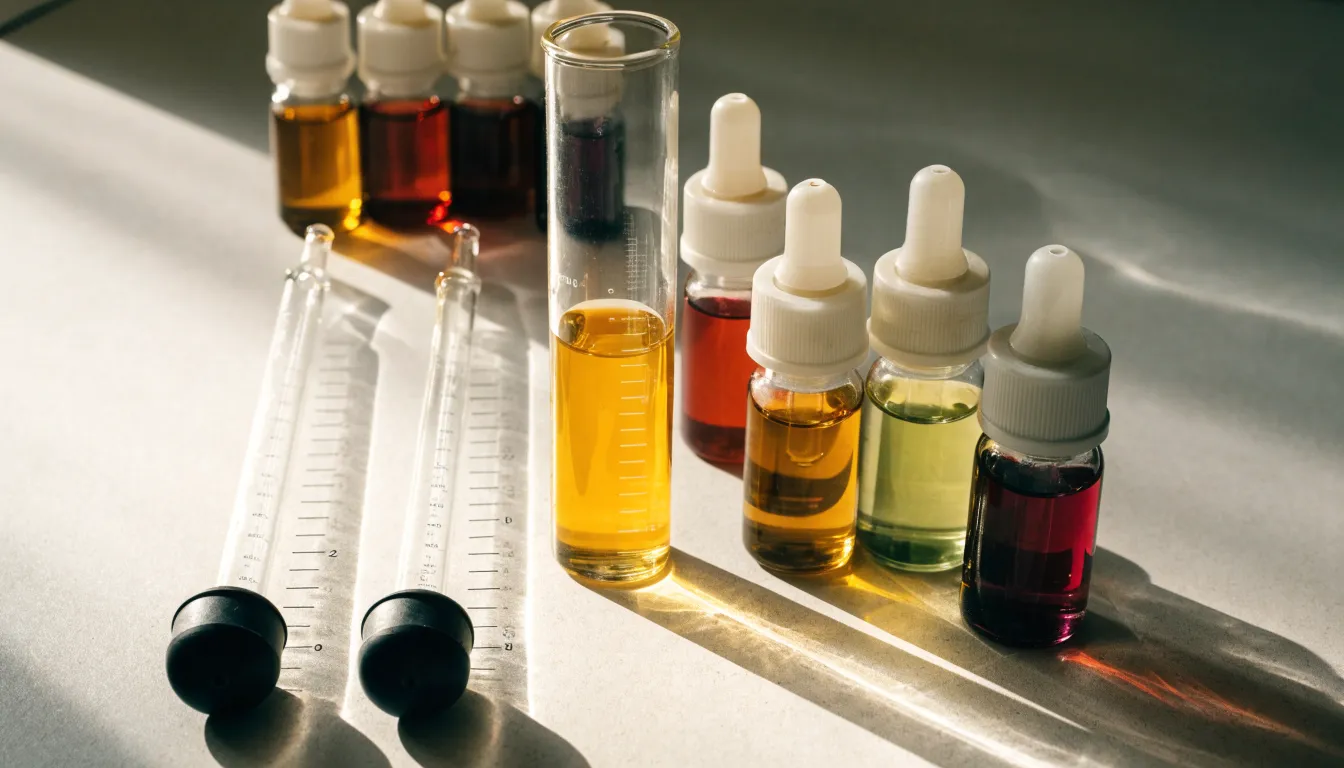
- Measure the carrier oil, count the essential oil. Use measuring spoons or a small graduated cylinder for the carrier, and count drops of essential oil from the bottle’s built-in dropper.
- Drop size varies. Thick oils like vetiver or sandalwood form bigger, slower drops; thin citrus oils form smaller ones. Hold the bottle at the same angle each time and let drops fall on their own.
- Use a pipette for small batches. A calibrated glass pipette is more accurate for blends under 10 ml.
- Label every blend with the oils, the dilution, and the date.
Choosing a Carrier Oil
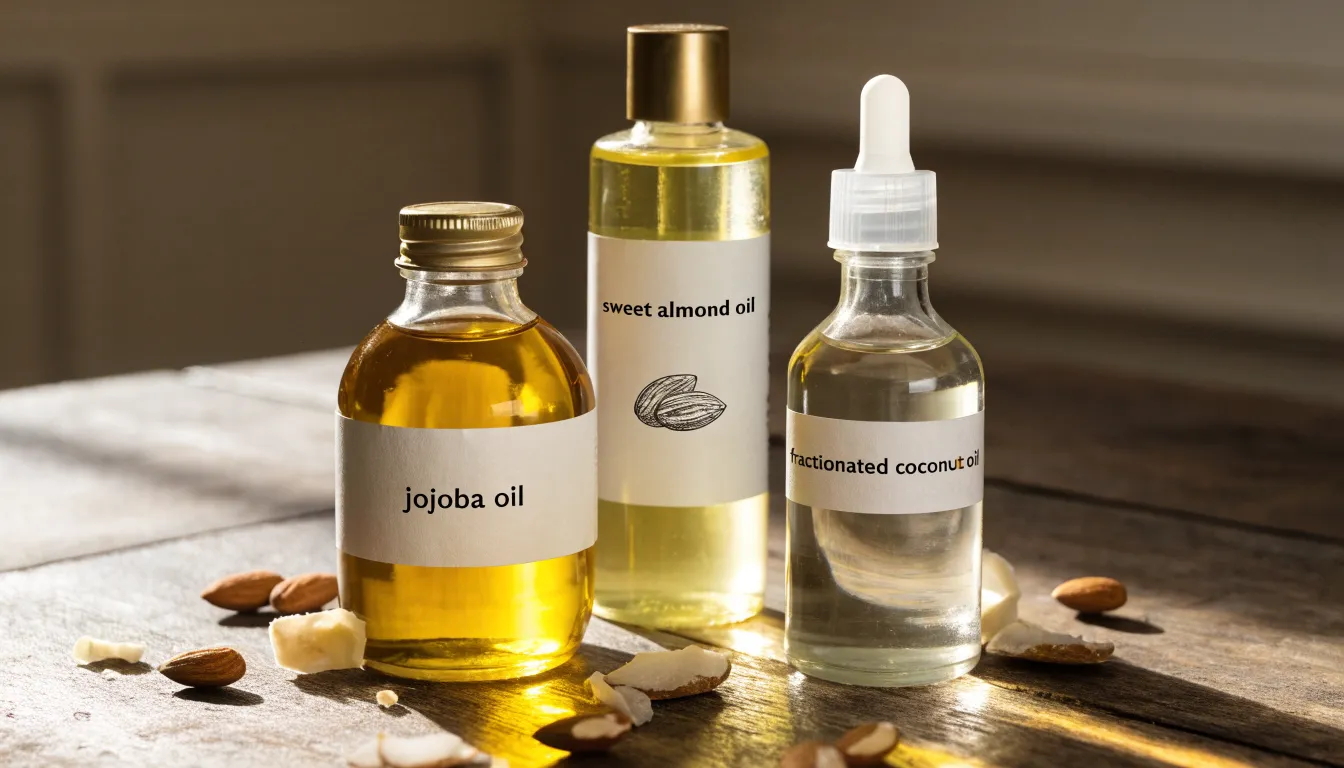
Any skin-safe plant oil works as a carrier. A few common choices:
- Jojoba: technically a liquid wax, very stable, absorbs well, suits most skin types including the face. Keeps for years.
- Sweet almond: rich and nourishing, good for massage and dry skin. Keeps around 6 to 12 months. Skip it if you have a tree nut allergy.
- Fractionated coconut oil: light, odorless, stays liquid, and keeps well. Good for roller bottles.
- Rosehip: a lighter facial oil, but it goes rancid faster; store it in the fridge.
See our full guide to carrier oils for more options.
Patch Test Before You Use a New Blend
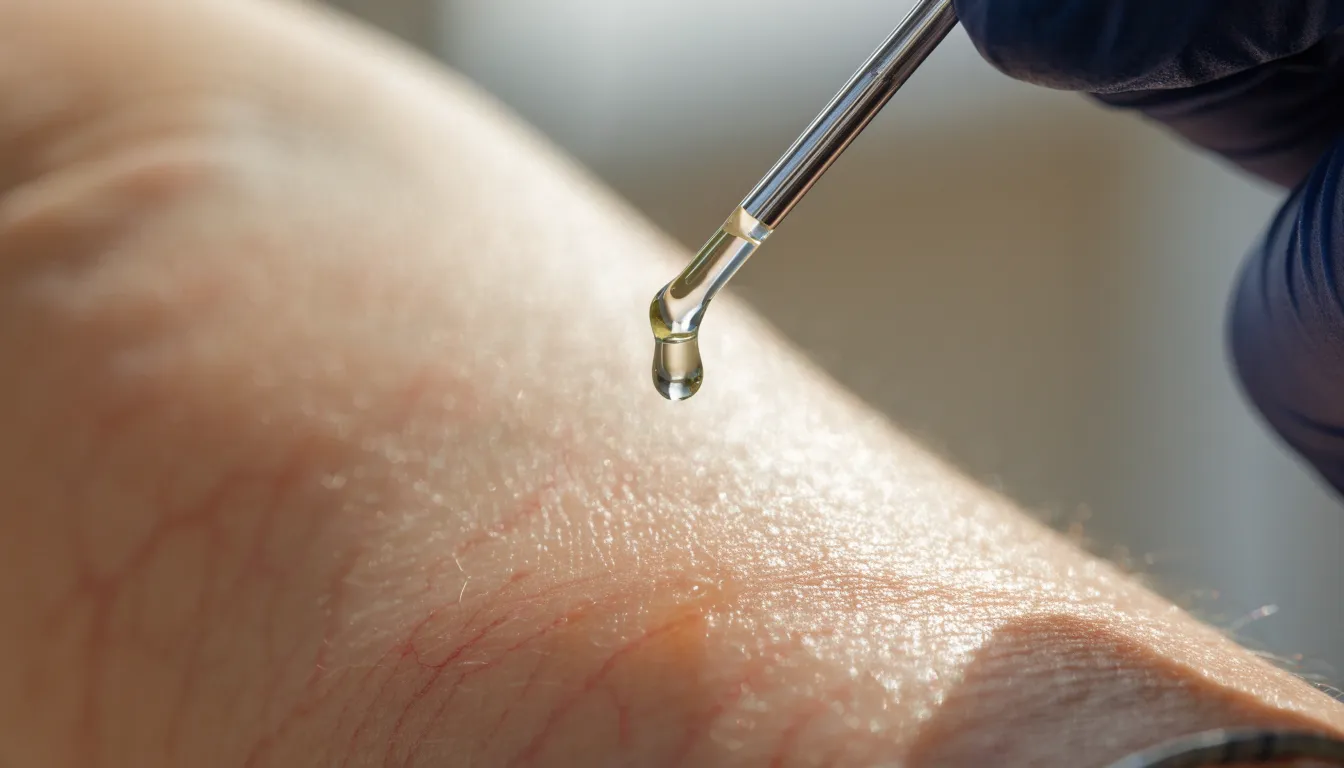
Mix your blend at the strength you plan to use, apply a small amount to your inner forearm, and leave it for 24 hours. If you see redness, itching, burning, or swelling, wash it off with soap and water and don’t use that blend. A clean patch test is reassuring but not a guarantee: sensitization can develop later with repeated use, which is another reason to keep dilutions low. Full steps are in our patch testing guide.
What Is the 30/50/20 Rule?
The 30/50/20 rule is a blending guideline about scent balance, not safety. It suggests building a blend from roughly 30% top notes, 50% middle notes, and 20% base notes:
- Top notes (about 30%): light, bright oils that you smell first and that fade fastest, such as lemon, sweet orange, bergamot, and peppermint.
- Middle notes (about 50%): the heart of the blend, such as lavender, geranium, rosemary, and chamomile.
- Base notes (about 20%): heavier oils that last longest and anchor the scent, such as cedarwood, sandalwood, vetiver, and patchouli.
For a 2% roller (4 drops in 10 ml), that could look like 1 drop of bergamot (FCF), 2 drops of lavender, and 1 drop of cedarwood. The ratio is a starting point, not a rule, and it doesn’t change the total amount of essential oil: dilute the finished blend using the chart above. Learn more in our beginner’s guide to blending.
Common Dilution Mistakes
- Diluting in plain water. Essential oils don’t mix with water. They float on top, so you end up applying concentrated drops. Use a carrier oil, or add a solubilizer to water-based sprays. See can you mix essential oils with water?
- Assuming more is better. Higher dilutions rarely work better and raise the risk of irritation and sensitization.
- Using one dilution for every oil. Some oils need far lower limits.
- Applying the same blend to kids. Adult blends are too strong for children; follow the age chart.
- Using old oil. Oxidized oils, especially citrus, tea tree, and pine, are more likely to cause reactions. Replace bottles that smell off or are past their best.
- Skipping the label. Always label homemade blends with ingredients, strength, and date.
Frequently Asked Questions
How many drops of essential oil per ounce for a 2% dilution?
About 12 drops per fluid ounce (30 ml) of carrier oil. For 1%, use about 6 drops; for 3%, about 18 drops.
How many drops of essential oil go in a 10 ml roller bottle?
About 2 drops for 1%, 4 drops for 2%, and 6 drops for 3%. Fill the rest with carrier oil.
What dilution is safe for children?
Don’t apply essential oils to babies under 3 months. Use 0.25% to 0.5% for ages 3 to 24 months, 1% for ages 2 to 6, and 1.5% for ages 6 to 15. Some oils, like peppermint and eucalyptus, should be avoided around young children’s faces entirely.
What dilution should I use on my face?
About 1% or less, which is roughly 6 drops per ounce or 2 drops per 10 ml. Use less for sensitive skin, and avoid phototoxic citrus oils on skin that will be in the sun.
Can I use essential oils undiluted?
It’s best not to. Undiluted use raises the risk of irritation and sensitization, which can cause a lasting allergy to that oil. Even gentle oils like lavender are safer diluted.
What is the 30/50/20 rule for essential oils?
It’s a blending guideline for scent: about 30% top notes, 50% middle notes, and 20% base notes. It shapes how the blend smells, not how strong it is, so you still dilute the finished blend using the dilution chart above.