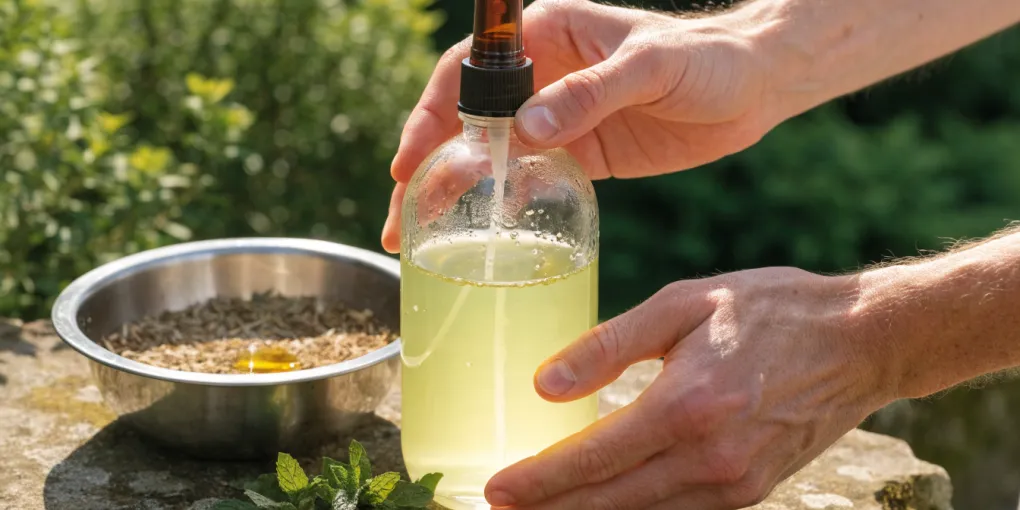
DIY essential oil bug sprays can make a backyard evening a bit more pleasant, but they protect for a much shorter time than registered repellents, often less than an hour. The most important thing to know: lemon eucalyptus essential oil is not the same as “oil of lemon eucalyptus” (OLE), the refined, EPA-registered repellent the CDC recommends. If you’re going anywhere with ticks or disease-carrying mosquitoes, use an EPA-registered repellent. Save homemade blends for low-risk, nuisance-bug situations.
Table of Contents
- When to Use DIY Repellents, and When Not To
- How Essential Oils Repel Bugs
- Lemon Eucalyptus Oil vs OLE: Not the Same Thing
- Citronella and Lemongrass
- Lavender and Peppermint
- Tea Tree
- Choosing a Base
- Safe Dilution Rates
- Easy Spray Bottle Recipe
- Cream Recipe
- Diffusers and Candles for Porches
- Reapplication
- Soothing Existing Bites
- Outdoor Prep Tips
- Troubleshooting Your Spray
- Kids and Pets
When to Use DIY Repellents, and When Not To
Homemade essential oil sprays are fine for low-stakes situations: an hour on the patio, gardening in your own yard, or keeping gnats off at a picnic, in places where mosquito- and tick-borne diseases aren’t a concern.
They are not enough when bites could make you sick. Use an EPA-registered repellent if you’re:
- Hiking, camping, or working in tall grass or woods where ticks carry Lyme disease or other infections
- In an area with West Nile virus, dengue, Zika, malaria, or other mosquito-borne illness
- Traveling somewhere your doctor or the CDC recommends bite protection
The CDC recommends repellents containing DEET, picaridin, IR3535, oil of lemon eucalyptus (OLE), PMD, or 2-undecanone, and permethrin-treated clothing for ticks (CDC: Preventing Mosquito Bites; CDC: Preventing Tick Bites). Most DIY and “natural” essential oil sprays fall under the EPA’s minimum-risk category, which means the EPA has not reviewed them for effectiveness.
How Essential Oils Repel Bugs
Some essential oil compounds interfere with how mosquitoes and other insects detect people, partly by acting on their smell receptors and partly by masking the human scents they track. That’s real, and it’s why some oils deter bugs for a while.
The catch is that essential oils are volatile: they evaporate quickly from skin. In lab and field tests, most essential oil repellents lose effectiveness much faster than DEET or picaridin, often within 30 minutes to a couple of hours.
Lemon Eucalyptus Oil vs OLE: Not the Same Thing
This is the most common, and most consequential, mix-up in natural bug repellents.
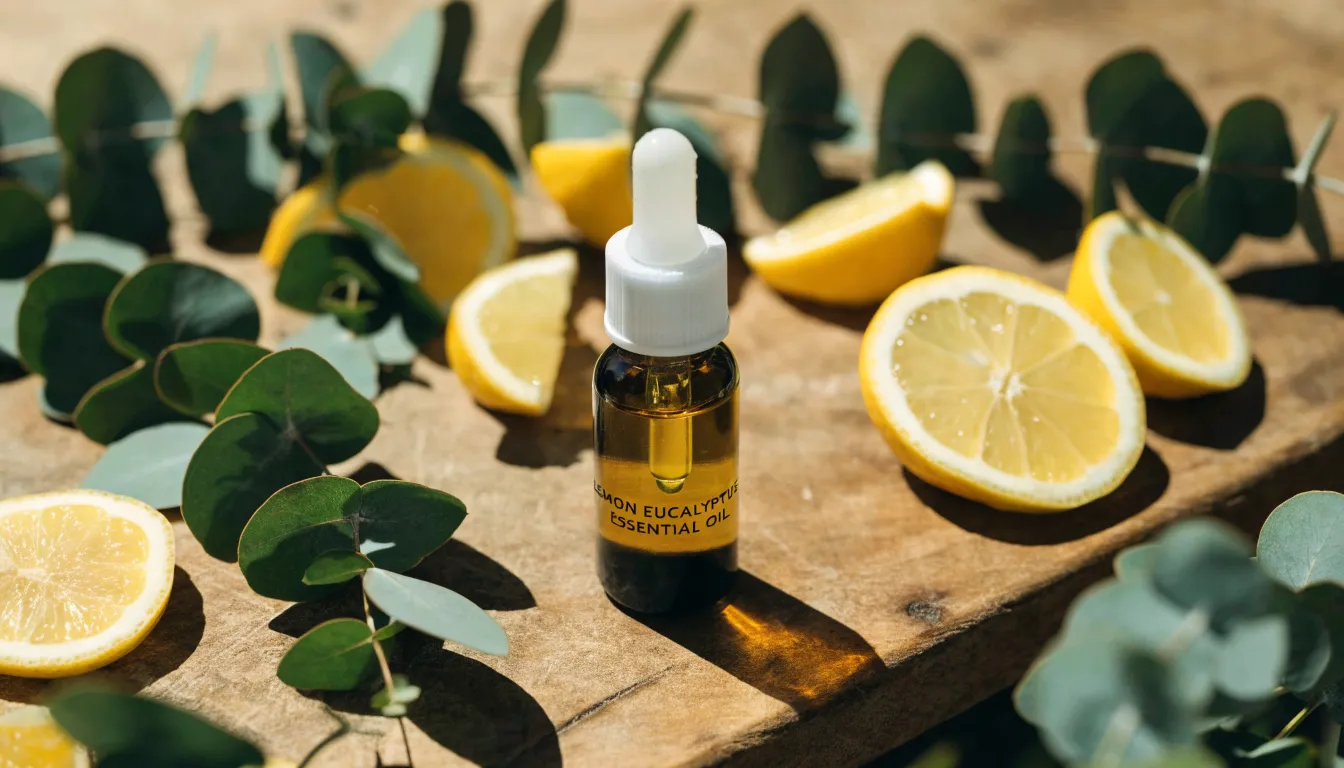
- Lemon eucalyptus essential oil is the raw oil distilled from the leaves of Corymbia citriodora. It’s mostly citronellal and contains only trace amounts of PMD (para-menthane-3,8-diol), the compound that makes OLE work. It’s what you buy in a small dropper bottle.
- Oil of lemon eucalyptus (OLE) is a refined, processed product enriched in PMD. It’s sold in EPA-registered repellents, usually labeled “oil of lemon eucalyptus” or “PMD” with an EPA registration number on the label.
The difference is large. In one direct comparison, the refined, PMD-rich product protected against mosquitoes for about five hours, while the raw essential oil lasted around 20 minutes. The CDC recommends OLE and PMD repellents, but it specifically does not recommend “pure” lemon eucalyptus oil, which hasn’t been tested or registered as a repellent (CDC Yellow Book).
You can’t make OLE at home by adding lemon eucalyptus essential oil to a spray. If you want a plant-based repellent that actually lasts, buy a registered OLE or PMD product and follow its label. Don’t use OLE or PMD on children under 3.
Citronella and Lemongrass
Citronella is the classic “natural” bug oil, from Cymbopogon nardus or C. winterianus. Its main compounds, citronellal, geraniol, and citronellol, do deter mosquitoes briefly. In head-to-head testing, though, citronella products protected for a much shorter time than DEET-based repellents, often well under an hour, so they need frequent reapplication.
Lemongrass oil works in a similar way thanks to compounds like citral and geraniol, with similarly short protection. Both are pleasant additions to a backyard blend, not reliable protection on their own.
If you buy citronella oil, look for the botanical name on the label and a supplier that publishes batch test reports. See how to choose high-quality essential oils online.
Lavender and Peppermint
Lavender and peppermint show up in a lot of DIY bug spray recipes, mainly because they smell good. Both show some repellent activity in lab tests, but the effect is short-lived. In one careful 2023 study on ticks, peppermint oil started out repelling well but dropped off sharply within the first hour, while DEET held up for six hours.
Peppermint is also used around the house for ants and spiders; see our guides to ants and spiders. For skin repellents, think of lavender and peppermint as scent and a small, brief boost, not as protection.
Tea Tree
Tea tree oil has only limited evidence as an insect repellent, and it’s a common cause of skin allergies, especially when old or oxidized. It’s not a good choice for repelling mosquitoes or ticks. It’s also toxic to cats and dogs, so keep tea tree sprays away from pets.
Choosing a Base
For an oil-based blend, a light carrier oil works well. Jojoba absorbs quickly and keeps well, and fractionated coconut oil is light, odorless, and stays liquid.
For a spray, you’ll need a water-based mix. Essential oils don’t dissolve in water or alcohol-free witch hazel, so they float on top and you can end up spraying a concentrated layer of oil. Use witch hazel that contains alcohol, high-proof vodka, or a solubilizer like polysorbate 20 to help them disperse, and shake well before each use.
Safe Dilution Rates
More oil doesn’t mean much more protection, but it does mean more risk of irritation and allergic reactions, especially on skin you’ll reapply to several times a day.
- Adults: 1% to 3%, about 6 to 18 drops of essential oil per ounce (30 ml) of base.
- Children 2 and up: follow the age-based amounts in our dilution chart and our guide to using oils around kids. Leave peppermint and eucalyptus out of any blend for children under 6.
- Babies under 2: don’t apply essential oils to their skin. Use physical protection like netting and long sleeves, and ask your pediatrician about registered repellents.
Read more about why dilution matters, and always do a patch test on your inner arm before using a new blend more widely.
Easy Spray Bottle Recipe
This makes a light, pleasant-smelling spray for short, low-risk outdoor time.
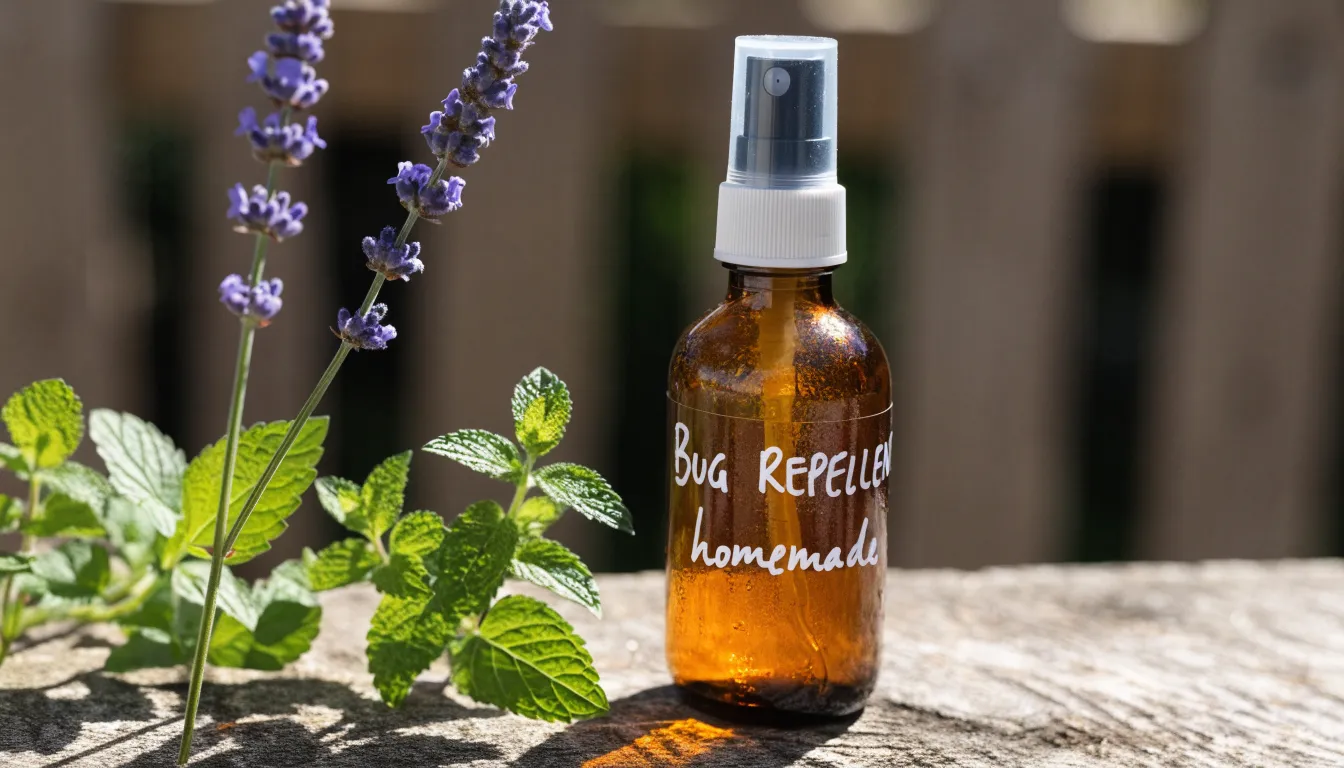
You’ll need (4 oz / 120 ml glass spray bottle, about 2%):
- 2 oz (60 ml) witch hazel that contains alcohol, or high-proof vodka
- 2 oz (60 ml) distilled water
- 40 to 45 drops total of essential oils, such as citronella, lemongrass, geranium, and lavender
To make it: add the essential oils to the witch hazel or vodka first and swirl to mix. Then add the water, cap the bottle, and shake well. Shake again before every use.
To use it: spray onto exposed skin and clothing, avoiding your face, eyes, mouth, and any cuts or irritated skin. To apply to your face, spray onto your hands and pat on, avoiding your eyes. Expect to reapply often (see below).
Cream Recipe
A cream sticks to your skin a little longer than a spray and is handy for gardening.
Makes about 2 oz (60 ml), about 2%:
- 2 tablespoons shea butter
- 1 tablespoon beeswax pellets
- 1 tablespoon jojoba or another carrier oil
- 20 to 24 drops total of essential oils, such as citronella, lemongrass, and geranium
To make it: gently melt the shea butter, beeswax, and carrier oil together in a double boiler. Remove from the heat, let it cool for a few minutes until it starts to thicken, then stir in the essential oils. Pour into a small jar or tin and let it set. Label it, and keep it out of reach of children.
Even in a cream, essential oils fade within an hour or two, so this isn’t a substitute for a registered repellent in tick or disease areas.
Diffusers and Candles for Porches
Diffusers, citronella candles, and scented coils can make a patio a little less attractive to mosquitoes in still air, but the effect is modest and drops off quickly with a breeze or distance from the source. Don’t count on them to protect you.
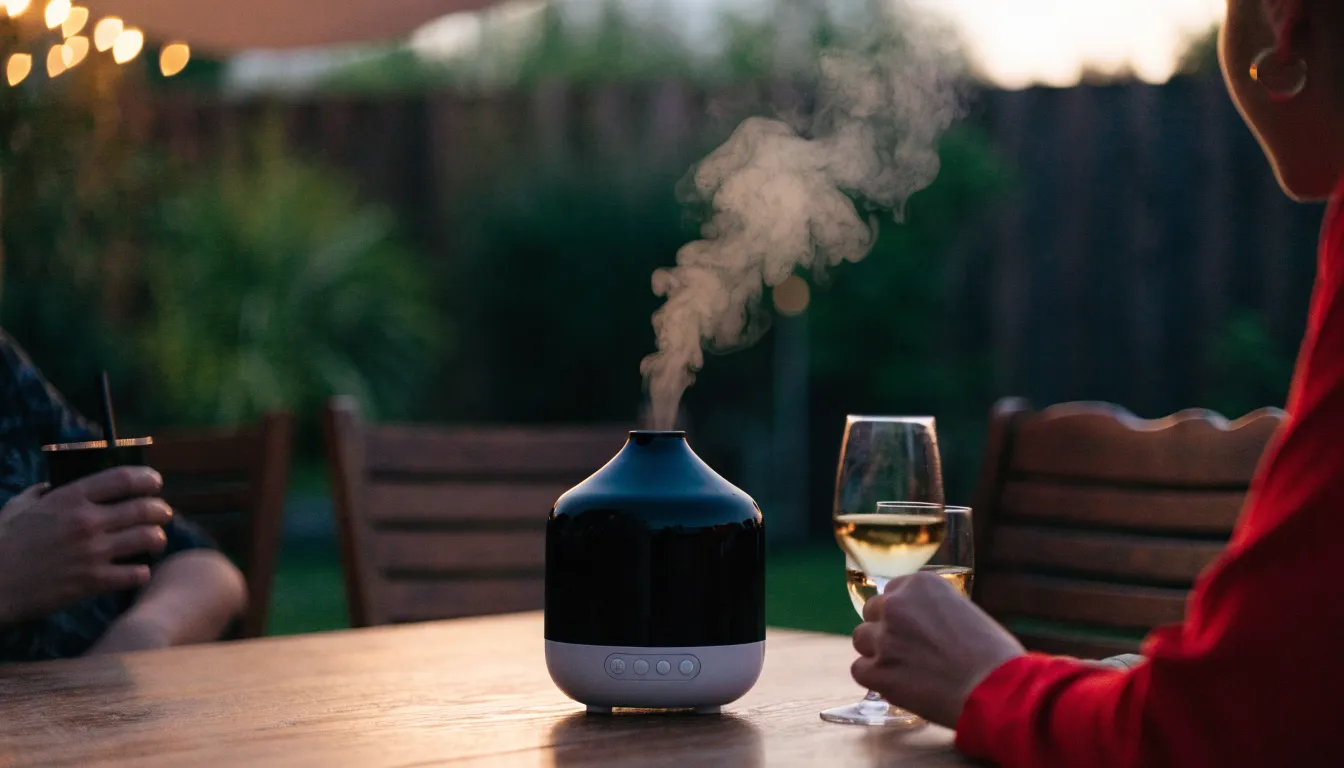
If you enjoy the scent, a few drops of citronella, lemongrass, or geranium in an outdoor diffuser placed near your seating area is fine. A simple fan can be more effective than any scent, since mosquitoes are weak fliers. Keep diffusers and candles away from pets (especially cats) and out of reach of kids.
Reapplication
Essential oil repellents fade fast. Plan to reapply roughly every 30 to 60 minutes, and sooner if you’re sweating, after swimming, or in hot, humid weather. If you start getting bitten, that’s a sign the protection has worn off, and a reason to switch to a registered repellent for the rest of the outing.
Reapplying many times a day also means more essential oil on your skin, so stick to the dilution rates above.
Soothing Existing Bites
For most bites, simple steps work best: wash the area, apply a cold compress, and avoid scratching. An over-the-counter hydrocortisone cream, calamine lotion, or an oral antihistamine can help with itching. See our guide to essential oils for bug bites for more.
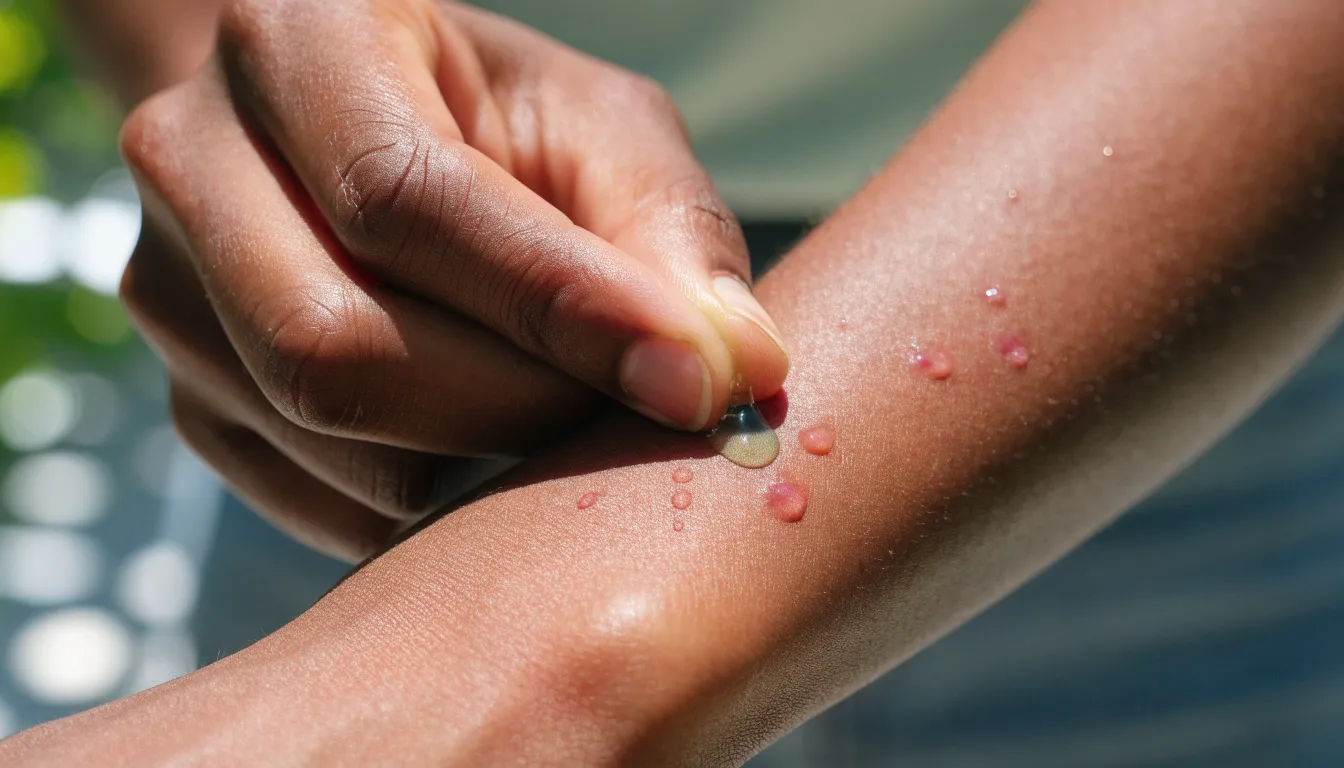
If you’d like a soothing scent, mix 1 drop of lavender into a teaspoon (5 ml) of carrier oil, about 1%, and dab a little on the bite. The evidence that this speeds healing is limited, so think of it as comfort rather than treatment. Don’t apply oils to broken or scratched-open skin.
See a doctor if a bite shows signs of infection (spreading redness, warmth, pus, or fever), if you have trouble breathing or swelling of the face or throat after a sting, or if you develop a rash or flu-like symptoms in the weeks after a tick bite.
Outdoor Prep Tips
Reducing bugs around your home makes a bigger difference than any spray.
- Empty standing water at least once a week: bird baths, pet bowls, plant saucers, toys, buckets, tarps, and clogged gutters. Mosquitoes can breed in very small amounts of water.
- Keep grass short and clear leaf litter and brush, where ticks like to rest.
- Use screens on windows and doors, and repair holes.
- Wear long sleeves and pants in light colors when bugs are active, and tuck pants into socks in tick areas.
- Check for ticks after time outdoors, and follow the CDC’s steps for removing one if you find it.
Troubleshooting Your Spray
- It separates into layers. The oils aren’t dispersing. Use witch hazel with alcohol, vodka, or a solubilizer like polysorbate 20, and shake before every use.
- The scent fades fast. That’s normal for essential oils, and it’s also when protection fades. Don’t raise the oil concentration beyond the safe rates above; reapply more often or switch to a registered repellent.
- Bugs are still biting. Homemade sprays may simply not be strong enough for your conditions. In that case, a registered repellent with DEET, picaridin, or OLE is the right tool.
Store your spray in a dark glass bottle away from heat and sunlight, and make a fresh batch every few weeks.
Kids and Pets
- Children: use lower dilutions, avoid peppermint and eucalyptus under 6, keep sprays away from their hands, eyes, and mouth, and don’t use OLE or PMD on children under 3. Store all oils out of reach. See using oils around kids.
- Pets: never use human repellents or essential oils on pets. Several common bug-repellent oils, including tea tree, citronella, peppermint, and eucalyptus, are on veterinary toxicity lists. Ask your vet about pet-safe flea and tick prevention, and see our guides to essential oils toxic to cats and toxic to dogs.
If a child swallows essential oil, call Poison Control (1-800-222-1222 in the US) right away.
Frequently Asked Questions
Do essential oils really repel mosquitoes?
Some do, briefly. Oils like citronella, lemongrass, and geranium can deter mosquitoes, but protection usually fades within 30 minutes to a couple of hours. For reliable protection, especially where mosquitoes carry disease, use an EPA-registered repellent.
Is lemon eucalyptus essential oil the same as oil of lemon eucalyptus (OLE)?
No. Lemon eucalyptus essential oil is the raw oil and contains only traces of PMD, the active repellent compound. OLE is a refined product enriched in PMD and sold in EPA-registered repellents. The CDC recommends OLE and PMD, but not pure lemon eucalyptus essential oil.
Can I use essential oils to prevent tick bites?
Essential oils aren’t reliable protection against ticks. In tick areas, use an EPA-registered repellent on skin, treat clothing with permethrin, and check yourself for ticks after being outdoors.
How much essential oil should I use in a DIY repellent?
For adults, use 1% to 3%, about 6 to 18 drops per ounce (30 ml) of base. For children 2 and up, use the lower amounts in our dilution chart and leave out peppermint and eucalyptus under age 6. Don’t apply essential oils to babies under 2.
How often should I reapply a homemade bug spray?
Plan on every 30 to 60 minutes, and sooner if you’re sweating or have been swimming. If you start getting bitten, the protection has worn off.
Do citronella candles and diffusers work?
They can slightly reduce mosquitoes in still air close to the source, but the effect is modest and doesn’t replace a repellent on your skin. A fan is often more effective, since mosquitoes are weak fliers.