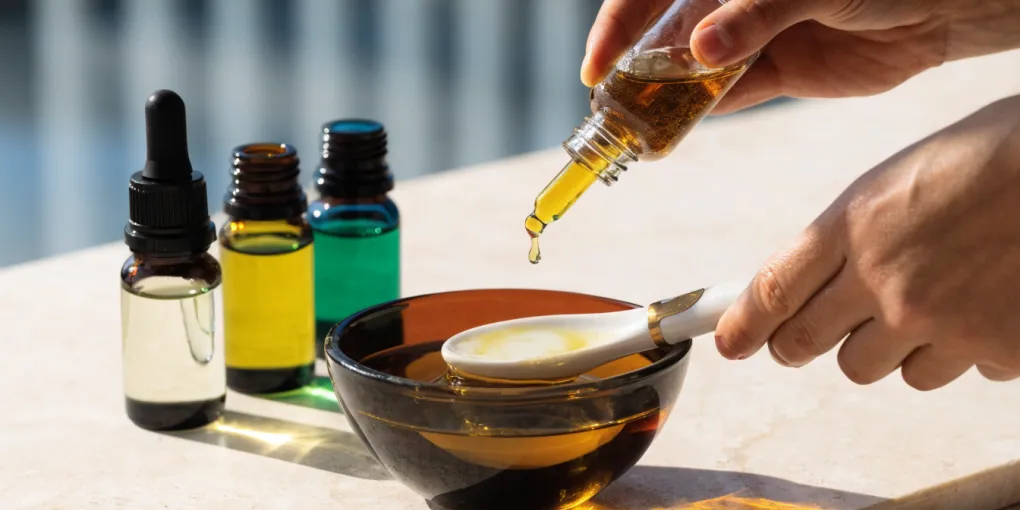
To make massage oil with essential oils, dilute potent essential oils in a carrier oil like jojoba or sweet almond to nourish skin safely. Add 6-18 drops of essential oil per ounce of carrier oil, layering base, middle, then top notes. Store in dark glass bottles away from heat and light to preserve freshness and effectiveness.
Table of Contents
- The Magic of Homemade Blends
- Understanding Carrier Oils
- Choosing Your Essential Oils
- Safety First Essentials
- Essential Equipment Checklist
- Relaxing Evening Blend
- Muscle Soothing Mix
- Romantic Couples Oil
- Energy Boosting Recipe
- Nourishing Skin Hydrator
- Understanding Dilution Ratios
- Mixing Step by Step
- Application Best Practices
- Shelf Life Guide
- Troubleshooting Common Issues
The Magic of Homemade Blends
Making your own massage oil lets you skip synthetic preservatives like parabens and phthalates. You choose pure carrier oils and therapeutic essential oils, so only natural ingredients touch your skin. This lowers your exposure to unnecessary chemicals and creates a cleaner, more nourishing experience.
It also saves money over time. The initial cost of quality oils may seem high, but those ingredients make many batches. You avoid the markups for branding and packaging, so you can create luxurious blends for a fraction of the store-bought price, making self-care more affordable.
The best part is personalization. You control the scent and function of your oil. Use lavender for calm, citrus for energy, or ginger and black pepper for muscle relief. By experimenting with essential oil combinations, you can craft a signature blend that fits your needs and turns massage into a personal, satisfying ritual.
Understanding Carrier Oils
Carrier oils form the essential base of any massage blend, serving to dilute potent essential oils while providing their own rich nutrients to nourish the skin. Among them, jojoba oil is truly exceptional—though called an oil, it is technically a liquid wax that closely mimics the skin’s natural sebum. This similarity allows it to absorb effectively, creating a breathable, non-greasy protective layer. With a medium absorption rate, it balances natural oil production, making it ideal for oily or acne-prone skin, while its soothing properties also benefit mature and sensitive complexions.
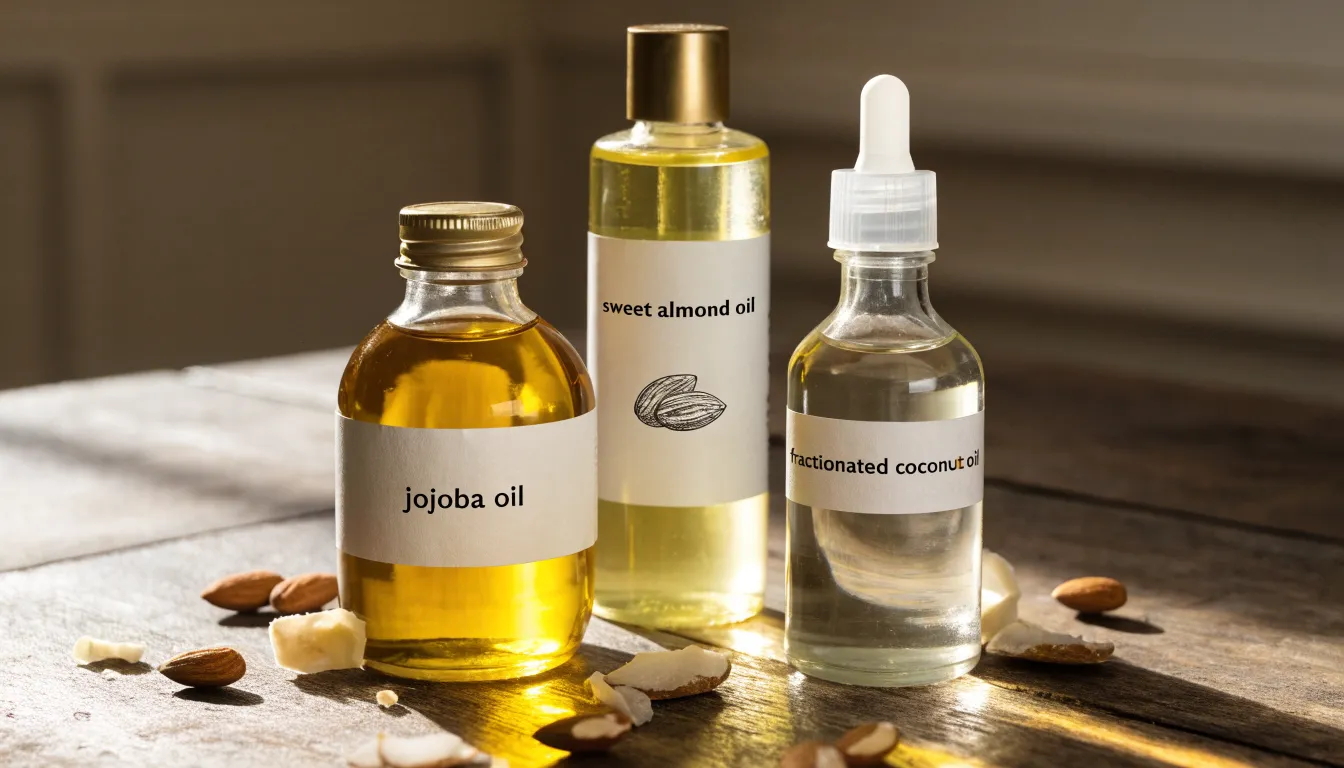
Sweet almond oil is a widely favored carrier, prized for its smooth glide and moisturizing qualities. It contains a rich blend of fatty acids along with vitamins E and A, which work to soften and nourish the skin. Its medium absorption rate offers a good balance of penetration and lasting slip, making it excellent for extended massage sessions. This oil is especially suited for dry, sensitive, and mature skin, providing deep hydration and a gentle, comforting touch.
Fractionated coconut oil (FCO) offers a distinct advantage with its exceptionally light texture and rapid absorption. It is processed to remove long-chain fatty acids, leaving only medium-chain triglycerides, which keep it liquid at room temperature and allow it to soak in quickly without any greasy residue. Its light, non-comedogenic nature makes it a great choice for all skin types, including oily and sensitive complexions, leaving a clean, weightless feel after a massage.
Choosing Your Essential Oils
Top notes are light, fast-evaporating oils like lemon, peppermint, and grapefruit. They are the first scent you notice and work to uplift and energize the mind, helping you feel more alert, refreshed, and positive during the early part of a massage.
Middle notes form the heart of the blend, with softer, longer-lasting aromas from oils like lavender, geranium, and rosemary. These oils are valued for soothing and balancing effects: lavender calms the nervous system and eases physical tension, while geranium helps steady emotions and reduce stress.
Base notes are heavy, long-lasting oils like frankincense, sandalwood, and cedarwood. They anchor the blend with rich, earthy scents that are deeply grounding and relaxing. These oils linger on the skin, extending the massage’s calming benefits long after it ends—frankincense promotes peace, while sandalwood supports deep rest and unwinding.
Safety First Essentials
Always put safety first when making massage oil with essential oils. Applying undiluted essential oils directly to the skin can cause irritation, redness, itching, or burning. Since these oils are highly concentrated plant extracts, they can overwhelm the skin’s natural barrier. Over time, even without an immediate reaction, repeated use can lead to sensitization—where the skin becomes increasingly reactive and may later react badly even to diluted oils.
Before using a new blend, do a patch test. Mix your massage oil properly with a carrier oil, then apply a tiny drop to a sensitive but discreet area, like your inner forearm or behind the ear. Watch the spot for 24 to 48 hours for any redness, itching, swelling, or irritation. If nothing appears, the blend is likely safe to use. If any irritation develops, wash the area right away and avoid using that blend.
Some citrus essential oils need extra caution. Cold-pressed bergamot, lemon, lime, and grapefruit contain furanocoumarins, which To stay safe, avoid applying these oils to skin that will see sun, or choose steam-distilled or furanocoumarin-free versions instead, learning more about photosensitivity and essential oils. If skin with these oils is exposed to sunlight or tanning beds within 12 to 18 hours, it can cause severe sunburn, blistering, or lasting discoloration. To stay safe, avoid applying these oils to skin that will see sun, or choose steam-distilled or furanocoumarin-free versions instead.
Essential Equipment Checklist
Amber glass bottles are the core of your setup because they protect essential oils from ultraviolet light, which can weaken their therapeutic properties and fade their scent. These bottles come in different sizes, from small dropper bottles for concentrated blends to larger ones for ready-to-use massage oils, and buying them in multi-packs is an easy way to save money.
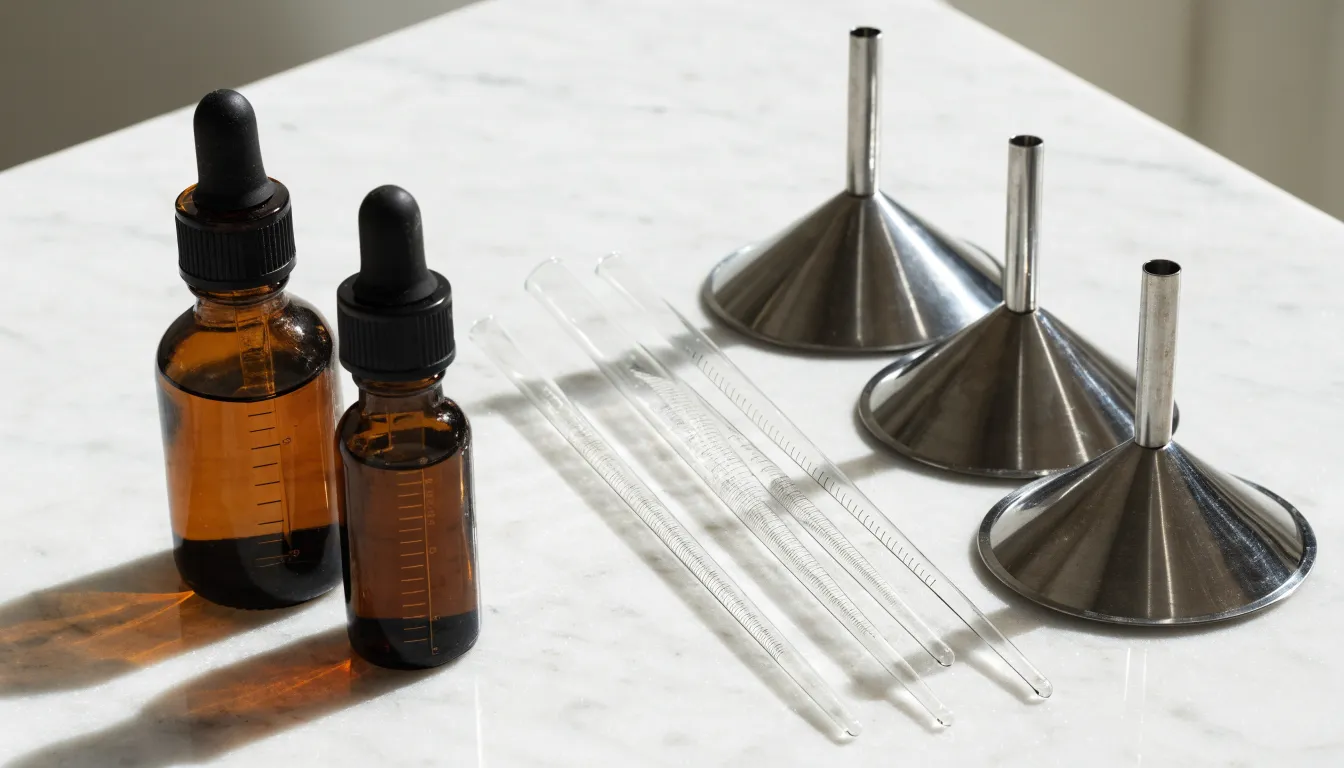
Small funnels are also essential for transferring oils into narrow-necked bottles without mess or waste. Usually made from food-grade stainless steel or durable plastic, they keep your workspace clean and make sure every drop of your precious oils ends up in the right container.
Graduated pipettes give you precise control when measuring essential oils. With clear milliliter markings and the ability to count individual drops, they help you follow safe dilution guidelines and keep your blends consistent, so you never overuse potent oils. Together, these simple tools let you make high-quality, personalized massage oils with confidence.
Relaxing Evening Blend
The Relaxing Evening Blend helps you unwind and tells your body it’s time for a peaceful night. It calms your nervous system and The Relaxing Evening Blend helps you unwind and tells your body it’s time for a peaceful night. It calms your nervous system and prepares you for deep, restful sleep, releasing the day’s tension and creating a sense of tranquility.
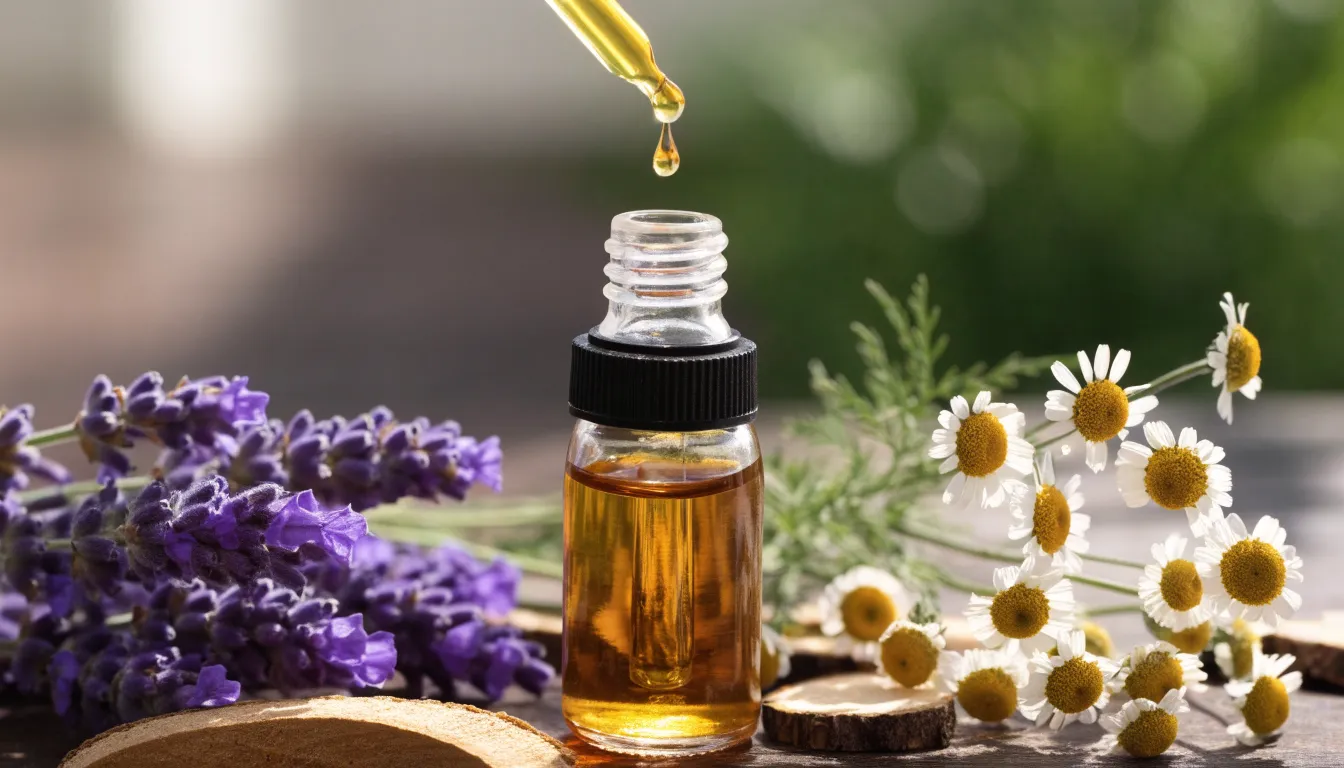
Each essential oil plays a special role. Lavender is known for its gentle, calming, sleep-supporting qualities and helps reduce stress and anxiety. Cedarwood has an earthy, grounding scent that centers the mind and brings feelings of stability and comfort. Roman chamomile has a soft, apple-like fragrance that is very soothing, helping to ease restlessness and emotional tension. Together, these oils work in harmony for deeper relaxation.
To make the blend, choose a carrier oil like fractionated coconut, sweet almond, or jojoba oil. Fill a 1-ounce bottle almost full, then add 8–10 drops of lavender, 4–5 drops of cedarwood, and 3–5 drops of Roman chamomile. Cap the bottle and roll it between your palms to mix. Apply the oil to your temples, neck, wrists, or feet before bed, and let the calming aroma and gentle massage invite a night of deep, restorative sleep.
Muscle Soothing Mix
This mix targets sore spots after exercise by combining cooling botanical oils. Peppermint essential oil is a key ingredient, giving a refreshing, cooling sensation on overworked muscles that helps ease discomfort.
Eucalyptus essential oil adds a clearing, stimulating aroma and works with the peppermint to boost the overall soothing effect. It helps the affected areas feel more open and relieved.
Rosemary essential oil promotes localized blood flow, which supports recovery and helps release built-up tension. Together, these oils reduce post-workout stiffness with a blend of cooling and circulation-boosting effects, offering natural support for muscle recovery.
Romantic Couples Oil
Sandalwood acts as the grounding base of this romantic blend. Its rich, woody, and earthy scent calms the mind and supports a peaceful sense of closeness. By helping both partners relax and open up, it creates a warm, distraction-free space for genuine connection.
Ylang-ylang brings a sweet, exotic floral note that is both uplifting and sensual. Known for boosting feelings of joy and passion, it helps melt away stress and inhibitions. Its luxurious aroma awakens the senses and encourages warmth, desire, and a more loving, carefree interaction.
Sweet orange adds a bright, cheerful citrus lift that keeps the blend from feeling too heavy. It reduces anxiety and promotes a happy, welcoming mood. Together, these three oils create a massage oil that supports relaxation, intimacy, and a deeper bond between partners on a special date night.
Energy Boosting Recipe
This massage oil blends grapefruit, bergamot, and spearmint essential oils. Grapefruit helps wake up the mind and brighten your mood, while This massage oil blends grapefruit, bergamot, and spearmint essential oils. Grapefruit helps wake up the mind and brighten your mood, while bergamot lifts your spirits and helps fight off sluggish feelings. Spearmint adds a cool, refreshing note that clears away mental tiredness and helps you feel more alert.
Together, these three oils work to refresh both your body and mind. This makes the blend a great choice for slow mornings or that sleepy afternoon stretch when you need better focus. The aroma is invigorating but gentle, so it wakes up your senses without overwhelming them, giving you a natural, steady lift in daytime energy.
You can use this oil as part of a morning routine or as a quick pick-me-up during a busy day. It’s a simple way to bring aromatherapy into your self-care. The balanced blend leaves you feeling light, focused, and calmly energized—showing how the right essential oils can support your daily well-being.
Nourishing Skin Hydrator
This deeply nourishing blend is made for dry, tired skin. Rosehip seed carrier oil is the base, and it works with frankincense and geranium essential oils to moisturize and revitalize. The formula absorbs well and delivers lasting moisture.
Rosehip seed oil helps restore and hydrate skin. It is rich in essential fatty acids, vitamins A and C, and antioxidants, which support skin regeneration, improve elasticity, and smooth texture. It reduces dryness and leaves skin feeling soft and supple.
Frankincense essential oil adds rejuvenating and soothing benefits. It helps even out skin tone, reduce minor imperfections, and support firmness and elasticity for a youthful glow. Geranium essential oil balances and revitalizes, promoting clear, healthy-looking skin with a gentle toning effect. Together, these oils turn dry, tired skin into soft, hydrated, radiant skin.
Understanding Dilution Ratios
Getting the dilution right is key when making massage oil with essential oils. It keeps your blend safe and effective by preventing skin irritation while still letting the oils absorb and do their therapeutic work. Dilution is described as a percentage, which simply tells you how many drops of essential oil to add to each ounce of carrier oil.
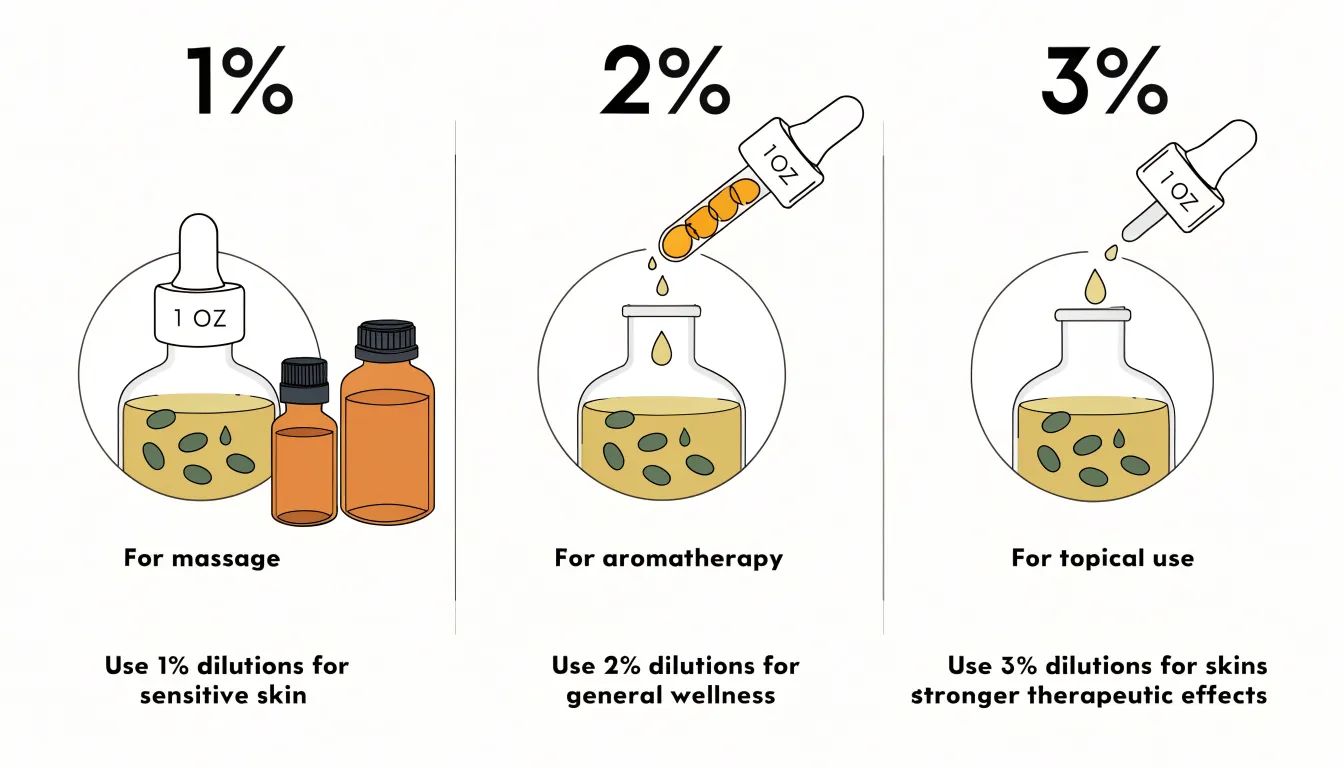
For a gentle, full-body massage—especially for sensitive skin, children, or older adults—use a 1% dilution. That means about 6 drops of essential oil per ounce of carrier oil. This mild blend is good for daily use and larger areas of the body without overwhelming the skin or senses.
A 2% dilution is the standard for most adults and regular full-body use: about 12 drops per ounce of carrier oil. It offers noticeable benefits while still being balanced for general skin types. For targeted problems like a sore muscle or localized discomfort, use a 3% dilution—about 18 drops per ounce—on a small area only. Stronger blends are not meant for whole-body use, especially on sensitive skin, so always do a patch test first.
Mixing Step by Step
To make your own massage oil blend, start by preparing the carrier oil base. Use a clean glass bottle or bowl and measure out oils like sweet almond, jojoba, or fractionated coconut oil. If you combine more than one carrier oil, stir them gently until fully blended before adding anything else.
Next, add your essential oils in a specific order. Begin with base notes—these are heavier, longer-lasting oils such as frankincense, sandalwood, or patchouli. They give the blend depth and staying power. After swirling them into the carrier oil, add the middle notes, like lavender, rosemary, or geranium. These form the heart of the aroma and add balance and body. Then add the top notes—the lightest, most volatile oils such as lemon, bergamot, or peppermint. They provide the first bright burst of fragrance and sit lightly over the deeper notes. This layering helps the oils mix evenly and stops them from separating or forming concentrated pockets.
Once all the essential oils are in, give the whole blend one final gentle stir. Let the massage oil rest for at least 24 hours so the aromas can blend and mature. This makes the final oil smell more cohesive and feel smoother and more luxurious.
Application Best Practices
Applying your homemade essential oil massage blend works best with simple, effective strokes. Basic Swedish techniques—effleurage and petrissage—help the oil absorb into the skin while also easing physical tension, so the blend’s benefits reach deeper and feel more soothing.
Effleurage uses long, gliding strokes with palms or fingertips, moving toward the heart with light to moderate pressure. This spreads the oil evenly, warms the tissues, and prepares the muscles for deeper work. It also creates a calming sensation, helping the person relax while the oil covers the area smoothly.
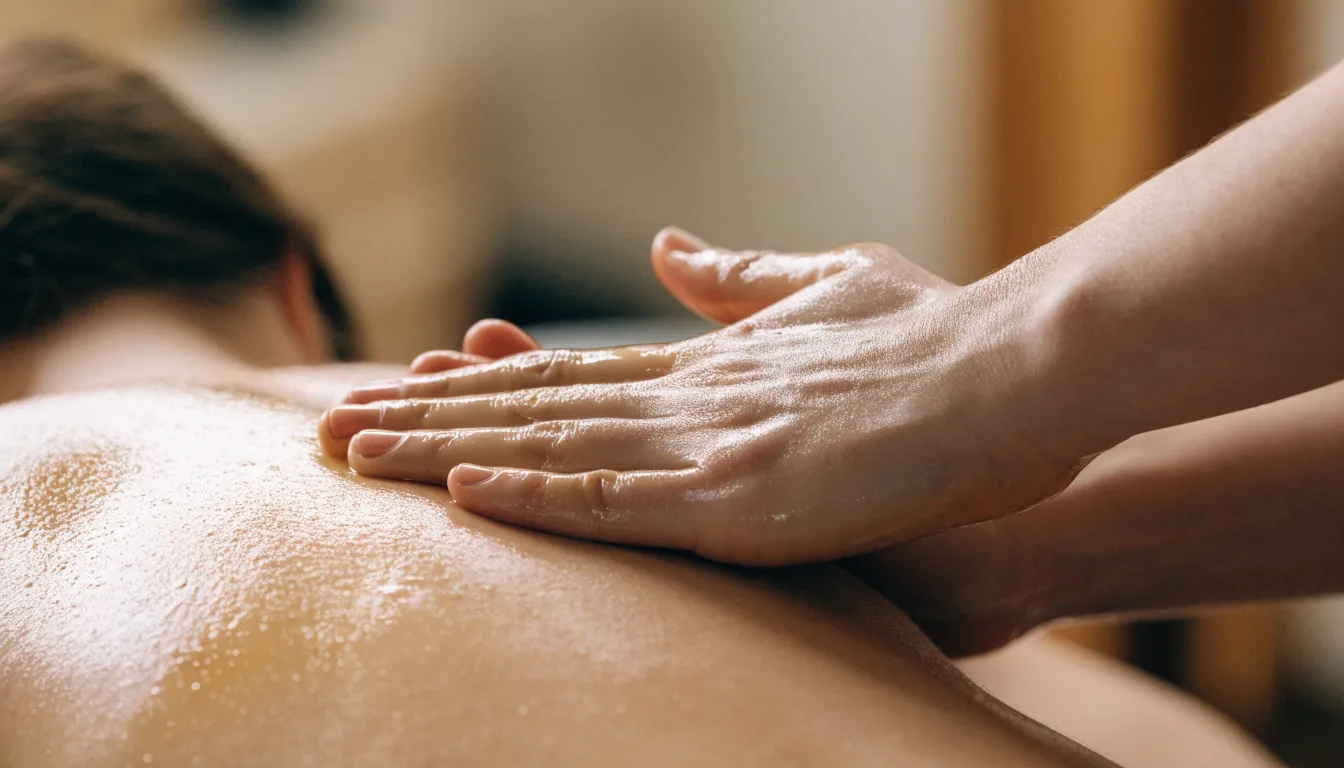
Petrissage follows with kneading, rolling, and lifting the muscles, similar to working dough. This improves circulation, flushes out waste, and relieves stiffness and knots. The gentle manipulation helps the essential oil penetrate more effectively. Use a firm but comfortable rhythm. Done slowly and mindfully, these strokes allow the oil’s aromatic and topical benefits to be fully absorbed while melting away stress.
Shelf Life Guide
To keep your homemade massage oil effective and safe, proper storage is crucial. Since the carrier oils in your blend naturally break down over time through oxidation, you must protect them. Always store the oil in a cool, dark place away from stoves or sunny windowsills, as heat speeds up this breakdown. Using dark amber or cobalt blue glass bottles with airtight lids helps block out oxygen and harmful light, preserving the delicate compounds in your blend.
You can easily tell when your oil has gone bad by using your senses. The most obvious sign is a rancid smell—if a subtle, nutty scent turns sour, metallic, or like old crayons, the oil has oxidized and should be thrown out. Also, watch for visual changes like a darker color, persistent cloudiness, or unusual sediment, which all indicate that the oil is no longer fresh and safe to use.
Light, especially ultraviolet rays from sunlight or bright indoor lighting, is a major enemy of oil stability. It triggers oxidation, which destroys the beneficial fatty acids and vitamins, reducing the blend’s therapeutic value and causing it to spoil faster. Keeping your massage oil in a cupboard or drawer instead of on an open shelf offers extra protection from ambient light. By following these simple storage rules and watching for spoilage signs, you can greatly extend the lifespan of your massage oil, ensuring it stays fresh and potent for your self-care routine.
Troubleshooting Common Issues
One common issue is that homemade massage oil can feel too heavy or sticky on the skin. This often happens because the base oil is naturally dense or used in too high an amount. You don’t have to throw the batch away. Instead, slowly add a lighter carrier oil, such as grapeseed oil, sweet almond oil, or fractionated coconut oil. Add about a tablespoon at a time, stir well, and test the oil on your skin. Keep doing this until the texture feels smooth and not greasy.
Another frequent problem is that the essential oil smell is too strong and overwhelming. This usually means too many drops were added, or the essential oils themselves have very powerful scents. The fix is to dilute the blend by adding more of your plain carrier oil. This spreads the essential oils out over a larger amount, making the aroma gentler. For example, adding the same amount of carrier oil as your current blend will cut the scent strength roughly in half.
If the scent is still too intense, you can let the mixture sit open for a little while so some of the stronger aromatic compounds can fade away. Always add carrier oil a little at a time and retest the smell after each addition. Stop once you reach a pleasant, balanced fragrance.
Frequently Asked Questions
Why should I make my own massage oil with essential oils?
Making your own massage oil lets you avoid synthetic preservatives and choose pure, natural ingredients. It also saves money over time and allows for personalization of scent and function to fit your specific needs.
Which carrier oils are best for different skin types?
Jojoba oil is ideal for oily, acne-prone, mature, and sensitive skin. Sweet almond oil is excellent for dry, sensitive, and mature skin, while fractionated coconut oil is a great choice for all skin types, including oily and sensitive complexions.
What are essential oil “notes” and how do they work in a blend?
Essential oil notes categorize oils by how quickly their scent evaporates. Top notes are light and energizing, middle notes form the blend’s heart with soothing effects, and base notes are heavy and grounding, anchoring the scent for longer-lasting benefits.
How do I ensure safety when using essential oils in massage oil?
Always dilute essential oils with a carrier oil to prevent skin irritation. Before using a new blend, perform a patch test on a small skin area and wait 24-48 hours for any reaction. Be aware that some citrus oils, like cold-pressed bergamot or lemon, can cause severe sunburn if exposed to UV light after application.
What is the recommended dilution ratio for essential oil massage blends?
For gentle, full-body massage or sensitive skin, use a 1% dilution, which is about 6 drops of essential oil per ounce of carrier oil. A 2% dilution (about 12 drops per ounce) is standard for most adults, and a 3% dilution (about 18 drops per ounce) is for targeted problems on small areas only.
How can I tell if my homemade massage oil has gone bad?
The most obvious sign of spoilage is a rancid smell, changing from a subtle, nutty scent to sour, metallic, or like old crayons. You should also watch for visual changes like a darker color, persistent cloudiness, or unusual sediment, all of which indicate the oil is no longer fresh and safe to use.