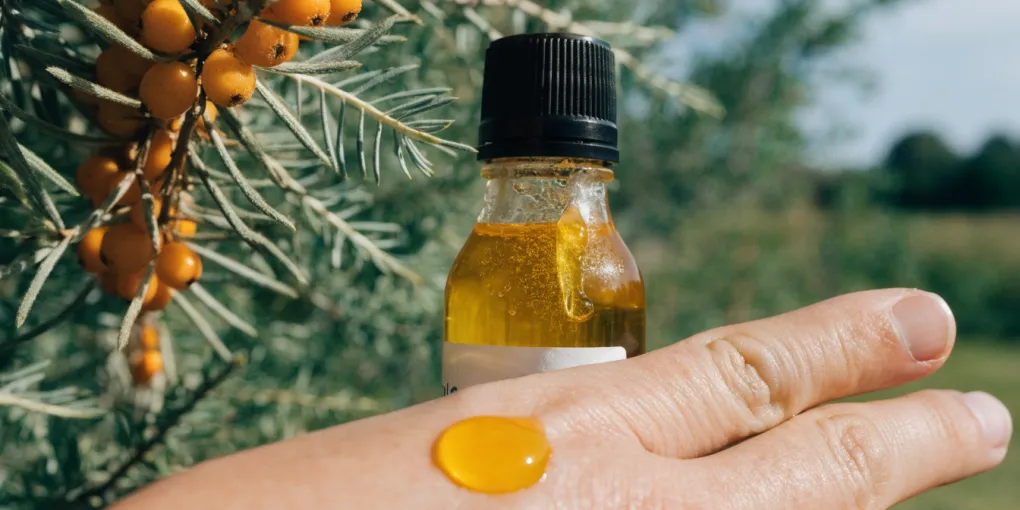
Sea buckthorn oil is a deep orange oil pressed from the berries and seeds of Hippophae rhamnoides, a thorny shrub that grows across Europe and Asia. It’s best known as a skin oil: it’s rich in carotenoids, vitamin E, and a rare fatty acid called omega-7. It’s also sold in capsules as a supplement, although the evidence for those internal uses is still limited.
What sea buckthorn oil is good for:
- Dry, rough, or irritated skin. Its fatty acids help support the skin’s moisture barrier.
- Skin after sun exposure. Its antioxidants (carotenoids and vitamin E) help soothe skin that has been out in the sun.
- Dry scalp and dull hair. Diluted, it makes a nourishing scalp oil.
- DIY facial and body oils. A few drops add color and antioxidants to a carrier oil blend.
- As a supplement (with caution). Small studies have looked at dry eyes, dry mucous membranes, and skin conditions, but the results are early and mixed.
One thing to know up front: sea buckthorn oil is not an essential oil. It’s a pressed (fixed) oil, closer to a carrier oil like rosehip or jojoba. It isn’t volatile or highly concentrated the way lavender or tea tree oil is, so the main reason to dilute it is its strong orange color, not irritation.
Table of Contents
What Is Sea Buckthorn Oil?
Sea buckthorn is a hardy shrub that thrives in cold, dry, high-altitude places, from the Himalayas and Mongolian steppes to coastal Europe and Siberia. Products are often labeled “Siberian sea buckthorn oil,” which usually just means the berries were grown or sourced in that region. It’s the same plant.
The berries have been used in traditional Tibetan, Mongolian, and Chinese medicine for centuries. A popular legend says Genghis Khan fed them to his horses and soldiers for stamina. It’s a fun story, but it’s a legend, not history.
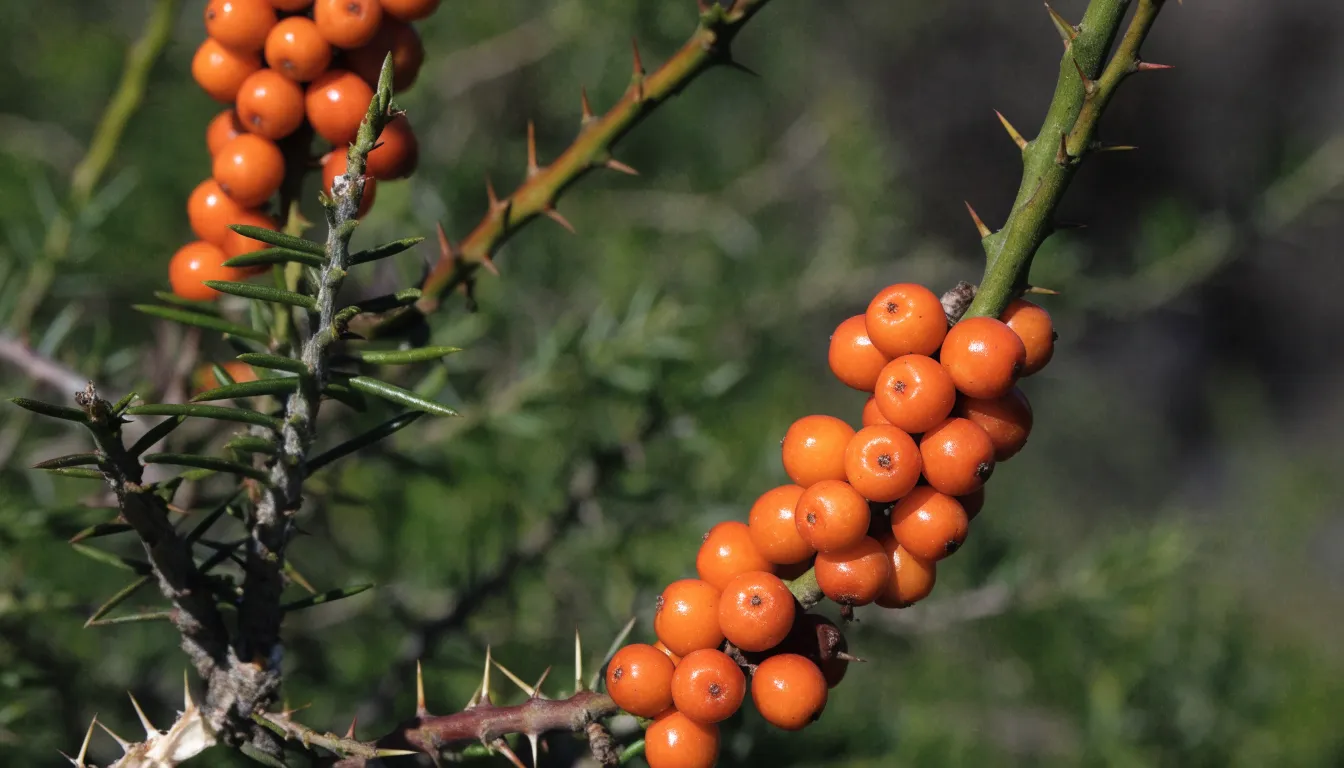
The best oils are cold-pressed, meaning the berries or seeds are pressed mechanically without high heat or chemical solvents. Cold-pressing helps keep heat-sensitive compounds like carotenoids and vitamin E intact.
What makes the oil stand out is its nutrient profile:
- Carotenoids (including beta-carotene): pigments that give the oil its orange color and act as antioxidants.
- Vitamin E (tocopherols): an antioxidant that helps protect oils and skin from oxidative damage.
- Omega-7 (palmitoleic acid): a fatty acid that is uncommon in plant oils and is also found naturally in human skin.
- Omega-3, -6, and -9: fatty acids that support the skin barrier, in amounts that depend on whether the oil comes from the seed or the pulp.
One common misconception: sea buckthorn berries and juice are high in vitamin C, but the oil contains very little, because vitamin C is water-soluble and stays in the juice.
Seed Oil vs. Berry Pulp Oil
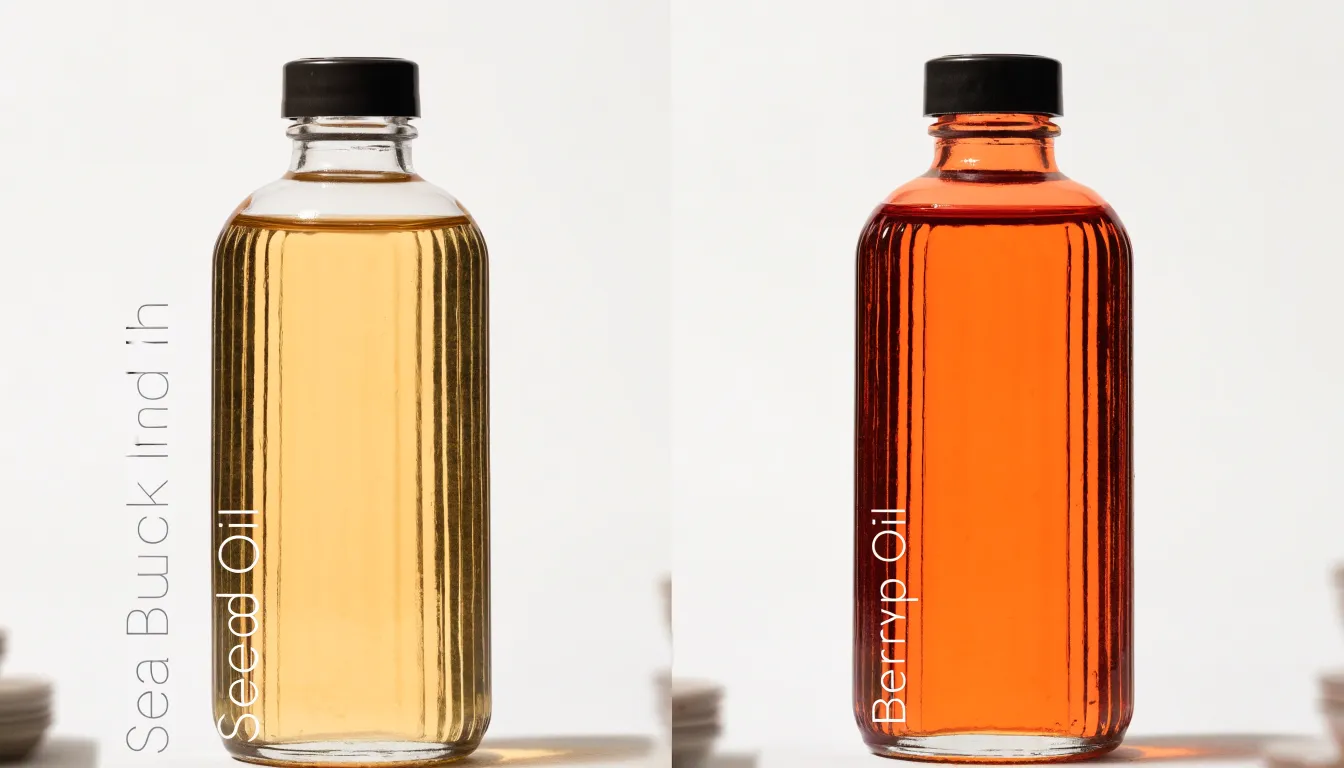
There are two main types of sea buckthorn oil. They come from the same plant but look and behave quite differently.
| Seed oil | Berry (pulp) oil | |
|---|---|---|
| Color | Golden yellow | Deep orange-red |
| Rich in | Omega-3, omega-6, vitamin E | Omega-7, carotenoids |
| Staining | Low | High (dilute it) |
| Best for | Facial oils, everyday skin care | Very dry skin, spot use, most supplements |
If a label just says “sea buckthorn oil,” check the ingredients or the color. A deep orange oil is mostly pulp oil. Many good products blend both. For general tips on spotting quality products, see our guide on how to choose high-quality oils online. The same rules (cold-pressed, clearly labeled, dark glass bottle) apply here.
Benefits for Skin
Skin care is where sea buckthorn oil is most widely used. Most of what follows comes from what its ingredients are known to do, plus some small studies. It isn’t a cure for any skin condition.
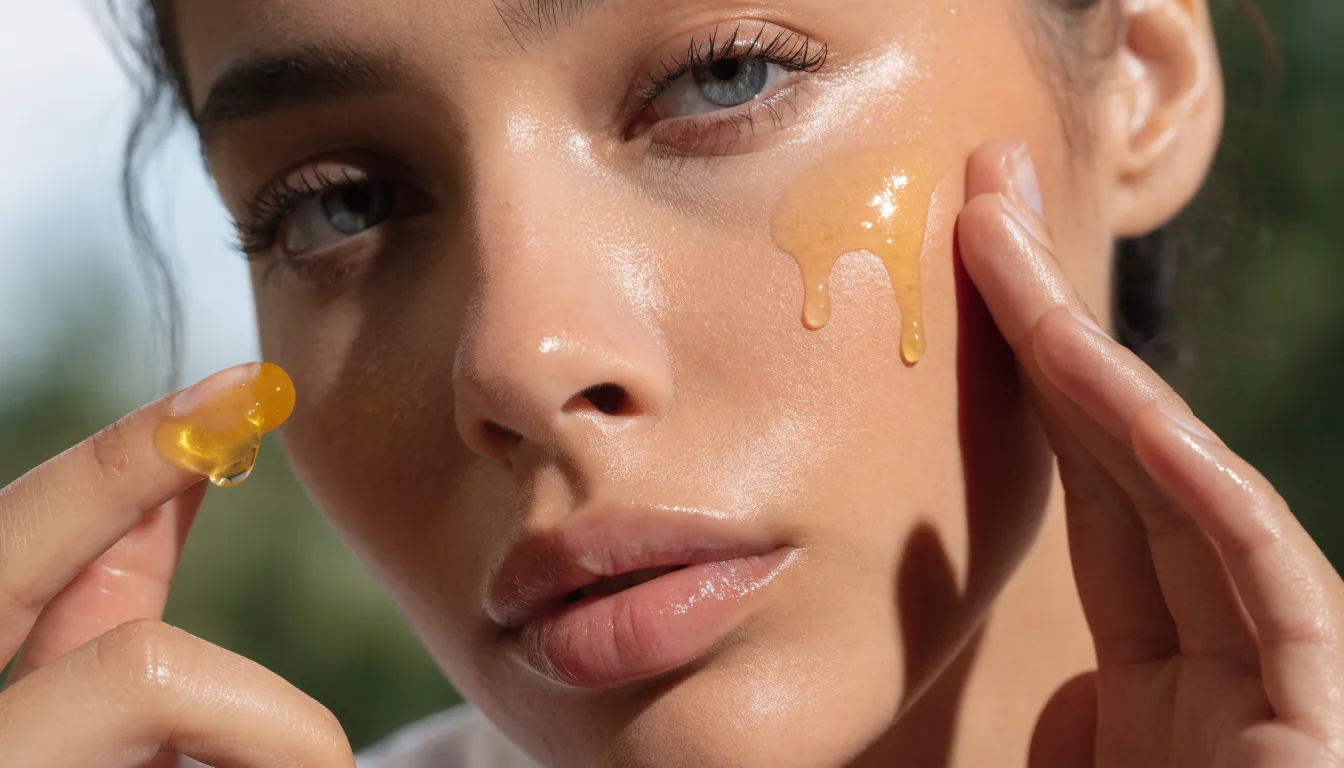
Moisture and barrier support. Your skin’s outer barrier is made partly of fats. Sea buckthorn’s mix of fatty acids, especially omega-7 and the linoleic acid in seed oil, helps soften dry, rough skin and reduce water loss. People with sensitive or easily irritated skin often find it soothing. If you have eczema or another diagnosed skin condition, it can be a gentle moisturizer alongside your usual treatment, not a replacement. Small studies on sea buckthorn and atopic dermatitis exist, but they’re too limited to draw firm conclusions from.
A healthier-looking glow. The carotenoids give a slight warm tint when applied, which is part of the “glow” people notice. Beta-carotene is also a source of vitamin A, which plays a role in normal skin cell renewal. Regular use can help skin look smoother and more even.
Aging skin. No oil reverses wrinkles. Still, keeping skin well moisturized and protected from oxidative stress, which carotenoids and vitamin E help with, makes fine lines less noticeable and supports skin elasticity over time.
After sun exposure. The antioxidants in sea buckthorn oil may help skin cope with oxidative stress from UV light. A diluted application can feel soothing on skin that has been out in the sun. It is not a sunscreen and won’t prevent sunburn, so keep using SPF. For a real burn, cool the skin and use plain aloe or a fragrance-free moisturizer first.
Benefits for Hair and Scalp
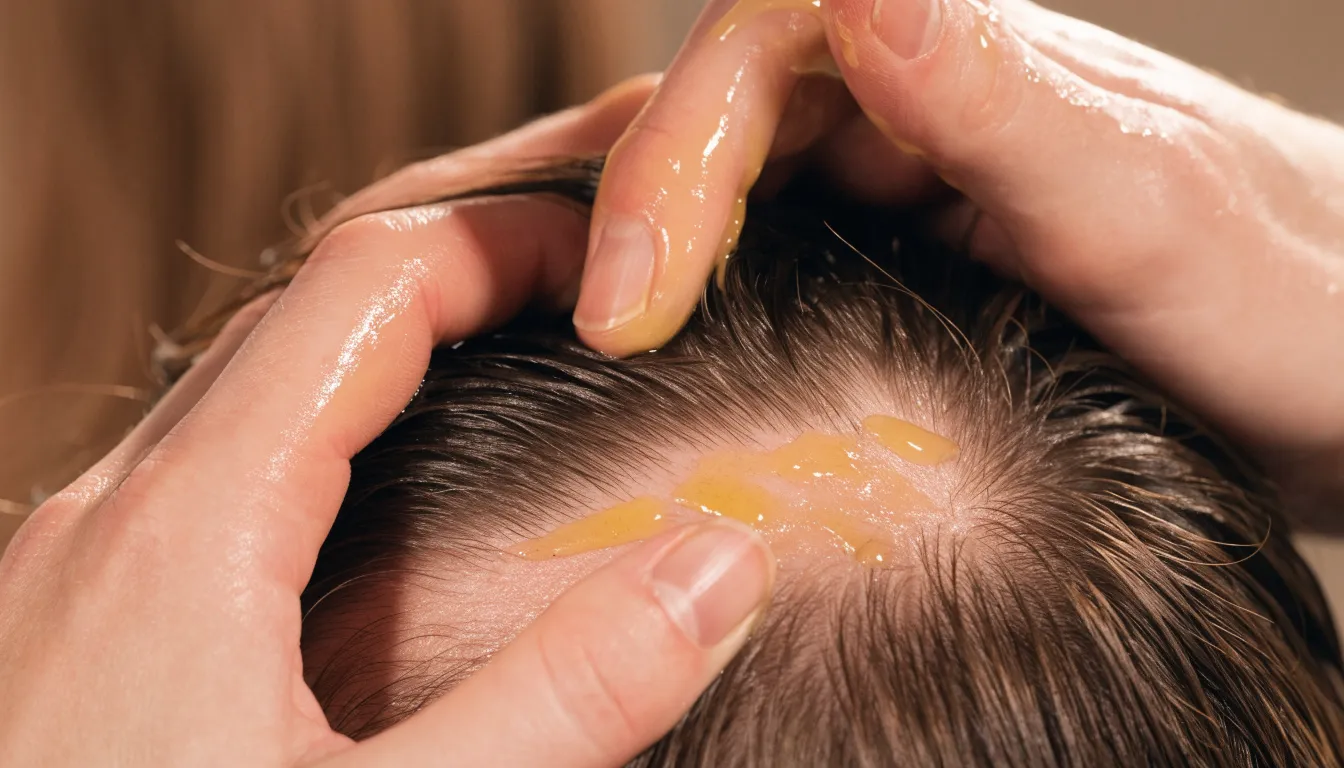
When diluted and massaged into the scalp, sea buckthorn oil works like a rich pre-wash treatment:
- Dry, flaky scalp. It moisturizes and can calm a tight, itchy-feeling scalp.
- Shine and softness. A small amount on the lengths smooths the hair cuticle and adds shine.
- Hair growth. You’ll see claims that it “wakes up” follicles, but there’s little evidence for this in people. A healthy, comfortable scalp is a good base for hair, but don’t expect sea buckthorn alone to regrow thinning hair.
Use the diluted recipe below, and keep in mind that undiluted pulp oil can tint light-colored hair and stain pillowcases.
Taking Sea Buckthorn Oil Orally
Sea buckthorn oil is sold as capsules (usually berry pulp oil, seed oil, or a blend). This is where the claims get ahead of the evidence, so here is an honest picture:
- Dry eyes. A small clinical trial found oral sea buckthorn oil modestly reduced some dry eye symptoms over three months. That’s promising but not conclusive.
- Dry mucous membranes. Omega-7 is often marketed for dryness of the mouth, eyes, and other mucous membranes. Some small studies show mild benefits. Larger studies are needed.
- Digestion and stomach lining. Much of the evidence here comes from animal and lab studies, not people.
- Heart health and cholesterol. Small human studies have been mixed. Sea buckthorn shouldn’t replace anything your doctor has prescribed.
- Immunity. Most immunity claims are based on the berries or juice, not the oil, and the evidence is limited. Putting the oil on your skin won’t affect your immune system.
Before taking any sea buckthorn supplement, talk to your doctor or pharmacist, especially if you take blood thinners, blood pressure medication, or other regular medication, or if you’re pregnant or breastfeeding. Don’t swallow oils that are sold for cosmetic use only.
How to Use Sea Buckthorn Oil on Skin
Since it isn’t an essential oil, sea buckthorn oil doesn’t need the heavy dilution that essential oils do. You dilute it mainly because undiluted pulp oil can leave a temporary orange tint on skin, clothes, and towels. Seed oil is much lighter and stains far less.
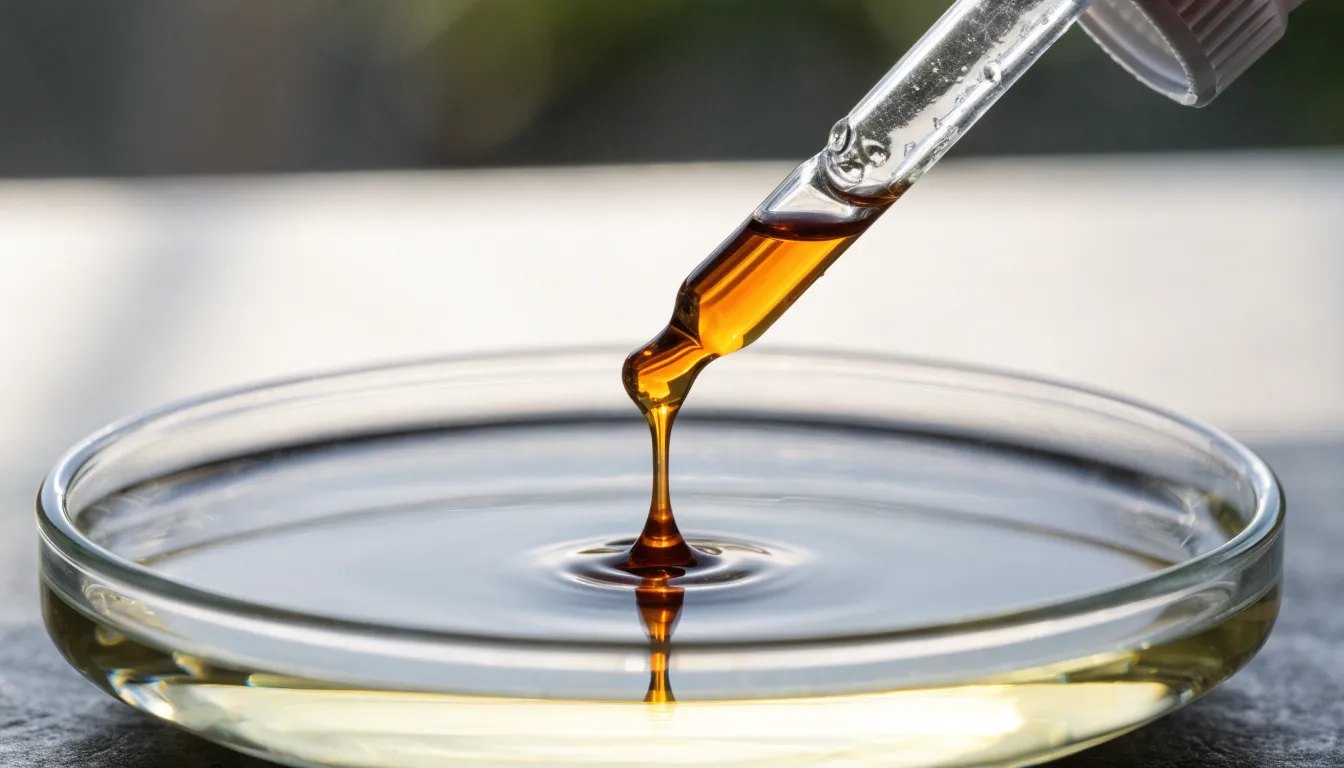
- Patch test first. Apply a drop of your blend to the inside of your forearm and wait 24 hours.
- Pick a carrier oil. Jojoba, rosehip, sweet almond, and argan all work well. See our guide to carrier oils and when to use them and our list of top carrier oils.
- Start at about 1:10. Mix 1 drop of sea buckthorn oil with 10 drops of carrier oil. If you don’t see any tint and your skin likes it, you can move toward 1:5.
- Mix just before use. Blend in your palm or a small dish, warm it between your fingertips, and press it into damp skin. Let it absorb for a few minutes before getting dressed or going to bed.
If you do get an orange tint, a gentle cleanser removes it, and it fades on its own within a few hours.
Simple DIY Recipes
Facial Glow Oil
- 2 tablespoons lightweight carrier oil (jojoba, rosehip, or argan)
- 10–15 drops sea buckthorn oil (use fewer if your skin is sensitive)
- Optional: 2–3 drops frankincense or lavender essential oil
Combine in a clean 1-ounce glass dropper bottle and shake. Warm 2–4 drops between your fingertips and press onto your face, neck, and chest, ideally at night. If you’re new to mixing, our beginner’s guide to blending essential oils covers the basics.
Soothing Scalp Treatment
- 2 tablespoons coconut or sweet almond oil
- 8–12 drops sea buckthorn oil
- Optional: 3–5 drops tea tree or peppermint essential oil
Mix in a small bowl and massage into a dry scalp for 5–10 minutes. Leave it on for at least 30 minutes, or overnight with an old pillowcase, then shampoo. Keep tea tree and peppermint away from your eyes. If your scalp is irritated or broken, skip the essential oils.
Side Effects and Who Should Be Careful
On the skin, sea buckthorn oil is generally well tolerated. Keep these in mind:
- Staining. Pulp oil can tint skin, hair, fabric, and grout. Dilute it, and use old towels.
- Allergic reactions. These are uncommon but possible. Stop using it if you get redness, itching, or a rash.
- Oral side effects. Supplements can cause stomach upset or loose stools in some people.
- Medications. Talk to a doctor before taking it orally if you use blood thinners, blood pressure medication, or have surgery coming up.
- Pregnancy and breastfeeding. There isn’t enough safety data for supplements, so check with your doctor. Topical use in a carrier oil is generally considered low risk, but a patch test is still a good idea.
- Pets. Keep supplements and DIY blends, especially those with added essential oils, away from cats and dogs.
Frequently Asked Questions
What is sea buckthorn oil good for?
It’s mainly used on the skin to moisturize dry or irritated skin, support the skin barrier, soothe skin after sun exposure, and condition a dry scalp. As a supplement, it’s being studied for dry eyes and dry mucous membranes, but that evidence is still limited.
Is sea buckthorn oil an essential oil?
No. It’s a pressed (fixed) oil, like rosehip or jojoba oil, not a distilled essential oil. That means it can be used at much higher concentrations than essential oils. People mostly dilute it to avoid orange staining.
How do you use sea buckthorn oil?
For skin, mix about 1 drop of sea buckthorn oil with 10 drops of a carrier oil like jojoba and press it into clean, slightly damp skin. For the scalp, add 8–12 drops to 2 tablespoons of carrier oil and massage it in before washing. Supplements should only be taken as directed on the label and after checking with your doctor.
Does sea buckthorn oil stain your skin?
Undiluted berry pulp oil can leave a temporary orange tint because of its carotenoids. Diluting it in a carrier oil and letting it fully absorb prevents most staining. Seed oil is much lighter in color and stains far less.
What’s the difference between seed oil and berry oil?
Seed oil is golden, lighter, and higher in omega-3, omega-6, and vitamin E, which makes it great for facial oils. Berry (pulp) oil is deep orange and high in omega-7 and carotenoids. It’s more often used in supplements and for very dry skin.
Is Siberian sea buckthorn oil different?
Not really. “Siberian” usually refers to where the berries were grown or sourced. It’s the same species, Hippophae rhamnoides. Quality depends more on whether it’s cold-pressed and clearly labeled than on the region.
Can I take sea buckthorn oil every day?
Many supplements are designed for daily use, but talk to your doctor or pharmacist first, especially if you take blood thinners or blood pressure medication, are pregnant or breastfeeding, or have a health condition.