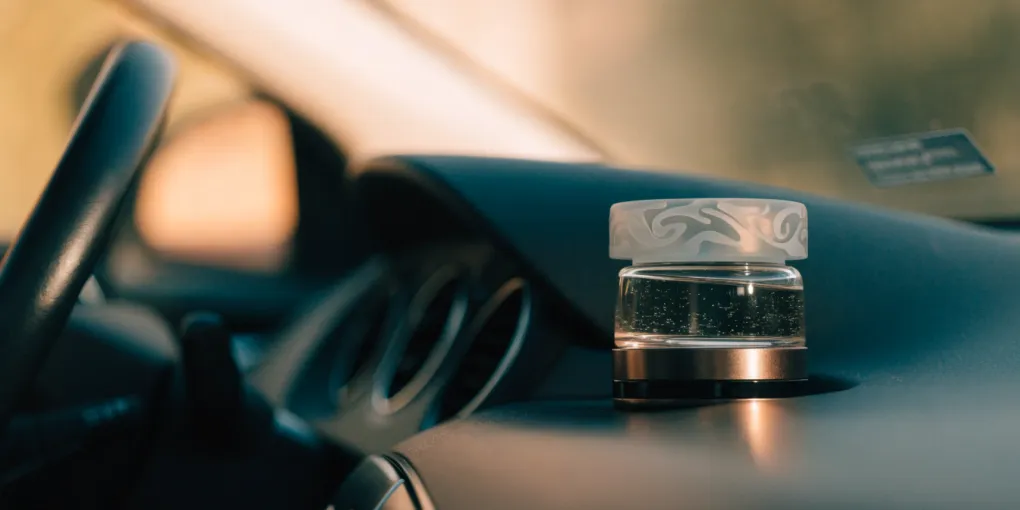
Essential oil car diffusers are compact aromatherapy devices designed for vehicles that release plant-based oil scents into the cabin via USB, 12V outlets, or passive methods. They offer natural odor neutralization, stress reduction, and alertness, providing a customizable and therapeutic alternative to synthetic air fresheners, with usage influenced by vehicle size, temperature, and humidity.
Table of Contents
- Driving in Style
- The Science of Scent
- Vent Clips vs USBs
- Passive Aroma Pads
- Ultrasonic Mist Makers
- Stress Free Commuting
- Staying Alert at the Wheel
- Tackling Car Odors
- The Humidity Factor
- Vehicle Size Matters
- Temperature Trouble
- Safe Driving First
- Safety for Passengers
- Maintenance Essentials
- Longevity and Value
Driving in Style
Essential oil car diffusers are small aromatherapy devices made for vehicles. They release a steady, gentle stream of essential oil scent inside the car, which can make the drive feel more refreshing or more relaxing, depending on the oil you choose. They are usually powered through a USB port or a 12V car outlet, and some models can run on batteries.
Unlike home diffusers, which are bigger and made for large rooms, car diffusers are compact and designed for the small space of a car cabin. Their small size means they don’t block the driver’s view or take up too much room on the dashboard or console.
They also differ from regular car air fresheners. Most air fresheners use synthetic chemicals with a fixed scent that only masks odors. Essential oil car diffusers, on the other hand, use pure plant-based oils, so you can choose oils that fit your needs—like peppermint for alertness or lavender for calm. This gives you a more natural, personalized, and therapeutic scent experience instead of just covering up bad smells.
The Science of Scent
Essential oils contain natural volatile compounds, so they easily evaporate into the air. A car diffuser simply helps trigger this release. Some use mild heat to speed up evaporation from a pad or reservoir, others use ultrasonic waves to create a fine mist, and simpler versions rely on passive evaporation, sometimes with a small fan to get the scent moving.
Once these fragrance molecules are in the air, the car’s own airflow guides them around the cabin. The heating, cooling, or defroster system acts like a distribution network, carrying the scent to all corners. Even without active ventilation, natural air currents from small temperature differences gradually spread the aroma.
Temperature also affects the strength of the scent. A warmer car causes the oils to evaporate faster, producing a stronger and quicker aroma. A cooler car slows evaporation, giving a softer, longer-lasting effect. Because the cabin is small, even a small amount of essential oil can fill the space and create an even, noticeable atmosphere.
Vent Clips vs USBs
When choosing an essential oil car diffuser, the two most common options are vent clips and USB plug-ins. Both work differently to release fragrance into your vehicle.
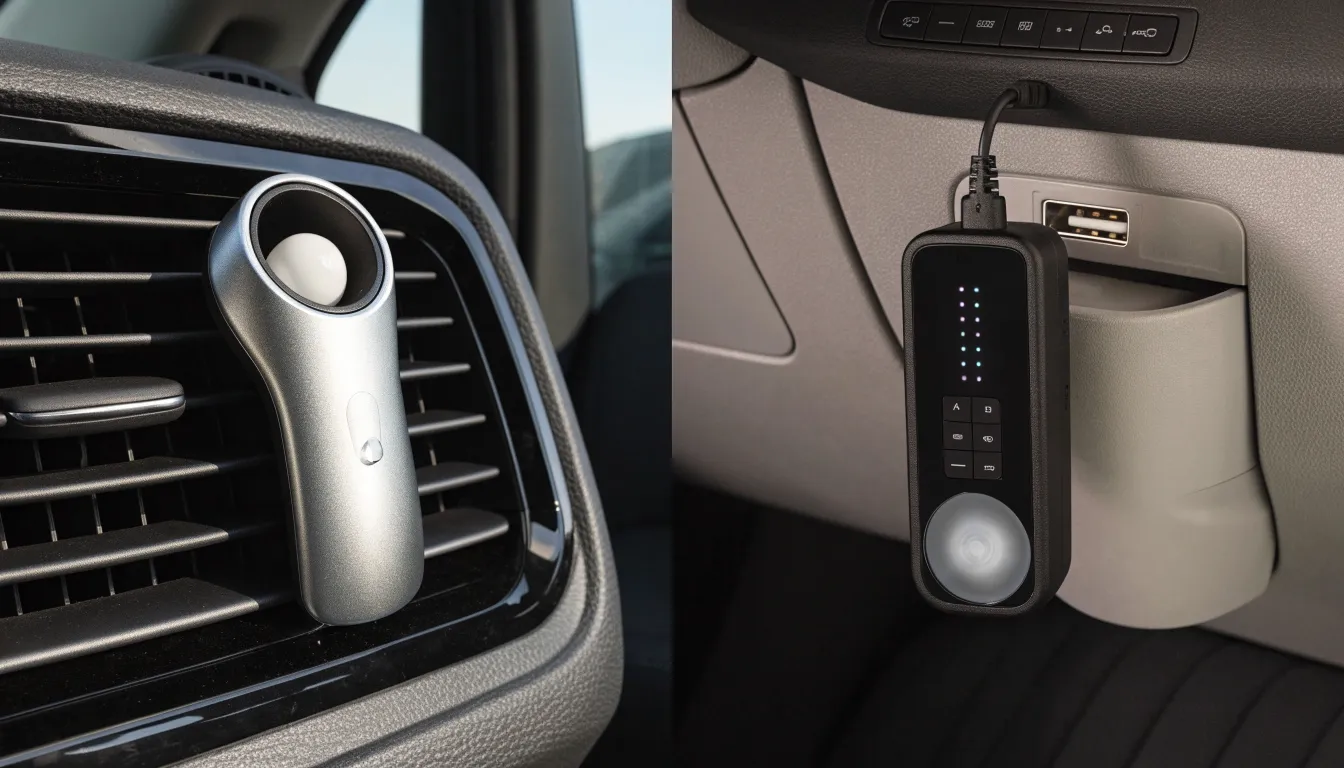
Vent clip diffusers are simple and easy to use. You just attach them to an air vent, with no power or liquid needed. They rely on the car’s airflow to spread the essential oil, so the scent is usually light and may come and go depending on fan speed. This makes them a good choice for subtle fragrance, and they use no electricity at all.
USB diffusers are more active. They plug into a USB port and use a small amount of power to disperse the oil, often through ultrasonic technology or a tiny fan. Many models use water or oil cartridges. They tend to produce a stronger, more consistent scent throughout the cabin and give you more control over intensity. The trade-off is that they take up a USB port and draw power while in use.
Passive Aroma Pads
Passive aroma pads, like simple felt strips, are a straightforward way to use essential oils in your car. They work by natural evaporation: you apply the oil directly to the absorbent pad, and it slowly releases the aroma into the air. There is no need for power, batteries, or water.
Because they have no electrical parts, these diffusers need no charging and keep your car clutter-free. They are quiet and gentle, relying on natural airflow—often from your car’s vents—to carry the essential oil molecules throughout the cabin. This gives a subtle, consistent scent without distraction.
When the fragrance fades, you simply add a few more drops of essential oil to the pad. This makes passive pads an easy, fuss-free option for enjoying the therapeutic benefits of essential oils while driving.
Ultrasonic Mist Makers
Ultrasonic mist makers are an effective way to use essential oils in your car. They work like small humidifying diffusers, using a tiny transducer that vibrates very fast in water. This creates a fine, cool mist without any heat, so the essential oils stay intact and don’t lose their beneficial properties.
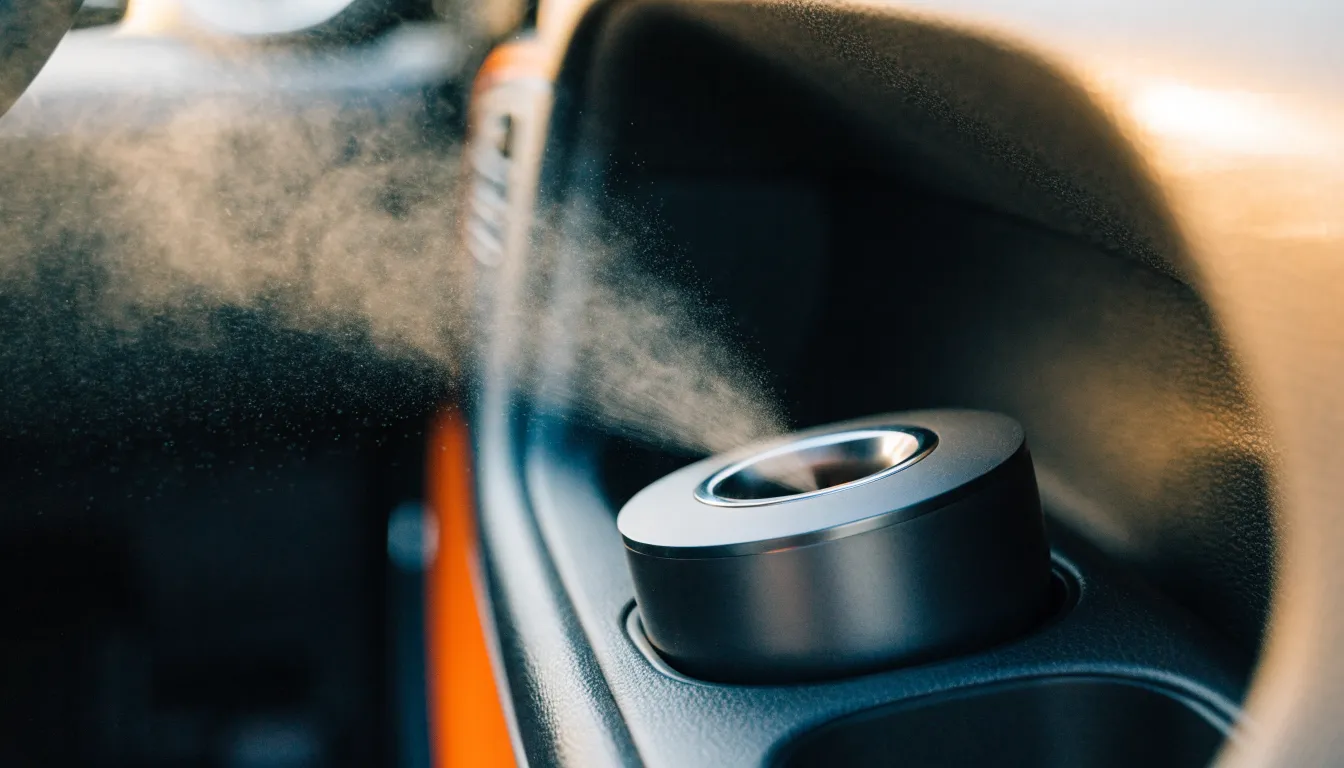
These car diffusers are powered by a 12V adapter or USB port, making them easy to use in most vehicles. The misting action spreads the aroma evenly through the cabin, giving you a steady, consistent scent and the therapeutic benefits of the oils while you drive.
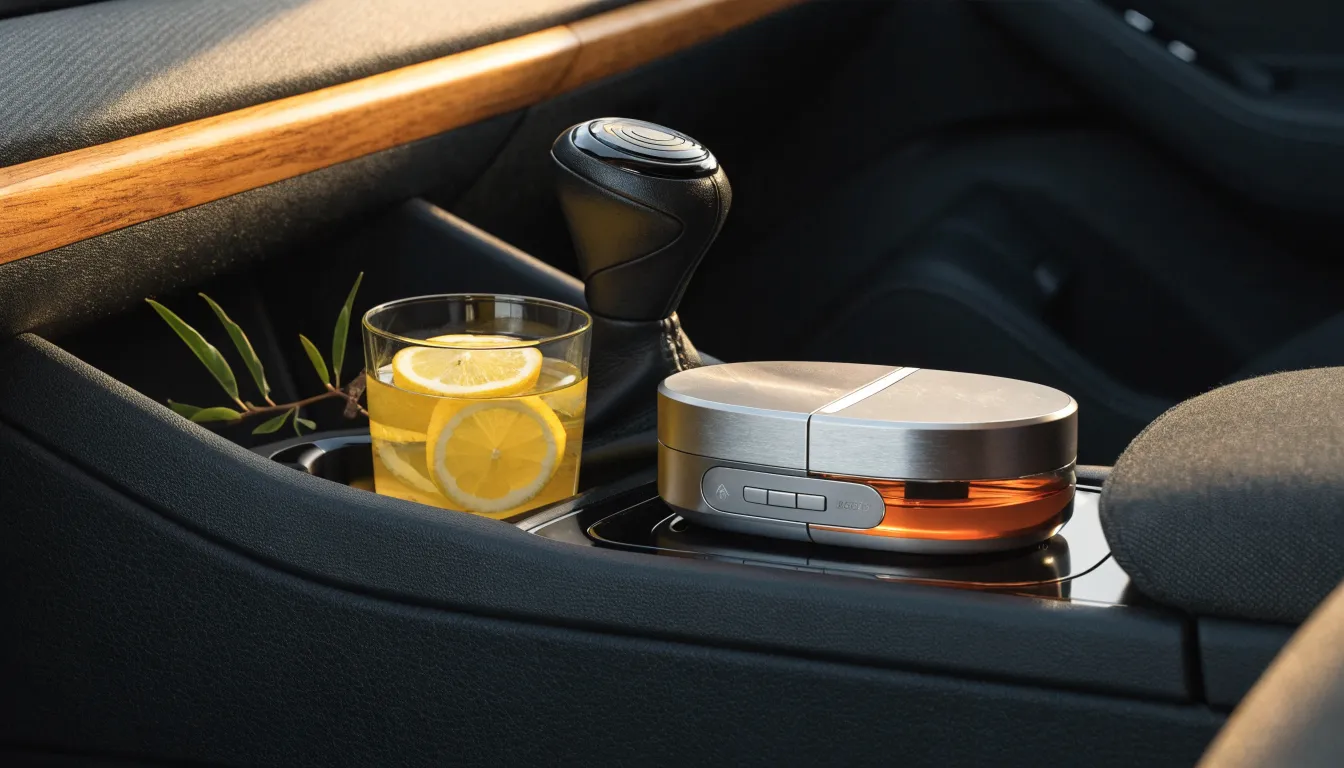
The mist also adds a little humidity to the air, which is nice in dry climates or seasons. These compact diffusers can sit on the dashboard or in a cup holder, and they run quietly and efficiently, making them a simple addition to your car.
Stress Free Commuting
Essential oil car diffusers offer a simple way to make daily commutes less stressful. When diffused in the car, the oils’ aromatic molecules are inhaled and interact with the brain’s limbic system, which helps regulate emotion. This signals the body to relax, reducing the physical signs of stress like a fast heartbeat and shallow breathing.
Lavender is especially useful for its calming effects, helping to ease anxious feelings and encourage a sense of peace. Roman chamomile works alongside it with a gentle, soothing scent that reduces nervous tension and irritation.
Together, these natural essences help counter the frustration of heavy traffic and road rage. Instead of letting bumper-to-bumper conditions control your mood, they promote patience and a more balanced emotional state, making the journey noticeably more pleasant and stress-free.
Staying Alert at the Wheel
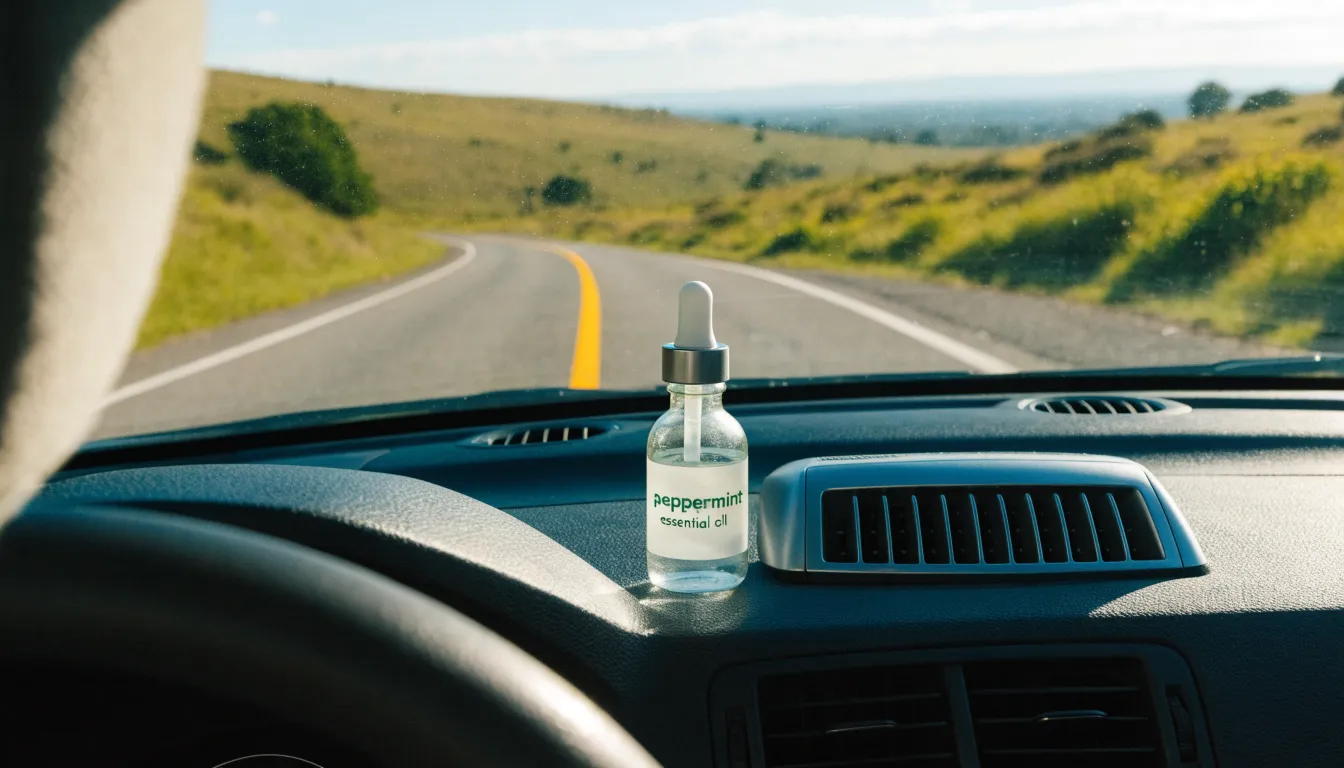
Maintaining alertness while driving is especially important on long trips. Essential oil car diffusers can help create a focused environment. Peppermint oil is a standout choice because its sharp, fresh scent stimulates the mind, reduces sluggishness, and gives a quick mental boost to help concentration as the miles add up.
Eucalyptus oil is another good option for staying vigilant. Its clean, camphor-like aroma supports clear breathing and open airways, which can make you feel more energized. This refreshing scent cuts through mental fog and helps sustain attention during long, monotonous stretches of road.
Citrus oils like lemon and sweet orange are also useful. Their bright, zesty fragrances lift your mood and reduce feelings of tiredness or boredom. Together, these oils in a car diffuser create an aromatic space that supports mental clarity and fights the natural fatigue of long-distance driving.
Tackling Car Odors
Car odors get trapped in upholstery and mats, making commutes unpleasant. Many air fresheners only cover smells with synthetic scents, which can make things worse. Essential oil car diffusers offer a natural alternative by using specific essential oils for natural home freshening instead of just masking them.
Tea tree oil is especially useful because it has strong antibacterial properties. Many bad smells come from bacteria in damp areas or leftover food particles. Diffusing tea tree oil helps fight those microbes and breaks down the source of the odor.
Lemon oil works as a natural deodorizer and also has antimicrobial qualities. Its compounds directly neutralize odor molecules, leaving a clean, fresh scent. Together, tea tree and lemon provide a complete, natural way to keep your car smelling fresh and make driving more enjoyable.
The Humidity Factor
The amount of moisture in your car’s air changes how essential oils behave. When the air is dry, like when the AC is on, scent particles spread quickly but also settle quickly. The lighter parts of the oil evaporate faster, creating a strong burst of fragrance at first, but it fades sooner and may not reach every corner of the cabin evenly.
When the air is more humid, water molecules can attach to the oil particles and carry them better. This keeps the scent airborne longer, allowing it to spread further and fill the space gradually. The result is often a longer-lasting, more even aroma, though very high humidity can slightly dull lighter scents at first by surrounding them too much.
Since air conditioning removes moisture, using the AC can change how well a diffuser works. A full-blast AC may give you a quick, short-lived scent. By knowing this, you can adjust how much oil you use or how long you run the diffuser, depending on the weather and AC use.
Vehicle Size Matters
The size of your vehicle’s cabin determines what kind of essential oil diffuser works best. A compact car has a small interior, so it needs a gentler approach, while a large three-row SUV needs much more power. The key is to match the diffuser’s output and oil capacity to the space so the scent is noticeable but not overpowering.
For small cars and coupes, choose a diffuser with a lower output and a small oil reservoir. This is enough to fill the limited space with a light, pleasant aroma. A strong diffuser in a small cabin can become distracting and uncomfortable, so gentle diffusion is usually the best choice.
In standard sedans and mid-size SUVs, a moderately powerful diffuser works well. These vehicles have more air to fill, so a slightly larger capacity or adjustable output helps you find the right medium intensity. For large vehicles like minivans and full-size SUVs, pick a diffuser made for broad coverage—one with a bigger water tank, stronger fan, or higher nebulizing power. This keeps the scent spreading evenly throughout the cabin and lasting longer. Matching the diffuser’s strength to your vehicle’s size gives you the best aroma and a more enjoyable drive.
Temperature Trouble
Hot weather changes how car essential oils diffuse. When a car gets very hot from sun or heavy heater use, the oil warms and becomes thinner. Thinner oil evaporates faster, so the scent hits quickly and strongly—but the oil runs out sooner, shortening how long the diffuser lasts.
Cold weather does the opposite. Low temperatures make the oil thicker and slower to evaporate. The aroma releases gradually and is much more subtle at first, but the oil lasts much longer. In cold conditions, you may need to wait longer for the scent or use more oil to get a noticeable fragrance.
Understanding these temperature effects helps you use a car diffuser more effectively all year. In heat, expect a strong short burst of scent. In cold, expect a softer, longer-lasting release.
Safe Driving First
When using an essential oil diffuser in your car, safe driving comes first. Pick a spot that does not block your view of the windshield, side windows, or mirrors. The best places are lower on the dashboard or console, well below your normal line of sight, so the diffuser adds scent without creating a blind spot or visual distraction.
Many diffusers attach to air vents to spread the aroma. If you use a vent clip, make sure it does not fully block the airflow. Air still needs to move through the cabin for comfort and defrosting. Also keep the diffuser away from the steering wheel, gear selector, indicator stalks, radio, climate controls, and dashboard displays so you can reach and see everything easily.
A secure mount is just as important. Whether using a clip, suction cup, or adhesive pad, follow the instructions carefully so the diffuser stays firmly in place. If it comes loose while driving, it can distract you or become a dangerous projectile. With these simple precautions, you can enjoy the aromatic benefits of essential oils while staying focused on the road.
Safety for Passengers
Keeping passengers safe, especially children and pets, is the top priority when using an essential oil diffuser in a car. Kids and animals are much more sensitive to concentrated oil vapors than adults due to their smaller bodies and developing systems.
Some oils are toxic to pets. Tea tree, peppermint, citrus, and wintergreen can be harmful to cats and dogs if inhaled or absorbed through the skin. Check with a vet before using any scent in a car, or simply skip the diffuser when pets are along. Children also have delicate airways, so strong or long exposure can cause coughing or breathing trouble. If kids are in the car, use very diluted blends and choose gentle oils like lavender or Roman chamomile to ensure you use essential oils safely around kids.
Good airflow is essential, even with safe oils. Keep windows slightly open or make sure the car’s ventilation pulls in fresh air. This stops vapor from building up to irritating levels. Use oils carefully, keep the diffusion mild, and always keep the cabin well-ventilated.
Maintenance Essentials
Keeping your essential oil car diffuser clean is key to making it last and keeping your aromas pure. Regular cleaning stops oil residue from building up, prevents bacteria and mold in the damp interior, and keeps the mist nozzle from clogging. A simple cleaning routine helps your diffuser keep creating a fresh, healthy scent in your car.
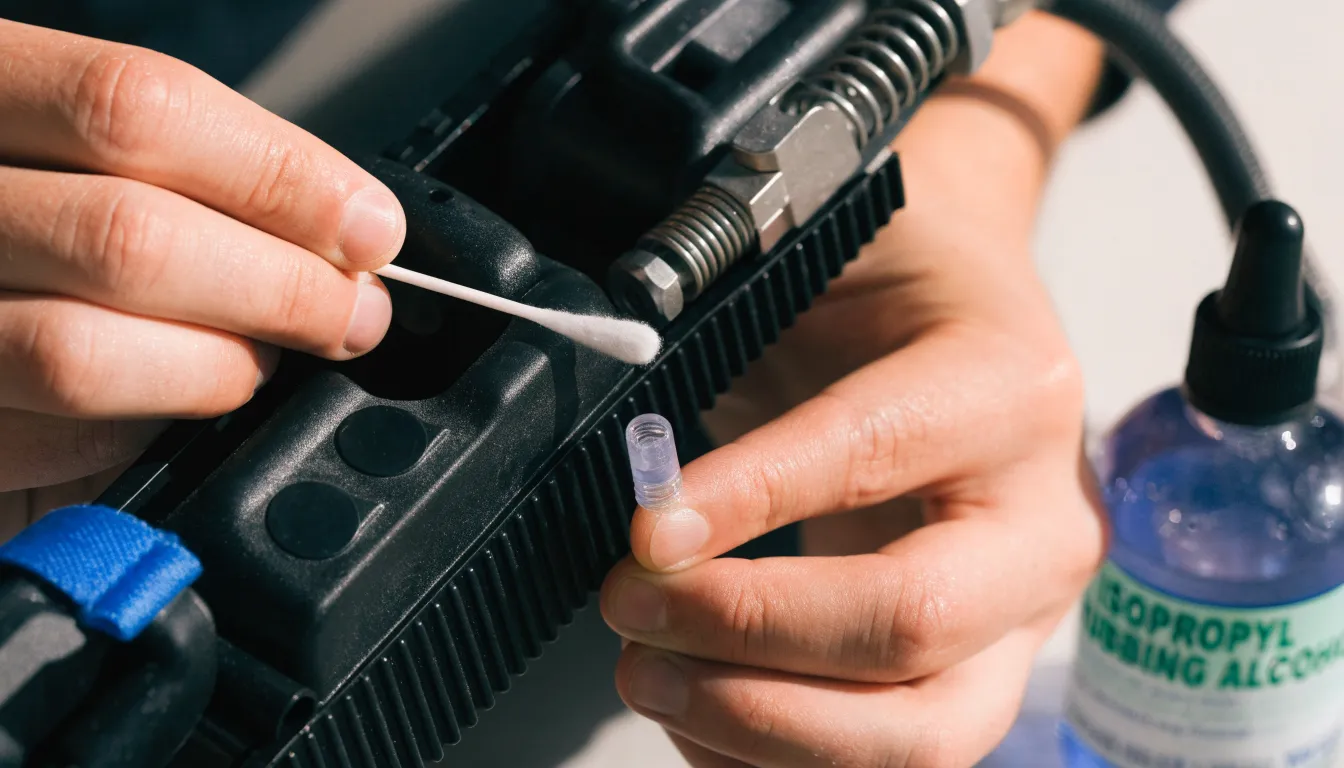
For a quick clean, especially when oil film is present, use rubbing alcohol. Start by unplugging the diffuser and emptying out any water and oil. If you can, take apart the reservoir and cover, then wipe the inside with a soft cloth or cotton swab dipped in alcohol. Gently clean the mist nozzle with another swab to clear blockages. The alcohol dissolves the oil and dries fast, leaving parts clean. Rinse everything with clean water afterward and let it fully air dry before putting it back together.
Another option is white vinegar, which works well against mineral buildup and helps sanitize. Mix equal parts white vinegar and water and fill the reservoir. Let it sit for 15 to 30 minutes so the vinegar can break down buildup. If your model allows, run the diffuser with this mix for a few minutes in a well-ventilated area to clean the internal parts and nozzle. Then empty it, rinse everything well with fresh water to remove any vinegar smell, and let all parts dry completely before using the diffuser again. Regular care like this keeps your diffuser working well and your essential oils smelling clean and fresh.
Longevity and Value
A single 15ml bottle of essential oil holds about 300 drops. A typical car diffuser session uses only 3–5 drops, which can last for hours or even a couple of days. For daily commutes, that means one bottle can provide roughly 60–100 uses, so it can last for many months with regular use.
How fast oil is used depends on the diffuser type. Passive diffusers use less oil than active ultrasonic or nebulizing models, and using the diffuser intermittently conserves oil better than running it continuously.
This makes essential oils very economical. A disposable air freshener costs a few dollars and only lasts a few weeks. By comparison, a $15 bottle of essential oil lasting 90 uses works out to about $0.17 per use. You also get the flexibility to choose different scents for different moods and the benefit of using pure plant extracts, making an essential oil car diffuser a smart long-term value.
Frequently Asked Questions
What is an essential oil car diffuser, and how is it different from a regular car air freshener?
Essential oil car diffusers are small aromatherapy devices designed for vehicles that release a gentle stream of pure plant-based essential oil scent. Unlike regular car air fresheners that use synthetic chemicals to mask odors, car diffusers offer a more natural, personalized, and therapeutic scent experience.
How do essential oil car diffusers spread scent in a vehicle?
Car diffusers release essential oil scent into the air through various mechanisms, such as mild heat, ultrasonic waves creating a fine mist, or passive evaporation sometimes assisted by a small fan. The car’s own airflow, including the heating, cooling, or defroster system, then guides and distributes these fragrance molecules throughout the cabin.
What essential oils can help me stay alert during long drives?
Peppermint oil is a standout choice for alertness due to its sharp scent that stimulates the mind and reduces sluggishness. Eucalyptus oil also supports clear breathing and provides an energizing, refreshing scent, while citrus oils like lemon and sweet orange can lift your mood and fight tiredness.
Are essential oil car diffusers safe to use with children or pets in the car?
Kids and animals are much more sensitive to concentrated oil vapors, and some oils like tea tree, peppermint, citrus, and wintergreen can be harmful to pets. If children are present, use very diluted blends and choose gentle oils such as lavender or Roman chamomile, and always ensure good airflow by keeping windows slightly open.
How should I clean my essential oil car diffuser?
For cleaning, you can wipe the reservoir and mist nozzle with a soft cloth or cotton swab dipped in rubbing alcohol, then rinse with clean water and air dry. Another option is to fill the reservoir with equal parts white vinegar and water, letting it sit for 15-30 minutes or running it briefly, then rinsing thoroughly and allowing all parts to dry completely.
How long does a bottle of essential oil typically last in a car diffuser?
A 15ml bottle of essential oil contains about 300 drops, and a typical car diffuser session uses only 3–5 drops. This means one bottle can provide roughly 60–100 uses, potentially lasting for many months with regular daily commuting, especially when using passive diffusers or running it intermittently.