
Essential oils can’t cure a cold, but some can make the symptoms easier to live with. Eucalyptus oil has the best evidence, mainly for loosening mucus. Peppermint makes breathing feel easier through its cooling menthol, even though it doesn’t physically open the nose. Lavender and citrus oils are mostly about comfort, sleep, and mood. Steam, diffusers, diluted chest rubs, and personal inhalers are all reasonable ways to use them, but eucalyptus and peppermint are not safe for young children, so check the age guidance below before using any oil around kids.
Table of Contents
How Essential Oils Help With Cold Symptoms
Essential oils are concentrated plant extracts made of volatile aromatic compounds. When you breathe them in or apply them diluted to your skin, a few of those compounds affect how your airways feel and function.
They help in three main ways:
- Loosening mucus. Some compounds, especially 1,8-cineole in eucalyptus, may thin mucus so it is easier to clear.
- Making breathing feel easier. Menthol in peppermint activates cold receptors in the nose, which creates a strong sensation of clearer airflow.
- Comfort and sleep. Calming scents like lavender can make it easier to rest, and rest matters when you’re fighting a cold.
None of these oils kill the cold virus or shorten a cold in any proven way. Think of them as symptom relief, in the same category as a hot shower or a menthol cough drop.
What the Research Shows
Here’s an honest summary of the evidence for each oil:
| Oil | What it may help | Strength of evidence |
|---|---|---|
| Eucalyptus (1,8-cineole) | Thinning mucus, sinus and chest congestion | Moderate, mainly from clinical trials of oral cineole capsules, not inhaled oil |
| Peppermint (menthol) | Feeling of easier breathing | Good for the sensation; studies show no real change in nasal airflow |
| Lavender | Relaxation and sleep | Some evidence for calming effects; none for cough |
| Tea tree | Antimicrobial in lab tests | No evidence that diffusing it prevents or treats colds |
| Lemon and citrus | Mood, pleasant scent | No evidence for immune or congestion benefits |
| Frankincense | Relaxed, slower breathing | Minimal; the anti-inflammatory compounds aren’t in the essential oil |
Vapor rubs that combine camphor, menthol, and eucalyptus have been studied a bit more, and one trial found they helped children over 2 sleep better during colds compared with plain petroleum jelly. That research applies to those specific commercial products, not homemade blends.
The Best Essential Oils for Colds
Eucalyptus
Eucalyptus oil is the most useful essential oil for congestion. Its main compound, 1,8-cineole (also called eucalyptol), has mucolytic activity, meaning it helps break down thick mucus so it is easier to clear from the nose, sinuses, and chest.
The strongest evidence comes from clinical trials where people took standardized cineole capsules by mouth for sinusitis and bronchitis. Inhaling eucalyptus oil delivers much less cineole, so the effect is milder, but many people find steam or diffusing helpful when phlegm and a blocked nose are the main problems.
Eucalyptus is not safe on or near the face of young children. See Essential Oils and Kids before using it around them.
Peppermint
Peppermint essential oil gets its effect from menthol. Menthol activates cold-sensing receptors in the nose and throat, which creates a strong feeling of cool, open airways. Studies show menthol doesn’t actually reduce nasal blockage, but the sensation of easier breathing is real and can make a stuffy nose much more bearable.
Menthol’s cooling effect can also soothe a scratchy throat and make a tight chest feel more comfortable. It isn’t an expectorant, so it won’t help you cough up mucus, but it pairs well with eucalyptus, which may.
Like eucalyptus, peppermint is not safe on or near the face of young children.
Lavender
Lavender won’t clear your nose, but it can help with the other side of a cold: feeling restless and sleeping badly. Its main compound, linalool, has calming effects when inhaled, and some studies link lavender aroma with better sleep quality.
Good sleep supports your immune system while it fights off a cold, so a calming bedtime routine is worth having. Diffuse lavender in the bedroom, or apply it diluted to your chest or wrists at night. It’s also one of the gentler oils for older children.
Tea Tree
Tea tree oil kills bacteria and some viruses in lab tests, which is why it’s often recommended for colds. However, there is no evidence that diffusing tea tree oil cleans the air enough to prevent colds, or that inhaling it fights a cold you already have.
Its real value here is its clean, medicinal scent, which blends well with eucalyptus and peppermint. Tea tree is toxic to cats and other pets, so don’t diffuse it where pets can’t leave the room.
Lemon and Other Citrus Oils
Lemon and other citrus essential oils, such as sweet orange and grapefruit, are often marketed as immune boosters because they contain d-limonene. There is no good evidence that inhaling them supports your immune system or relieves congestion.
What they do offer is a bright, uplifting scent that can make a sick room feel fresher and help you feel a bit less run down. Sweet orange is also one of the milder options for children. If you use lemon or grapefruit on your skin, avoid sun exposure for 12 hours, since cold-pressed versions can cause skin reactions in sunlight.
Frankincense
Frankincense essential oil is often credited with anti-inflammatory effects from boswellic acids. Those compounds are found in frankincense resin and supplements, but they are too heavy to come through steam distillation, so the essential oil contains little or none of them.
Frankincense’s warm, resinous scent is popular in calming blends and may encourage slower, deeper breathing. It’s a nice addition to a diffuser or inhaler, but don’t expect it to reduce inflammation in your airways.
How to Use Essential Oils for Congestion
Steam Inhalation
Steam inhalation delivers warm, moist air and aromatic vapors straight to your nose and sinuses. It’s one of the best ways to use eucalyptus and peppermint for a blocked nose. This method is for adults and teens only. Bowls of hot water are a common cause of serious scalds in children.
- Place a heat-proof bowl on a stable table and fill it with hot (not boiling) water.
- Add one or two drops of eucalyptus, peppermint, or tea tree oil.
- Lean over the bowl, keeping your face about 12 inches from the water, and drape a towel over your head and the bowl.
- Close your eyes and breathe slowly through your nose for five to ten minutes.

If the steam feels too hot or the vapors sting, lift the towel and take a break. You can repeat this two to three times a day when congestion is at its worst. Skip steam with essential oils if you have asthma, since strong vapors can trigger symptoms.
Diffuser Blend for Congestion
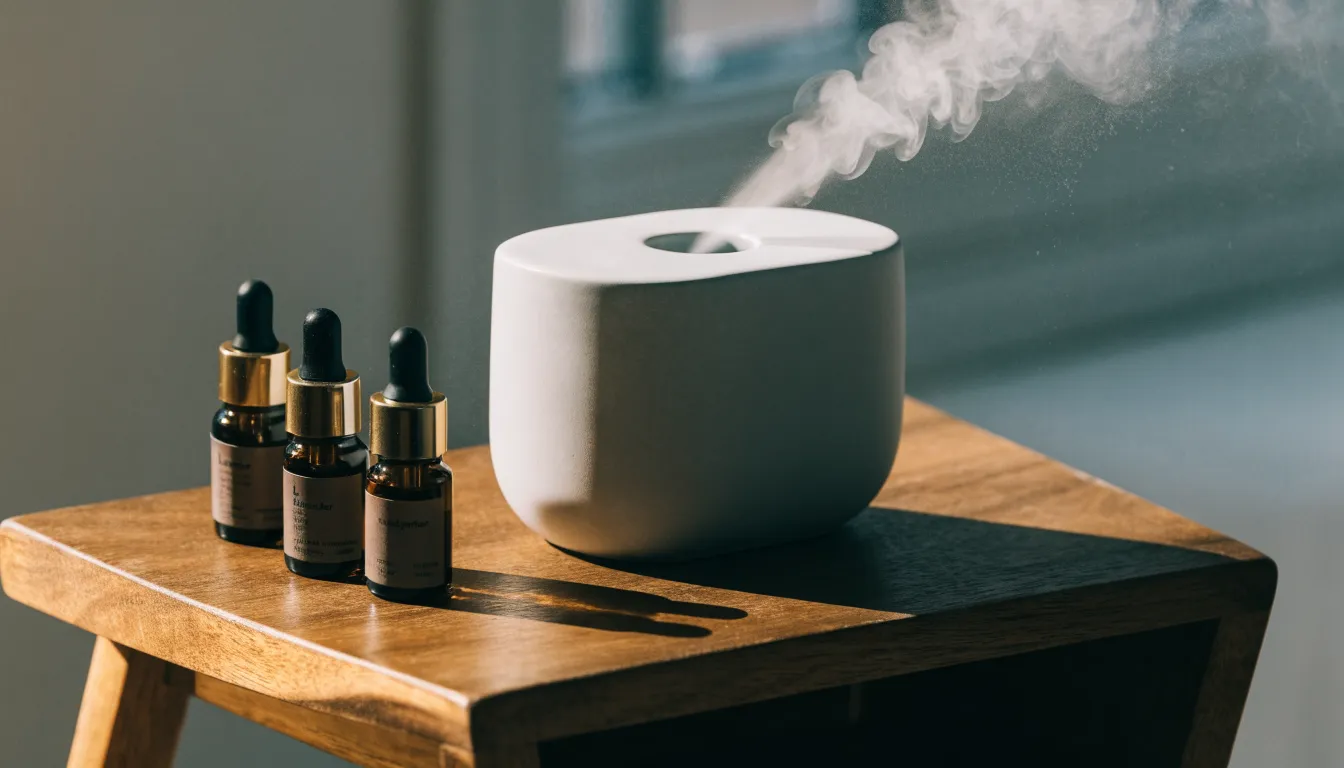
A diffuser is an easy way to keep a light scent in the bedroom while you rest. This blend combines eucalyptus for congestion, peppermint for a cooling, open feeling, and tea tree for a clean scent.
For a standard 100 to 150 ml ultrasonic diffuser, add:
- 4 drops eucalyptus globulus
- 3 drops peppermint
- 2 drops tea tree
Run the diffuser for 15 to 30 minutes before bed, or in intermittent cycles, such as 30 minutes on and 30 minutes off, rather than all night. Keep the door open or the room ventilated. Don’t use this blend in a room where young children, pregnant people, or pets will be sleeping.
DIY Chest Rub
A homemade chest rub lets you use essential oils without a diffuser. Mix them into a carrier oil such as jojoba, which absorbs easily, or fractionated coconut oil, which is light and spreads well.
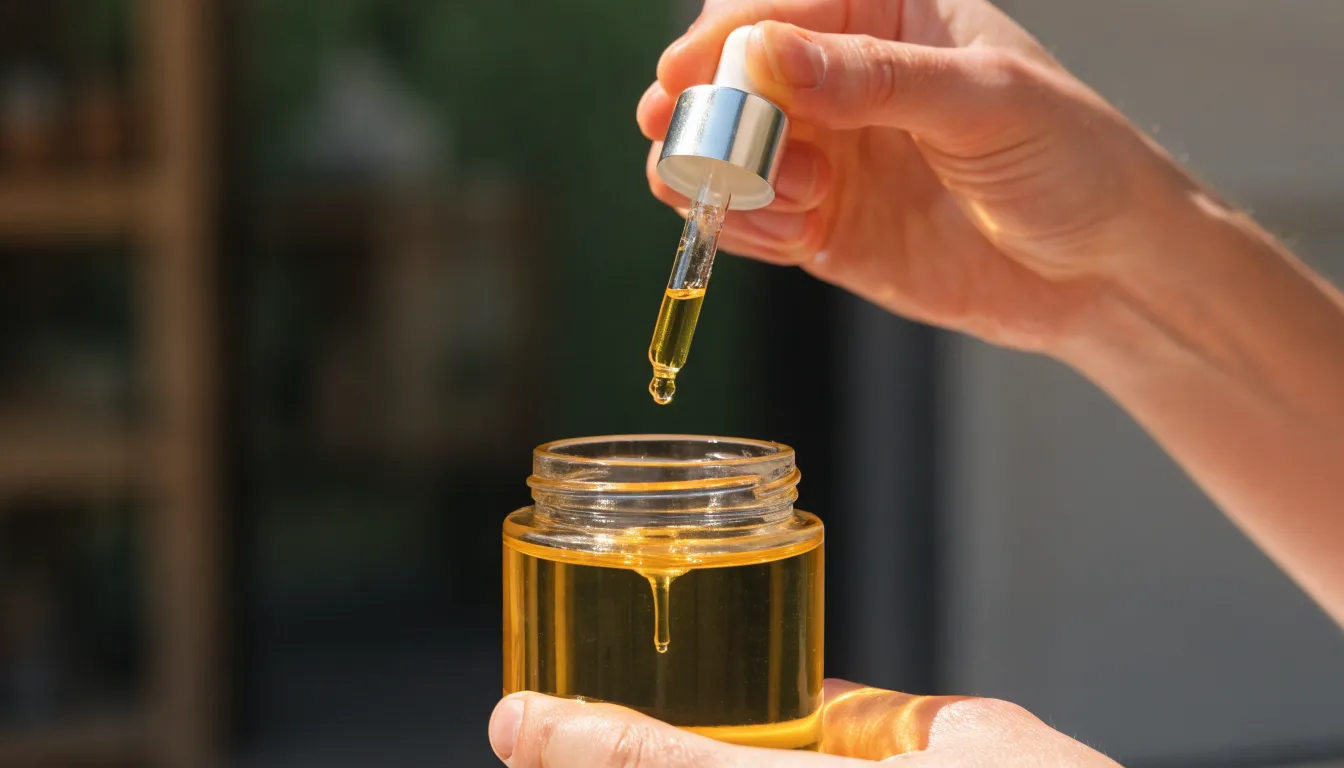
Dilution matters, because undiluted essential oils can burn or irritate skin. One tablespoon of carrier oil is about 300 drops, so for adults:
| Strength | Per tablespoon | Per 1 oz (2 tbsp) | Use for |
|---|---|---|---|
| 1% | 3 drops | 6 drops | Sensitive skin, older children (see age limits) |
| 2% | 6 drops | 12 drops | Most adults |
| 3% | 9 drops | 18 drops | Short-term adult use |
A simple adult blend: 1 tablespoon jojoba oil with 4 drops eucalyptus and 2 drops peppermint (2%). Mix in a small glass jar, then patch test on your inner forearm and wait 24 hours. Apply a small amount to your chest and upper back as needed. Keep it away from your face, nostrils, and eyes, and wash your hands afterward.
Warm Bath
A warm bath can ease the general achiness of a cold, and the steam carries a light scent of any essential oil you add. Essential oils don’t mix with water, though. They float on top in concentrated droplets that can irritate your skin.
To use oils safely in the bath, first mix 3 to 5 drops of essential oil into a tablespoon of carrier oil or unscented liquid soap, then stir it into the full tub. Epsom salts can make the bath feel more soothing, but they don’t disperse essential oils, so don’t rely on them for that. Peppermint can feel intense on sensitive skin in a bath, so eucalyptus or lavender are better choices here.
Personal Nasal Inhalers
A personal inhaler is a small tube with an oil-soaked cotton wick inside. It’s the most discreet way to use decongestant oils at work, while traveling, or on errands, and it doesn’t scent the whole room for everyone else.
Blank nasal inhaler kits are inexpensive and easy to assemble:
- Hold the cotton wick with tweezers and add 10 to 15 drops of your blend, such as eucalyptus and peppermint, until the wick is evenly soaked.
- Slide the wick into the inner tube.
- Push the end plug in firmly, then put the outer cap on to seal it.
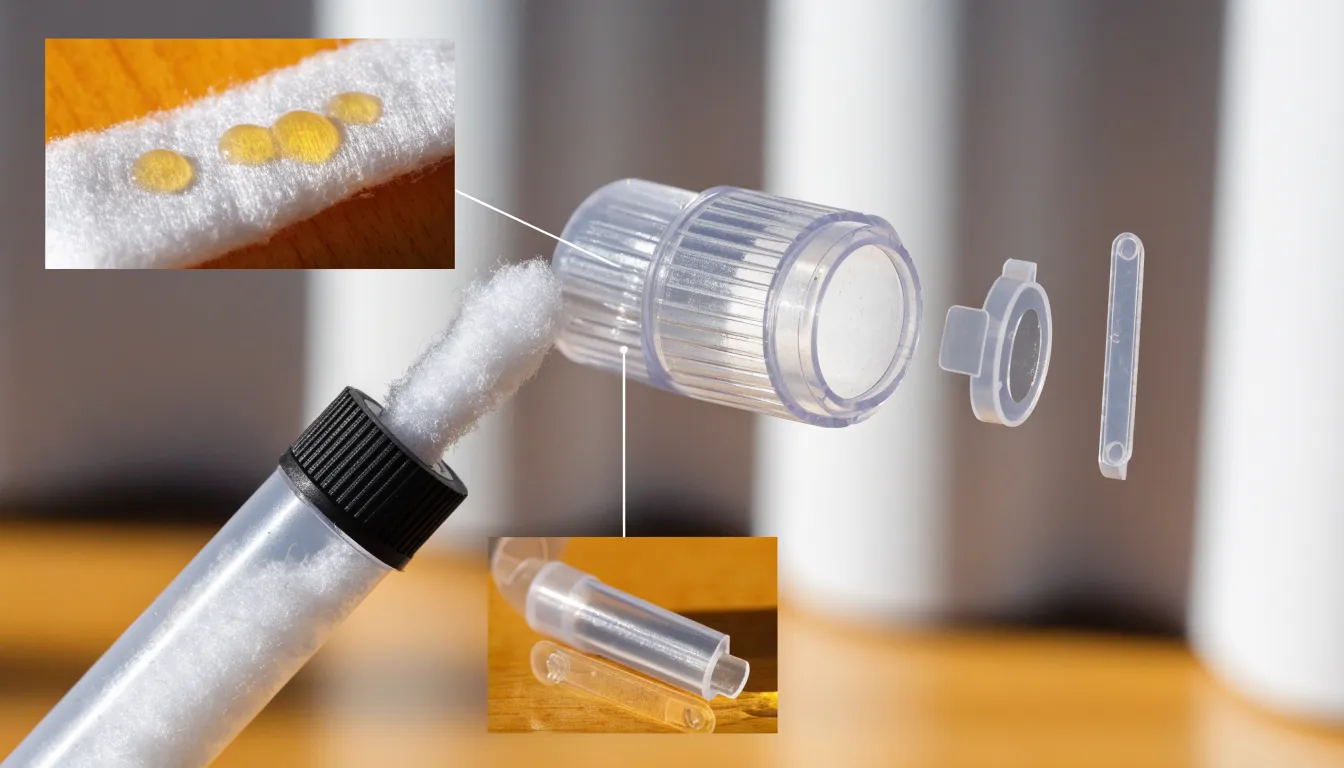
To use it, remove the cap, hold the tip just under one nostril without inserting it, and breathe in gently. Repeat on the other side. Keep the cap on between uses so the oils last longer, and keep inhalers out of children’s reach.
Essential Oils and Kids: Age Limits
Children are far more sensitive to essential oils than adults, and some of the most popular cold oils are the riskiest for them. Menthol (in peppermint) and 1,8-cineole (in eucalyptus and rosemary) can slow breathing or trigger airway spasms in young children if applied to or near the face.
Widely cited guidance from aromatherapy safety references, including Tisserand and Young’s Essential Oil Safety, is:
- Under 3 months: no essential oils at all, including diffusing.
- Under 6 years: avoid eucalyptus and peppermint in any form, including diffusing in their room.
- Under 10 years: never apply eucalyptus, rosemary, or other cineole-rich oils on or near the face.
- All children: no steam inhalation over hot water, and never apply oils to a child’s face, nose, or neck.
Gentler options for older babies and children include sweet orange, lavender, and cedarwood (Atlas or Virginian). Sweet orange has a cheerful scent, while lavender and cedarwood are calming and can help a sick child settle at bedtime.
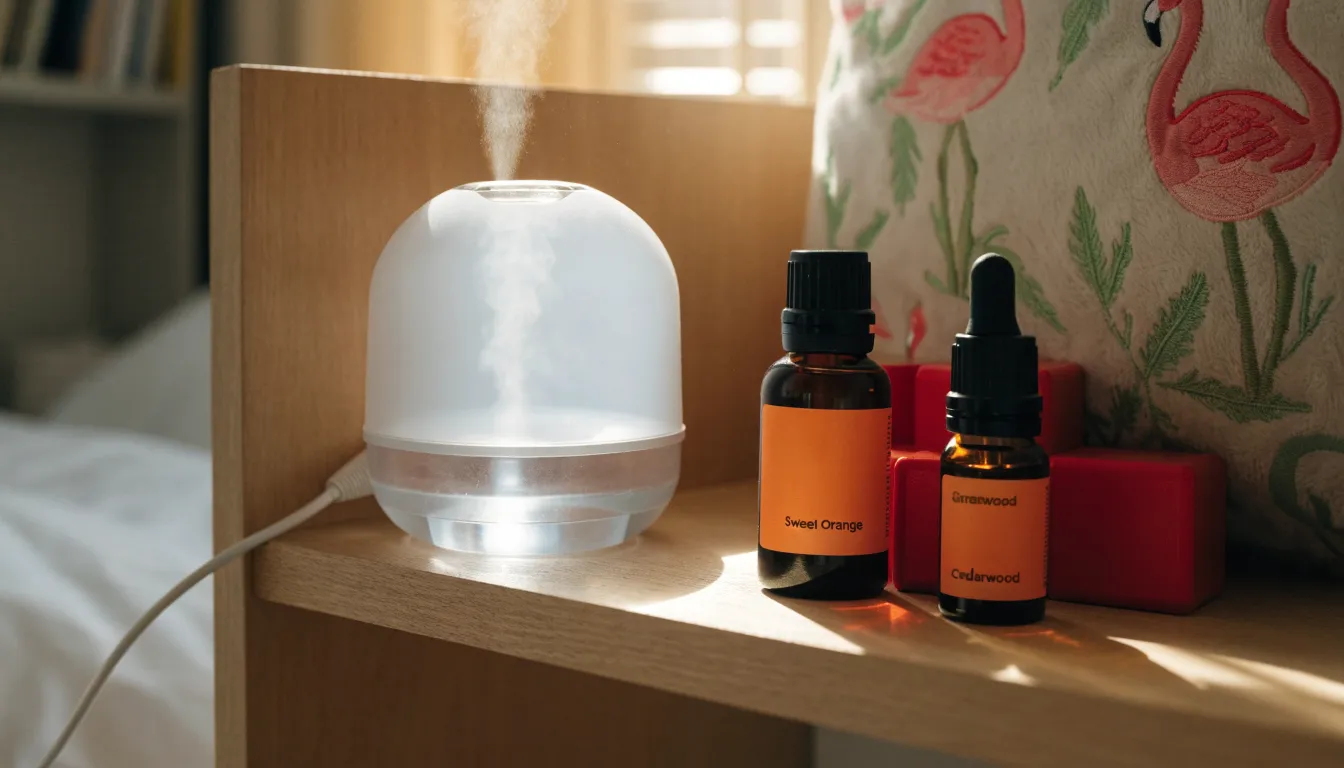
For children, keep it light:
- Diffusing: 1 to 3 drops in a diffuser, run for 15 to 30 minutes in a ventilated room, then turn it off.
- Topical: 0.5 to 1% dilution (1 to 3 drops per tablespoon of carrier oil), on the back or chest only, for children over 2.
Commercial vapor rubs with camphor and menthol are also not recommended for children under 2. Ask your pediatrician before using any essential oil with a baby, or with a child who has asthma.
Safety Precautions
- Never swallow essential oils. Even small amounts can be poisonous, especially eucalyptus and camphor, and especially for children. Store bottles out of reach with child-resistant caps.
- Always dilute for skin use and patch test new blends.
- Asthma: strong aromas can trigger attacks. Start with short, light exposure or skip essential oils entirely.
- Pregnancy and breastfeeding: talk to your doctor or midwife before using essential oils, especially peppermint and eucalyptus.
- Pets: tea tree, peppermint, eucalyptus, and citrus oils can be toxic to cats and dogs. Diffuse only where pets can leave the room.
- Keep oils out of your eyes. If you get oil in your eye, flush it with a carrier oil or milk, not water, then rinse.
When to See a Doctor
Essential oils are for mild symptoms. See a doctor if you or your child has:
- Trouble breathing, wheezing, or chest pain
- A fever above 102°F (39°C), or any fever in a baby under 3 months
- Symptoms that last longer than 10 days or get better and then worse
- Severe sinus pain, swelling around the eyes, or a stiff neck
- Signs of dehydration, such as very little urine
Frequently Asked Questions
What essential oils are best for colds and congestion?
Eucalyptus has the best evidence, since its main compound, 1,8-cineole, helps loosen mucus. Peppermint makes breathing feel easier through menthol, although it doesn’t physically clear the nose. Lavender helps with sleep, and citrus oils are pleasant for mood. None of them cure a cold.
Can essential oils cure a cold?
No. There is no evidence that any essential oil kills cold viruses in the body or shortens a cold. They can ease symptoms like a stuffy nose and help you rest, but your immune system clears the cold on its own, usually within 7 to 10 days.
How do I safely make a chest rub with essential oils?
Dilute the essential oils in a carrier oil like jojoba or fractionated coconut oil. For adults, use 6 drops per tablespoon (2%), or up to 9 drops (3%) for short-term use. Patch test first, and keep the rub away from your face, nostrils, and eyes.
Can I diffuse eucalyptus around my baby?
No. Eucalyptus and peppermint can cause breathing problems in babies and young children. Safety references recommend avoiding them entirely for children under 6, and no essential oils at all for babies under 3 months. Gentler oils like lavender or sweet orange, diffused lightly and briefly, are better options for older babies.
What essential oils are safe for kids with a cold?
Sweet orange, lavender, and cedarwood are among the gentler choices for children. Diffuse 1 to 3 drops for 15 to 30 minutes in a ventilated room, or apply a 0.5 to 1% dilution to the back or chest for children over 2. Never apply oils to a child’s face, and check with your pediatrician first.
Is Vicks VapoRub the same as eucalyptus oil?
No. Vicks VapoRub is a commercial ointment that contains camphor, menthol, and eucalyptus oil in a petroleum base. It has been studied for cold symptoms and is labeled for ages 2 and up. A homemade eucalyptus rub works in a similar way but has a different strength and hasn’t been tested the same way.
How do I do steam inhalation with essential oils?
Add one or two drops of eucalyptus or peppermint oil to a bowl of hot, not boiling, water. Drape a towel over your head, keep your face about 12 inches away, close your eyes, and breathe through your nose for five to ten minutes. Steam inhalation is not safe for children because of the risk of burns.
Does tea tree oil help with colds?
Tea tree oil kills germs in lab tests, but there is no evidence that diffusing or inhaling it prevents colds or helps you recover faster. It’s mainly useful for its clean scent in a congestion blend. Keep it away from cats, as it is toxic to them.