
If your dog was just exposed and is having a seizure, trembling, or struggling to breathe, call your vet or an emergency clinic now. You can also call the ASPCA Animal Poison Control Center at (888) 426-4435 or the Pet Poison Helpline at (855) 764-7661. Both are available 24/7, and a consultation fee may apply. Jump to what to do right now ↓
Many common essential oils can poison dogs. The most dangerous are tea tree, pennyroyal, wintergreen, sweet birch, and camphor, which can cause tremors, seizures, or liver damage even in small amounts. Cinnamon, clove, citrus, peppermint, pine, eucalyptus, and ylang ylang are also on the avoid list. Dogs can be poisoned by licking oil off their fur, swallowing it, absorbing it through the skin, or breathing in concentrated vapor.
Table of Contents
- Essential Oils Toxic to Dogs: Quick List
- Which Essential Oils Can Cause Seizures in Dogs?
- What to Do If Your Dog Was Exposed
- Signs of Essential Oil Poisoning in Dogs
- Why Essential Oils Are Risky for Dogs
- The Most Dangerous Oils, One by One
- Diffusers and Dogs
- Never Put Essential Oils on Your Dog
- Small Dogs, Puppies, and Seniors
- Lower-Risk Alternatives
- Dog-Proofing Your Home
- Frequently Asked Questions
Essential Oils Toxic to Dogs: Quick List
| Essential oil | Main toxic compound | Main risks for dogs | Seizure risk |
|---|---|---|---|
| Tea tree (melaleuca) | Terpinen-4-ol and other terpenes | Tremors, wobbliness, weakness, low body temperature, liver damage | High |
| Pennyroyal | Pulegone | Liver failure, bleeding, seizures | High |
| Wintergreen | Methyl salicylate | Aspirin-type poisoning: stomach ulcers, bleeding, kidney damage | High |
| Sweet birch | Methyl salicylate | Same as wintergreen | High |
| Camphor | Camphor | Vomiting, tremors, seizures | High |
| Eucalyptus | 1,8-cineole (eucalyptol) | Drooling, vomiting, weakness, breathing irritation | Moderate (large exposures) |
| Cinnamon | Cinnamaldehyde | Mouth and skin burns, vomiting, low blood sugar, liver stress | Low |
| Clove | Eugenol | Mouth and skin burns, liver damage | Low |
| Citrus (lemon, orange, grapefruit, lime, bergamot) | d-Limonene, linalool | Skin irritation, drooling, vomiting, lethargy | Low |
| Peppermint | Menthol | Mouth irritation, vomiting, diarrhea, lethargy | Low |
| Pine | Terpenes and phenols | Skin and airway irritation, vomiting, liver and kidney stress | Low |
| Ylang ylang | Various terpenes | Drooling, vomiting, weakness, trouble walking | Low |
“Low” seizure risk doesn’t mean safe. Any of these oils can make a dog seriously ill, especially if it’s swallowed, applied to the skin, or the dog is small.
Which Essential Oils Can Cause Seizures in Dogs?
The oils most often linked to tremors and seizures in dogs are:
- Tea tree oil. This is one of the most common causes of essential oil poisoning in dogs, often after an owner applies it to the skin to treat fleas or hot spots. Tremors, wobbliness, and weakness can begin within a few hours. Severe cases can progress to seizures or collapse.
- Pennyroyal oil. Very small amounts can cause liver failure and seizures. It’s sometimes sold as a “natural flea repellent,” which makes it especially dangerous.
- Wintergreen and sweet birch oils. These are almost pure methyl salicylate, the same family as aspirin. A small amount of oil contains a very large dose. Salicylate poisoning can cause seizures along with bleeding and kidney damage.
- Camphor. This is found in some rubs, balms, and “cooling” products as well as essential oils. Camphor is known for causing seizures quickly after it’s swallowed.
- Eucalyptus. Seizures are less common but possible with large exposures, such as a dog chewing a bottle or licking up a spill.
If your dog is having a seizure: move furniture or objects away from them, keep them away from stairs and water, don’t put your hands near their mouth, and time the seizure. Call your vet or an emergency clinic as soon as it’s safe. Any seizure after essential oil exposure is an emergency, even if your dog seems to recover.
What to Do If Your Dog Was Exposed
Act quickly, but stay calm. These steps help, and they don’t replace calling a professional.
- Get your dog away from the source. Move them to fresh air and turn off any diffuser.
- Don’t make your dog vomit unless a vet or poison control tells you to. Essential oils can be inhaled into the lungs during vomiting and cause aspiration pneumonia.
- Remove oil from the skin or fur. Wash the area with a gentle liquid dish soap and lukewarm water, then rinse well. Water alone won’t remove oil. Stop your dog from licking the area.
- Call for help right away. Contact your vet, an emergency clinic, the ASPCA Animal Poison Control Center at (888) 426-4435, or the Pet Poison Helpline at (855) 764-7661.
- Have this information ready: the oil or product name (bring the bottle), how much your dog may have been exposed to, how (licked, swallowed, on the skin, or inhaled), when it happened, your dog’s weight, and any symptoms.
Don’t wait for symptoms to appear. Some effects, like liver damage, can show up a day or more later.
Signs of Essential Oil Poisoning in Dogs
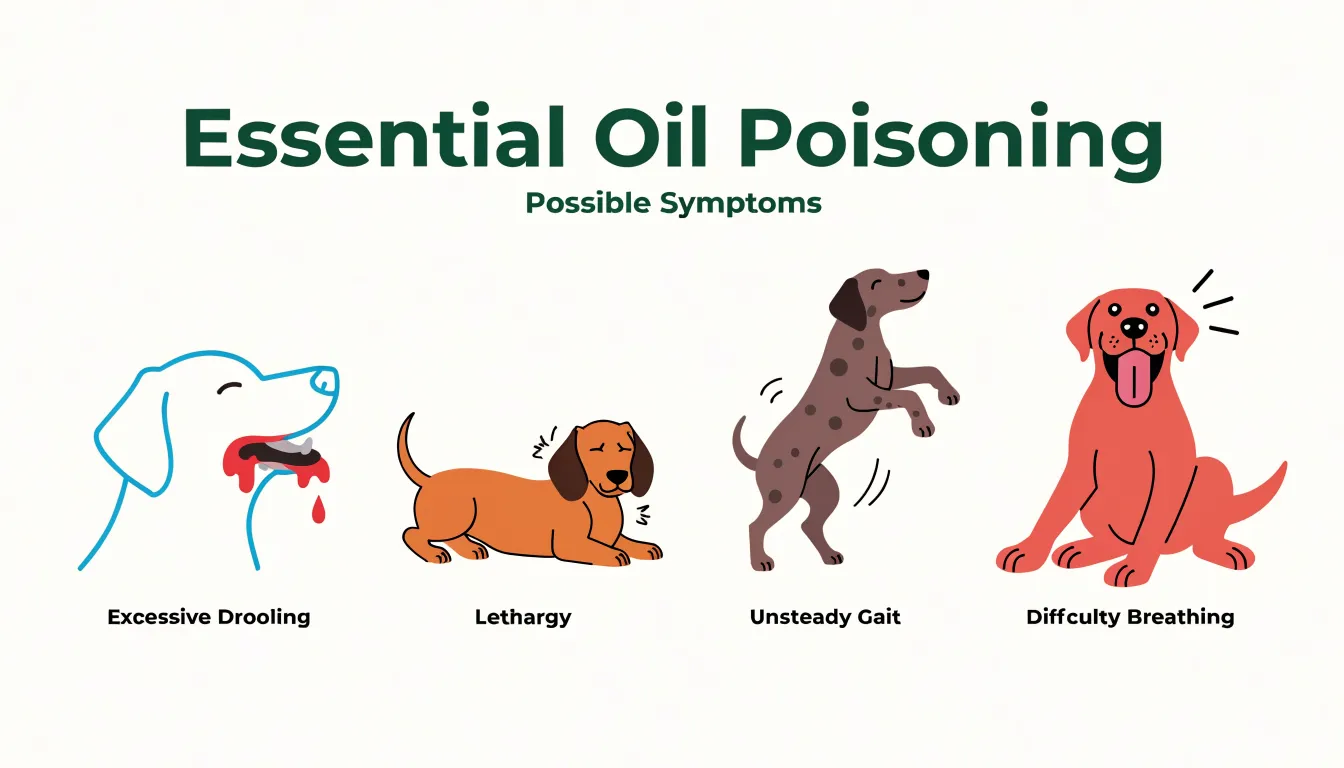
Common early signs:
- An oily scent on their breath, fur, skin, or vomit
- Drooling, pawing at the mouth, or redness in the mouth
- Vomiting or diarrhea
- Lethargy or weakness
- Red, irritated skin where oil touched
Serious signs (get emergency care):
- Wobbliness, stumbling, or trouble standing (ataxia)
- Muscle tremors or twitching
- Seizures
- Coughing, wheezing, or labored or rapid breathing
- A low body temperature, especially with tea tree oil
- Collapse or unresponsiveness
Signs of liver damage, such as yellowing of the gums or eyes, loss of appetite, or a swollen belly, may appear 24–72 hours after exposure, especially with pennyroyal or a large swallowed dose.
Why Essential Oils Are Risky for Dogs
Essential oils are extremely concentrated. One drop can contain the aromatic compounds of a large amount of plant material. As we explain in “Why Natural Doesn’t Always Mean Safe,” a plant extract being natural says nothing about whether it’s safe at that strength. Several things make dogs especially vulnerable:

- Oils absorb fast. The volatile compounds in essential oils dissolve in fat, so they pass through skin and the lining of the mouth and stomach easily. From there, the liver has to process them.
- Dogs lick themselves. Any oil that lands on fur, from a spray, a topical application, or diffuser mist settling, is likely to be licked off and swallowed.
- Dogs are smaller than us. The same amount of oil is a much larger dose for a 10-pound dog than for a 150-pound person.
- Their noses and airways are sensitive. Strong vapor that smells pleasant to us can irritate a dog’s airways, especially in a small or closed room.
- Some compounds are harsh for any body. Methyl salicylate, pulegone, and camphor are toxic to people too in concentrated amounts. A dog just needs much less to get sick.
Cats are even more sensitive than dogs, because their livers lack some of the enzymes needed to break these compounds down. If you have both, assume whatever is risky for your dog is worse for your cat.
The Most Dangerous Oils, One by One
Tea Tree Oil
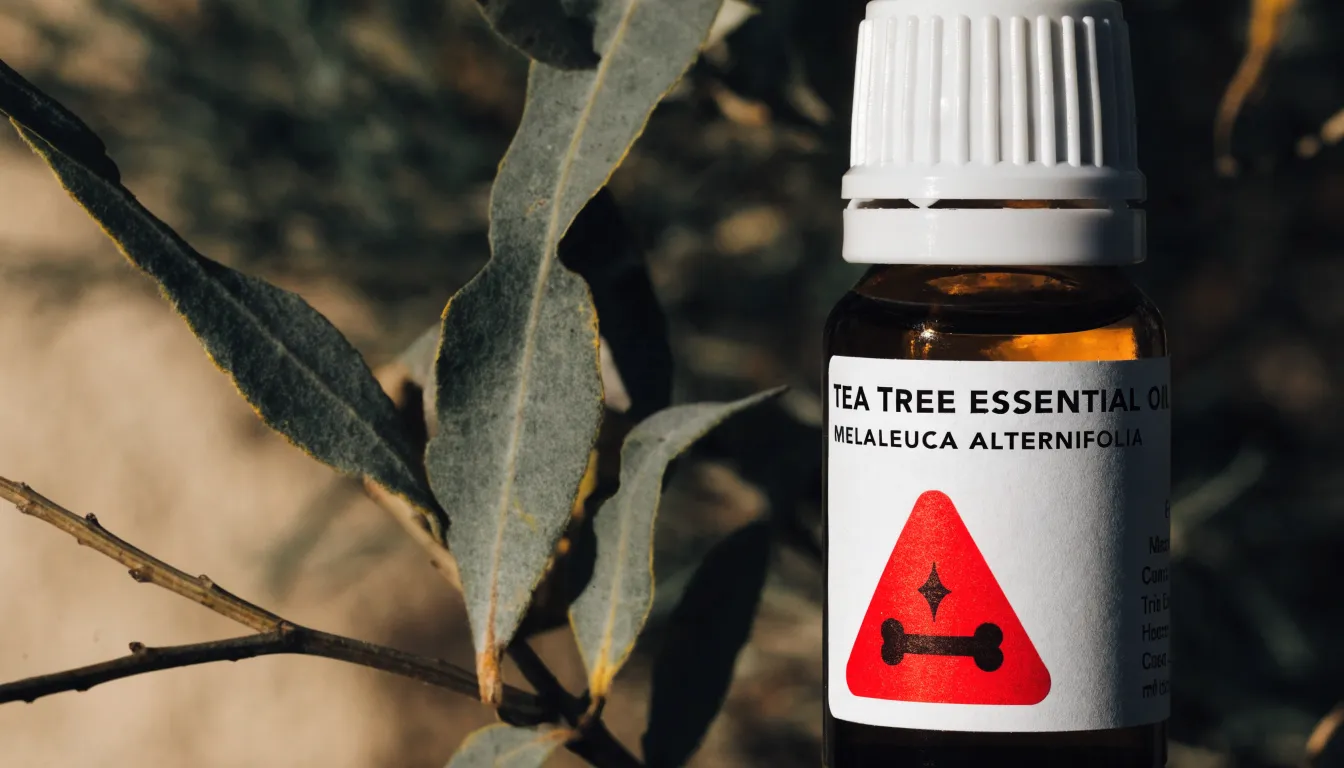
Tea tree oil, from Melaleuca alternifolia, is popular in human products. You can read about its benefits and uses for people. For dogs, it’s one of the most common causes of essential oil poisoning. Many cases happen when owners put undiluted or strongly concentrated oil on a dog’s skin to treat fleas, itching, or hot spots. Even a few drops of 100% oil can cause tremors, weakness, wobbliness, and low body temperature. Larger exposures can cause seizures, collapse, and liver damage. Some pet shampoos contain very small, diluted amounts. Those are different from pure oil, but check with your vet before using them.
Pennyroyal Oil
Pennyroyal oil contains pulegone, which damages the liver. It’s been marketed as a natural flea repellent, but it’s one of the most toxic essential oils for dogs and people. It can cause vomiting, bleeding, seizures, and liver failure. Never use it on or around pets.
Wintergreen and Sweet Birch Oils
Wintergreen oil and sweet birch oil are mostly methyl salicylate, a concentrated aspirin-like compound. A small amount of oil delivers a very large salicylate dose, which can cause stomach ulcers and bleeding, vomiting (sometimes with blood), kidney damage, and seizures. They’re also found in some muscle rubs and liniments, so keep those out of reach too.
Camphor
Camphor appears in some essential oil blends, vapor rubs, and “cooling” balms. Swallowing it can cause vomiting followed by tremors and seizures, sometimes quickly. Store camphor products like medicine.
Cinnamon and Clove
Cinnamon oil (cinnamaldehyde) and clove oil (eugenol) are strong irritants. On skin or in the mouth, they can cause redness, pain, and chemical burns. If swallowed, they can cause vomiting and diarrhea, and in large amounts they can stress or damage the liver. Cinnamon oil can also lower blood sugar.
Citrus Oils
Lemon, orange, grapefruit, lime, and bergamot oils contain d-limonene and linalool. On the skin, they can cause redness, itching, and irritation. If swallowed, they can cause drooling, vomiting, and lethargy. Large exposures have been linked to weakness, wobbliness, and low body temperature. Many citrus oils also make skin more sensitive to sunlight.
Peppermint
Peppermint oil is mainly menthol. In concentrated form, it irritates the mouth, stomach, and airways, causing drooling, vomiting, diarrhea, and lethargy. It’s also sometimes used in “natural” pest sprays, so check labels.
Pine and Eucalyptus
Pine oil (also found in some cleaning products) and eucalyptus oil can irritate a dog’s skin, mouth, and airways. Swallowing them can cause drooling, vomiting, diarrhea, and weakness. Heavy vapor can trigger coughing and breathing trouble, and dogs with asthma or other airway problems are especially sensitive. If a dog vomits after swallowing these oils, some of the oil can be inhaled into the lungs, which can lead to aspiration pneumonia.
Ylang Ylang
Ylang ylang is included on pet poison control lists. Swallowing it or getting it on the skin can cause drooling, vomiting, weakness, and trouble walking.
Diffusers and Dogs
Diffusing is lower-risk than applying oils to the skin or leaving bottles where a dog can reach them, but it isn’t risk-free. Water-based diffusers spread tiny droplets that can settle on your dog’s fur and be licked off. Reed diffusers and open bottles can be knocked over or chewed. To learn more about the devices themselves, see our guide to diffusers for small spaces.

If you diffuse around a dog:
- Never diffuse the high-risk oils from the list above (tea tree, pennyroyal, wintergreen, sweet birch, or camphor).
- Keep the diffuser out of reach on a high, stable surface where it can’t be tipped over, and away from your dog’s bed, food, and water.
- Use a well-ventilated room and always leave a door open so your dog can leave if the smell bothers them.
- Keep sessions short, around 15–30 minutes, and use fewer drops than the maximum.
- Stop immediately if your dog drools, sneezes repeatedly, coughs, paws at their face, seems restless, or avoids the room.
- Skip diffusing entirely for puppies, small breeds, seniors, pregnant dogs, dogs with breathing problems or liver disease, and in homes with cats or birds.
Never Put Essential Oils on Your Dog
Applying essential oils directly to your dog’s skin is the most common way dogs get poisoned. Undiluted essential oils can burn the skin, especially where fur is thin. The compounds absorb quickly into the bloodstream, and your dog will then lick off whatever is left, adding an oral dose on top of the skin exposure.
Don’t use essential oils on your dog for fleas, ticks, itching, hot spots, ear problems, or anxiety unless your vet has specifically recommended a product and how much to use. Vet-approved flea and skin treatments are much safer and more effective.
Small Dogs, Puppies, and Seniors
The smaller the dog, the bigger the dose per pound. A spill or a few drops on the fur that might cause mild drooling in a Labrador could cause tremors in a Chihuahua, Yorkie, or Pomeranian. Puppies have immature livers, and senior dogs or dogs with liver or kidney disease are less able to clear these compounds. Be especially careful with these dogs, and call for help sooner rather than later if they’re exposed.
Lower-Risk Alternatives
No essential oil is completely risk-free for dogs, but some options are much gentler than the oils on the list above.
- Hydrosols. These are the aromatic waters left over from distilling plants. They’re far less concentrated than essential oils. Lavender or chamomile hydrosol can be lightly misted into the air or onto bedding, but not onto your dog, for a mild scent.
- Unscented options. Fresh air, washing bedding, and enzyme cleaners for odors work without adding chemicals.
- Calming aids from your vet. If you’re trying to calm an anxious dog, your vet can suggest products made and tested for dogs.
Lavender and chamomile are sometimes called “dog-safe,” but the plants and oils can still cause stomach upset or irritation in some dogs. Ask your vet before using any essential oil around your dog, even a diluted one. If you do, keep it highly diluted in a carrier oil, never apply it to the dog, and watch for the warning signs above.

Dog-Proofing Your Home
- Store oils like medicine. Keep them in a high or closed cabinet with the caps tightly closed. Never leave bottles on low tables, nightstands, or in bags your dog can get into.
- Check other products. Muscle rubs, vapor rubs, “natural” bug sprays, cleaning products, potpourri, and liquid potpourri can all contain the oils on this list.
- Clean up spills immediately, and keep your dog out of the room until you’re done.
- Wash your hands after handling oils before you pet your dog.
- Save the numbers: your vet, your nearest 24-hour emergency clinic, the ASPCA Animal Poison Control Center (888-426-4435), and the Pet Poison Helpline (855-764-7661).
Frequently Asked Questions
What essential oils are toxic to dogs?
The most dangerous are tea tree, pennyroyal, wintergreen, sweet birch, and camphor. Cinnamon, clove, citrus oils (lemon, orange, grapefruit, lime, bergamot), peppermint, pine, eucalyptus, and ylang ylang should also be avoided. See the full list above for their main risks.
Which essential oils can cause seizures in dogs?
Tea tree, pennyroyal, wintergreen, sweet birch, and camphor are the oils most often linked to tremors and seizures in dogs. Eucalyptus can also cause them after large exposures. Any seizure after essential oil exposure is an emergency.
Is tea tree oil safe for dogs?
No. Pure tea tree oil is one of the most common causes of essential oil poisoning in dogs. Even a few drops of undiluted oil on the skin can cause tremors, weakness, and wobbliness. Don’t use it to treat fleas or skin problems. Ask your vet for a safer treatment.
How long does it take for signs of essential oil poisoning to show in dogs?
Mouth irritation, drooling, and vomiting can start within minutes. Tremors and wobbliness from tea tree oil often appear within 2–12 hours. Liver damage from pennyroyal or a large swallowed dose may not show for 24–72 hours, so call for help even if your dog seems fine.
What should I do if my dog licked essential oil?
Move your dog away from the oil, wash any oil off their fur with a gentle dish soap, and don’t make them vomit unless a professional tells you to. Then call your vet, an emergency clinic, the ASPCA Animal Poison Control Center (888-426-4435), or the Pet Poison Helpline (855-764-7661). Have the bottle with you when you call.
Can I use an essential oil diffuser around my dog?
Diffusing is lower-risk than other uses but not risk-free. Never diffuse the high-risk oils, keep the diffuser out of reach in a ventilated room with an open door, run it for short sessions only, and stop if your dog shows any discomfort. Skip it entirely for puppies, small dogs, seniors, dogs with breathing problems, and homes with cats.
Are lavender and chamomile safe for dogs?
They’re lower-risk than most oils but not guaranteed safe. They can still cause stomach upset or irritation in some dogs. Hydrosols misted on bedding, not on the dog, are a gentler option. Check with your vet first.