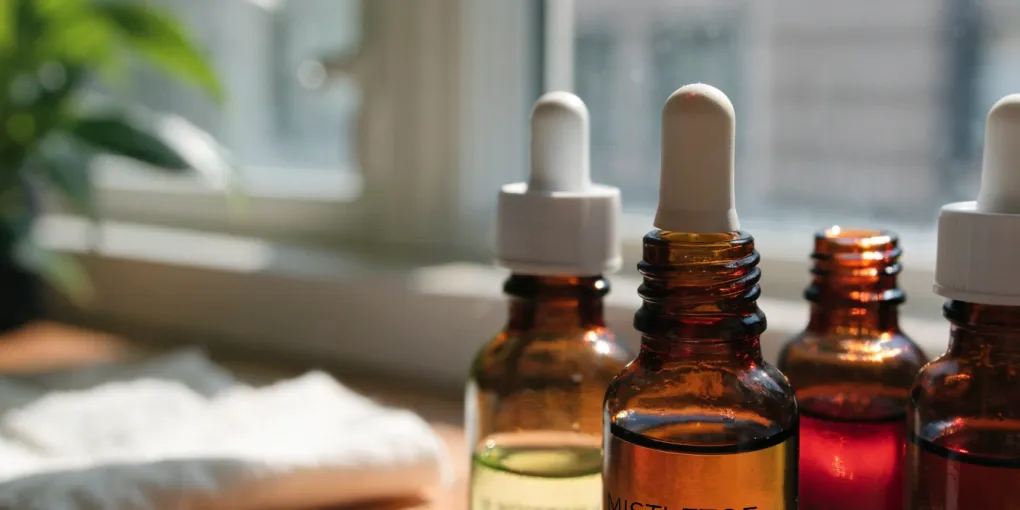
Short answer: Essential oils like tea tree, clove, and lemon can freshen musty air and help discourage mildew on hard surfaces like tile and grout. They won’t fix an established mold problem. Mold comes back as long as there’s moisture, so the real fix is drying the area out and cleaning or replacing what’s affected. If the moldy patch is bigger than about 10 square feet, it keeps returning, or it’s inside walls or carpet padding, call a professional.
Within those limits, oils are a pleasant, low-fume addition to your cleaning routine. Here’s how to use them.
Quick recipes
- All-purpose spray: 1 cp white vinegar + 1 cp distilled water + 1 tbsp rubbing alcohol + 20–30 drops tea tree (or tea tree + lemon). Details ↓
- Tile and grout paste: ½ cp baking soda + enough water to make a paste + 5–10 drops tea tree. Details ↓
- Closet sachet: ½ cp baking soda or rice + 5–8 drops lavender or lemon, in a cloth bag. Details ↓
- Carpet deodorizer: 1 cp baking soda + 10–15 drops tea tree or lemon, left overnight and vacuumed. Details ↓
Table of Contents
- What Essential Oils Can and Can’t Do
- Which Oils to Use
- All-Purpose Spray
- Bathroom Tiles and Grout
- Closets
- Basements
- Carpets
- Diffusing for Musty Air
- Safety: Kids, Pets, and Surfaces
- When to Call a Professional
- FAQ
What Essential Oils Can and Can’t Do
Several essential oils contain compounds with antifungal activity: terpinen-4-ol in tea tree, eugenol in clove, cinnamaldehyde in cinnamon bark, and thymol in thyme. In lab tests, these compounds slow or stop the growth of some common household molds.
That’s a long way from cleaning your house, though. Lab tests use controlled concentrations on clean samples. Real mold grows into drywall, wood, grout, and fabric, and it keeps returning as long as the area stays damp.
What oils are good for:
- Freshening musty air in closets, bathrooms, and basements
- Adding a mild antifungal boost to cleaning you’re already doing on hard, non-porous surfaces
- Making routine cleaning more pleasant than with bleach or harsh cleaners
What oils won’t do:
- Remove mold that has grown into porous materials like drywall, carpet padding, or unsealed wood
- Fix the moisture problem that causes mold in the first place
- Make a moldy space safe for someone with allergies, asthma, or a weakened immune system
Which Oils to Use
You don’t need seven bottles. Tea tree plus one scent you like covers most jobs.
| Oil | Best for | Watch out for |
|---|---|---|
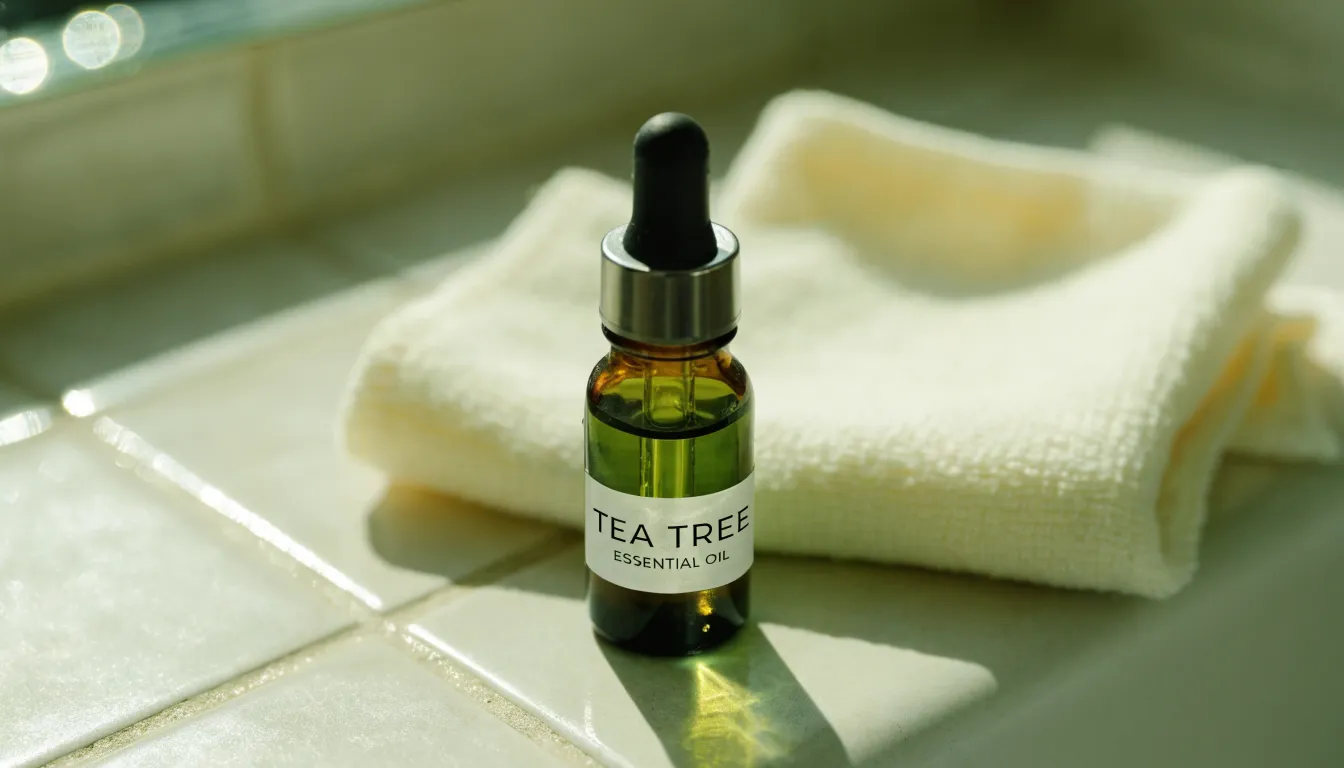
| Tea tree | The workhorse: sprays, grout paste, carpets | Strong medicinal smell; toxic to cats and dogs |
| Clove | Adding strength to sprays; warm scent that covers mustiness | Irritates skin, so wear gloves; can stain light surfaces |
| Cinnamon bark | Musty smells in spaces you can spot test | One of the harshest oils on skin; stains; never use undiluted |
| Lemon | Cutting grime and film; fresh scent in sprays | Sensitizes skin to sunlight; toxic to cats |
| Peppermint | Freshening closets and small closed spaces | Mostly masks odor rather than removing it |
| Lavender | Closet sachets; gentle everyday scent | Mild, so not a heavy-duty cleaner |
| Eucalyptus | Basements; cutting stale air | Keep away from small children and cats |
| Thyme | An extra antifungal option in sprays | Strong herbal smell; irritates skin |
A good blend to start with: 4 parts tea tree, 2 parts clove, and 3 parts lemon or sweet orange. The citrus softens the medicinal tea tree and spicy clove notes. For more ideas, see our beginner’s guide to blending essential oils.
All-Purpose Spray
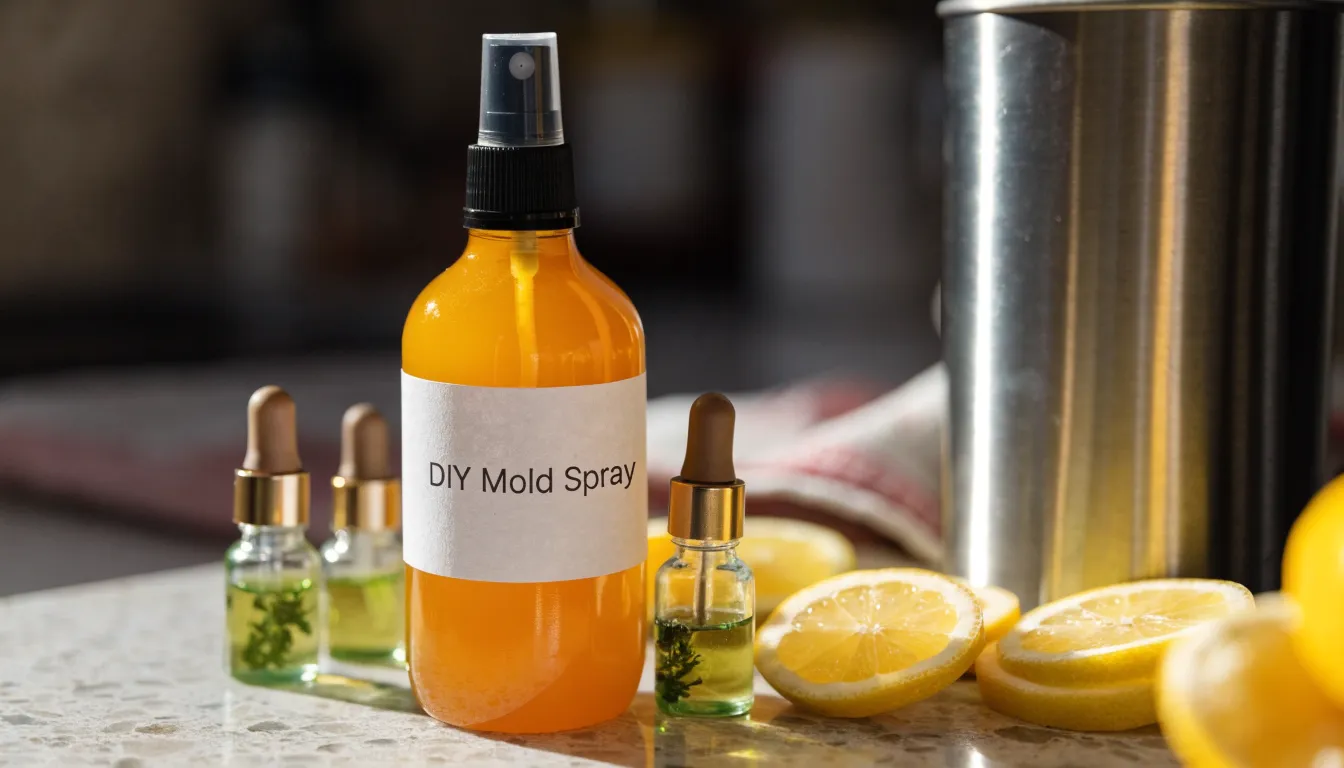
This works on tile, sealed counters, glass, shower doors, and window sills.
You’ll need:
- Glass spray bottle (oils break down plastic over time)
- 1 cp white vinegar
- 1 cp distilled water
- 1 tbsp rubbing alcohol (this helps the oil mix in; otherwise it floats on top)
- 20–30 drops essential oil (for example, 15 drops tea tree + 10 drops lemon)
Directions:
- Add the 1 tbsp rubbing alcohol and the 20–30 drops of oil to the bottle first and swirl to combine.
- Add the 1 cp vinegar and 1 cp distilled water. Shake well before every use.
- Spray the area, let it sit 15–30 minutes, then wipe with a damp cloth. For stubborn spots, scrub with a soft brush first.
- Dry the surface completely. Leftover moisture undoes the work.
Don’t use vinegar on marble, granite, or other natural stone, because it etches the surface. And never mix this spray with bleach.
Want more spray ideas? See how to make an essential oil room spray.
Bathroom Tiles and Grout
Bathrooms are where most people first see black mildew spots. They’re also where oils help most, because tile and glass are non-porous.
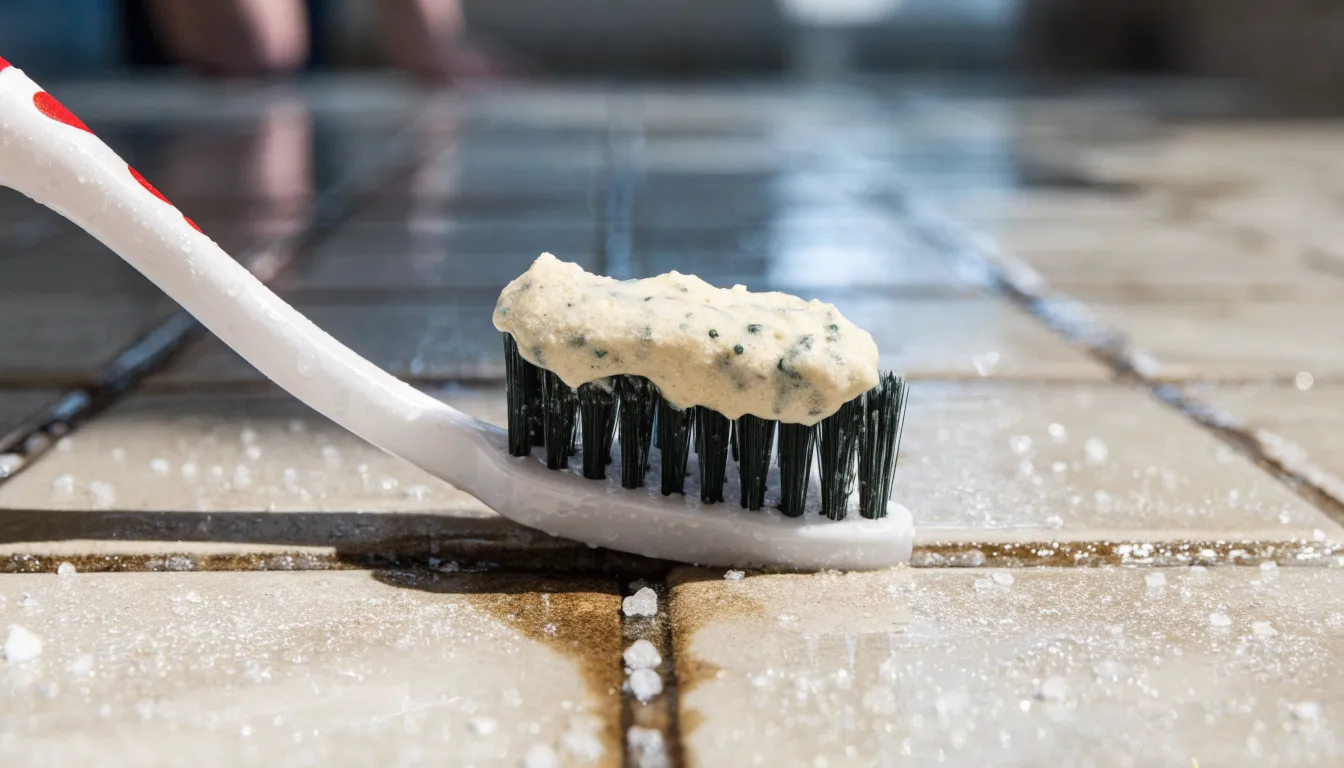
- Mix ½ cp baking soda with enough water to make a toothpaste-like paste.
- Stir in 5–10 drops tea tree oil (or swap in 2–3 drops lemon or eucalyptus for scent).
- Spread the paste on dark spots and grout lines and leave it for 15–20 minutes.
- Scrub with an old toothbrush, rinse, and dry.
The baking soda does the scrubbing, and the oil adds a mild antifungal boost and a fresh smell.
To keep mildew from coming back: run the exhaust fan during showers and for 20–30 minutes afterward, squeegee the walls, and give the tile a weekly mist with the all-purpose spray. If the grout stays stained after scrubbing, mold may have grown into it. Regrouting or a grout sealer will help more than another round of oil.
Closets
Closets smell musty because they’re closed, dark, and often hold clothes that weren’t fully dry. Air them out first, and never put damp clothes away.
Sachets: Mix ½ cp baking soda, uncooked rice, or silica gel beads with 5–8 drops lavender, lemon, or tea tree. Spoon the mix into small breathable cloth bags and tuck them into drawers and shelves. Replace them every 3–4 weeks.
Closet spray: Combine 1 oz distilled water, 1 tsp vodka or rubbing alcohol, and 10–15 drops oil. Mist the closet air rather than the clothes, since oils can spot fabric.
Peppermint works well here too, but mostly as a deodorizer. It covers mustiness rather than removing the cause.
Basements
Basement mustiness is almost always a moisture problem. Oils can make the air smell better, but they won’t fix the cause.
Fix the dampness first:
- Run a dehumidifier and aim for 30–50% humidity. A cheap hygrometer will tell you where you are.
- Improve airflow with a fan or by opening windows when the outside air is dry.
- Check for leaks, gutters draining toward the foundation, and condensation on pipes.
- In small spaces, open containers of activated charcoal or baking soda can absorb a bit of moisture and odor. They won’t replace a dehumidifier.
Then freshen: For concrete floors and brick walls, add 10–15 drops of eucalyptus or tea tree to a bucket of warm, soapy cleaning water and scrub. A diffuser running tea tree, eucalyptus, and lemon can keep the air pleasant once the dampness is under control.
If the musty smell is still strong after the space is dry, look for hidden mold behind paneling, in carpet, or in stored cardboard boxes.
Carpets
Carpet holds on to odor whenever moisture gets trapped from spills, humidity, or a slow-drying cleaning.
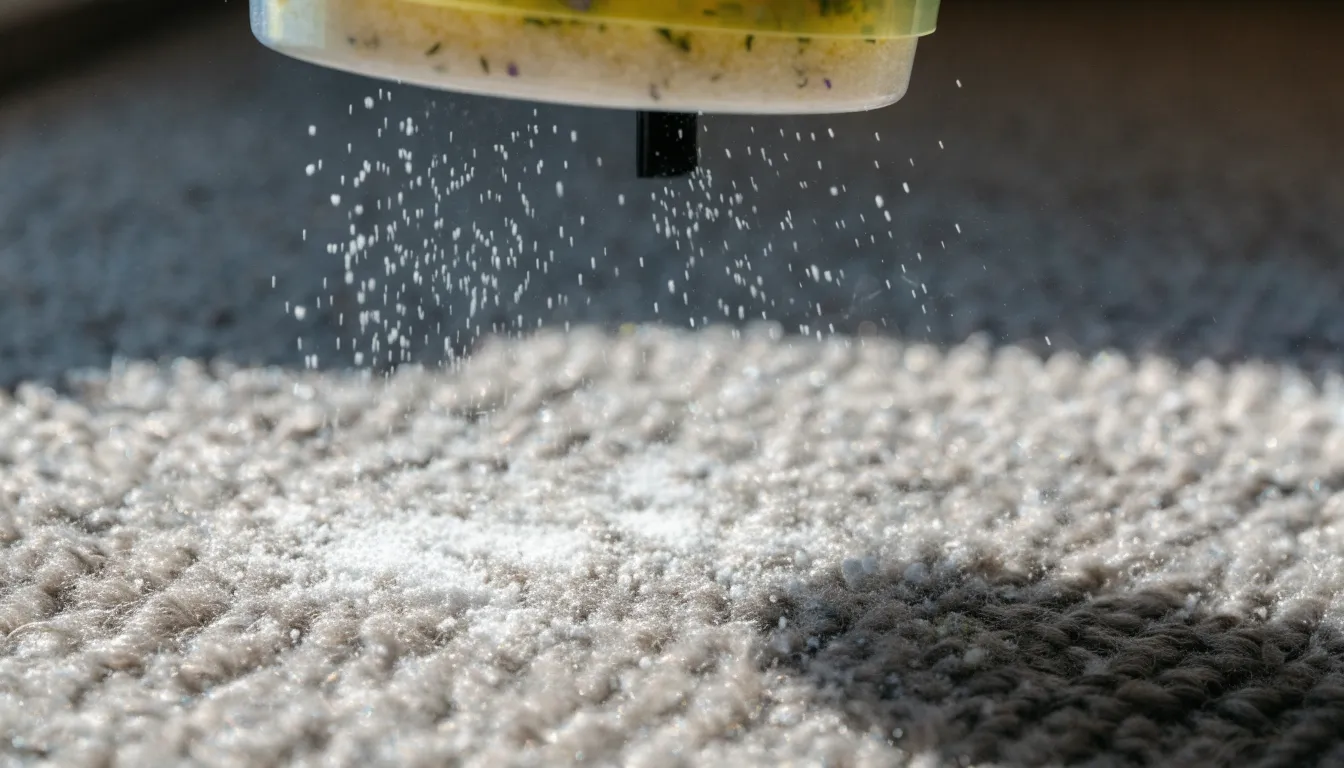
- Mix 1 cp baking soda with 10–15 drops tea tree or lemon oil in a jar. Shake it well so the oil spreads evenly.
- Test the mix on a hidden spot first, because oil can discolor some carpets.
- Sprinkle it over the musty area and leave it for several hours or overnight.
- Vacuum thoroughly.
If the smell comes back within days, or the carpet ever got soaked, the padding underneath may be moldy. A deodorizer can’t reach that, so the padding likely needs to be replaced.
Diffusing for Musty Air
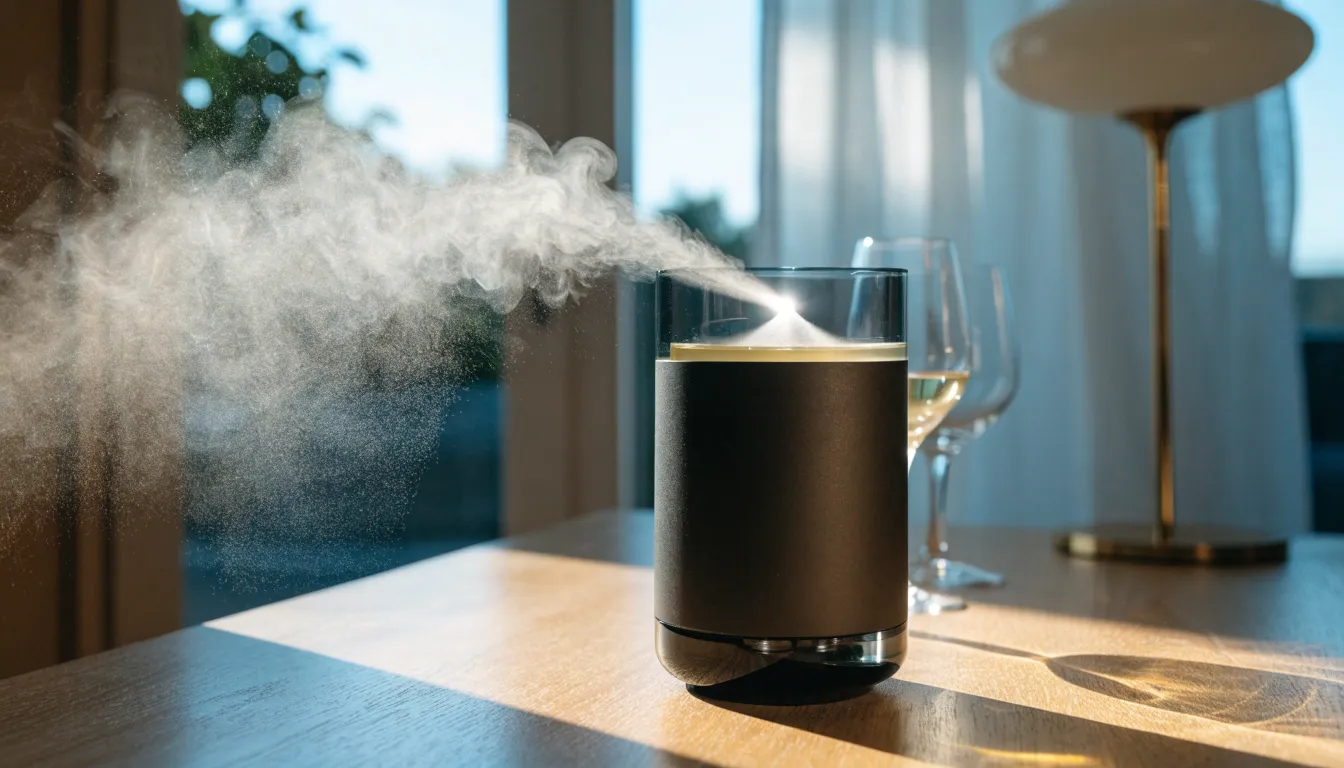
An ultrasonic diffuser is the best choice. It disperses oil as a fine mist without heat. Place it in a central spot in the room.
- Use the number of drops your diffuser recommends for its water level, usually 3–8 drops. Start low.
- Run it in cycles, such as 30 minutes on and 30 minutes off, rather than all day. This saves oil and keeps you from going nose-blind to the scent.
- Keep the room ventilated. Diffusing into stale, sealed air just layers scent on top of the problem.
- Clean the diffuser weekly. A dirty diffuser can grow its own mildew.
Safety: Kids, Pets, and Surfaces
- Pets: Tea tree, clove, cinnamon, eucalyptus, peppermint, and citrus oils are toxic to cats and can harm dogs. This applies whether the oil is diffused or licked off a surface. Don’t diffuse these oils around cats or birds. Always give dogs a way to leave the room, and wipe treated surfaces your pets can reach.
- Kids: Keep bottles out of reach. Don’t diffuse eucalyptus or peppermint around children under 6.
- Skin: Wear gloves when handling clove, cinnamon bark, or thyme. Never apply oils undiluted where bare skin will touch.
- Surfaces: Spot test everything. Cinnamon and clove can stain, and oils can mark carpet and fabric. Vinegar etches natural stone.
- Ventilation: Open a window or run a fan while cleaning.
- Stop if anyone gets a headache, starts coughing, or has a skin reaction.
When to Call a Professional
Skip the DIY approach and get the space inspected if:
- The moldy area is larger than about 10 sq ft
- Mold keeps returning after cleaning
- You smell mustiness but can’t find the source, which may mean mold inside walls, under floors, or in HVAC ducts
- There’s been flooding or a water leak
- Someone in the home has asthma, allergies, or a weakened immune system, or has symptoms that get better when they leave the house
Frequently Asked Questions
Do essential oils kill mold?
Some oils, especially tea tree, clove, and thyme, slow or stop mold growth in lab tests. At home, they work best as a mild boost for cleaning hard, non-porous surfaces. They won’t remove mold that has grown into drywall, wood, or carpet, and mold will keep returning until the moisture problem is fixed.
What’s the best essential oil for musty smells?
Tea tree is the most useful all-rounder for cleaning. For scent, lemon and eucalyptus cut stale air well, and lavender is a gentle choice for closets. Peppermint is strong but mostly masks odor.
How do I make an essential oil mold spray?
Mix 1 cp white vinegar, 1 cp distilled water, 1 tbsp rubbing alcohol, and 20–30 drops tea tree (or tea tree plus lemon) in a glass spray bottle. Shake well, spray, wait 15–30 minutes, then wipe and dry. Don’t use it on natural stone.
Can I just diffuse oils to get rid of a musty smell?
Diffusing makes the air smell better, but the source will still be there. Find and dry out the damp area, clean it, and then diffuse to keep things fresh.
Are these oils safe around pets?
Many aren’t. Tea tree, citrus, peppermint, eucalyptus, clove, and cinnamon are toxic to cats and can harm dogs. Don’t diffuse them around cats or birds, and wipe down any surfaces pets can lick.
When is mold too much to handle myself?
If the mold covers more than about 10 sq ft, keeps coming back, follows flooding, or seems to be affecting someone’s health, have the space professionally inspected.