
Oregano essential oil is one of the strongest oils you can buy. Its main compounds, carvacrol and thymol, show powerful antimicrobial activity in the lab, which is why it has a big reputation online. In people, though, the evidence is thin, and the same compounds that kill microbes in a petri dish also make oregano oil one of the most irritating oils for skin, eyes, and mucous membranes. Here’s what it’s realistically useful for, how to keep it safe, and why I don’t recommend swallowing it.
Table of Contents
- Understanding Oregano Oil
- The Active Compounds
- Can Oregano Oil Boost Your Immune System?
- Antifungal and Antibacterial Claims
- Digestion, SIBO, and Candida
- Should You Take Oregano Oil Internally?
- Skin Use: Proceed With Caution
- How to Dilute Oregano Oil
- Diffusing Oregano Oil
- Why I Skip It for Steam Inhalation
- Household Cleaner
- Who Should Avoid Oregano Oil
Understanding Oregano Oil
Oregano oil comes from oregano plants in the mint family, mainly Origanum vulgare and its close relatives native to the Mediterranean. The herb you cook with is mild. The essential oil is not.
The oil is made by steam distillation: steam passes through the plant, carries the aromatic compounds out, and the oil separates from the water as it cools. That process concentrates compounds that are present only in small amounts in the leaves, which is why a single drop of the oil is far stronger than any amount of oregano you’d put in food.

“Oregano oil” is also sold in two very different forms: the pure essential oil (sold by the drop, for external use) and oil-of-oregano supplements (capsules or pre-diluted liquids sold as dietary supplements). This page is about the essential oil. Supplements are covered briefly in the internal-use section.
The Active Compounds
Good oregano oil is dominated by carvacrol, often well over half of the oil, with smaller amounts of thymol and other compounds. Both are phenols, a class of compounds known for strong antimicrobial activity and for being harsh on skin and mucous membranes.
In lab studies, carvacrol and thymol damage the membranes of bacteria and fungi and show antioxidant activity. Those results are real, but they come from petri dishes and test tubes, usually at concentrations far higher than anything that would be safe to put on skin or in your body. Lab activity isn’t the same as a proven benefit in people.
Can Oregano Oil Boost Your Immune System?
There’s no good human evidence that oregano oil strengthens immunity, activates white blood cells, or prevents colds and flu. The “immune-boosting” claims you’ll see online come from lab and animal research, not from trials in people.
If you want to lower your chances of getting sick, the basics have real evidence behind them: vaccination, handwashing, sleep, and staying home when you’re ill. If you’re already sick and not getting better, see a doctor.
Antifungal and Antibacterial Claims
Oregano oil is one of the more potent essential oils against bacteria and fungi in lab testing, including some Candida species. That’s why it shows up in so many “natural antibiotic” articles.
What’s missing is solid clinical evidence. There are no good-quality trials showing that oregano oil treats infections in people, and it should never replace antibiotics or antifungals a doctor has prescribed. Infections that are spreading, painful, or not improving need medical care.
Digestion, SIBO, and Candida
You’ll often read that oregano oil “balances gut bacteria,” relieves bloating, or treats SIBO (small intestinal bacterial overgrowth). There’s no reliable evidence that oregano essential oil does any of these things. A few small studies have looked at herbal supplement blends for SIBO, but they didn’t test oregano oil on its own, and they used commercial capsule products under medical supervision, not drops from an essential oil bottle.
Digestive symptoms like ongoing bloating, pain, or changes in bowel habits are worth getting checked. SIBO and Candida overgrowth are diagnoses a clinician should make and treat.
Should You Take Oregano Oil Internally?
I don’t recommend swallowing oregano essential oil, in drops, in water, under the tongue, or in homemade capsules. Here’s why:
- It’s highly irritating. Undiluted or poorly diluted oregano oil can burn the mouth, throat, and stomach lining.
- There’s no proven benefit. As covered above, the claimed internal benefits don’t have good human evidence behind them.
- It can interact with medicines and conditions. Carvacrol may affect blood clotting, which matters if you take blood thinners or are having surgery. It’s also not considered safe during pregnancy or breastfeeding.
Commercial oil-of-oregano supplements are a separate product, sold as dietary supplements and not reviewed by the FDA for effectiveness. If you’re considering one, talk to your doctor or pharmacist first, especially if you take any medications, are pregnant or breastfeeding, or have a bleeding disorder. For more on why bottled essential oils aren’t meant for swallowing, see can you ingest essential oils?.
Skin Use: Proceed With Caution
Oregano oil is classed as a strong skin irritant, and even diluted it can cause redness, burning, and peeling. It can also sensitize skin over time, meaning you may react more and more with repeated use.
Because of that, I don’t recommend it as a spot treatment for acne or for skin conditions. If you want an essential oil for mild blemishes, tea tree oil has better evidence and is much gentler. For sore muscles, there are far more comfortable options than oregano.
For suspected fungal skin infections like athlete’s foot or ringworm, use a proven over-the-counter antifungal or see a doctor rather than experimenting with a harsh oil on already irritated skin.
How to Dilute Oregano Oil
If you do use oregano oil on skin, keep it very dilute and use it on small areas only.

- Maximum for adults: about 1%, which is 1 drop per teaspoon (5 ml) of carrier oil such as jojoba or fractionated coconut oil. Tisserand and Young’s Essential Oil Safety, the standard reference, sets a skin maximum for oregano oil at around this level.
- Sensitive skin: 0.5% or less, which is 1 drop per 2 teaspoons (10 ml).
- Never apply it undiluted, and don’t go above these amounts for “stronger” spot treatments.
- Keep it away from the face, eyes, mucous membranes, and broken or irritated skin.
Always patch-test first: apply a little of your diluted blend to your inner forearm and wait 24 hours. If you see redness, itching, or burning, wash it off and don’t use it. Wash your hands after handling the oil, and never touch your eyes with oregano oil on your fingers.
Diffusing Oregano Oil
Diffusing is the lowest-risk way to enjoy oregano’s warm, herbal scent, as long as you keep it light. On its own it can be harsh, so blend a single drop with brighter oils.

Two simple blends:
- 1 drop oregano + 4 drops sweet orange or lemon
- 1 drop oregano + 3 drops eucalyptus
Run the diffuser for 30 to 60 minutes, then take a break, and keep the room ventilated. Diffusing makes a room smell fresh, but it doesn’t purify the air. Don’t diffuse oregano oil around young children, anyone with asthma, or cats (see below), and stop if anyone gets a headache, cough, or irritated eyes.
Why I Skip It for Steam Inhalation
You’ll often see oregano oil recommended for steam inhalation when you’re congested. I don’t recommend it. Hot steam carries oregano’s phenols straight into your eyes, nose, and airways, and this oil is irritating enough to sting and make coughing worse.
Plain steam from a bowl of hot water or a warm shower is what does most of the work of loosening mucus. If you want an aroma, eucalyptus is a gentler choice, used sparingly. If congestion lasts more than about 10 days or comes with a high fever or trouble breathing, see a doctor.
Household Cleaner
Oregano oil can add a sharp, herbal scent and some antimicrobial activity to a homemade cleaner. Homemade sprays aren’t a substitute for an EPA-registered disinfectant when you actually need to disinfect, such as after handling raw meat or during illness.
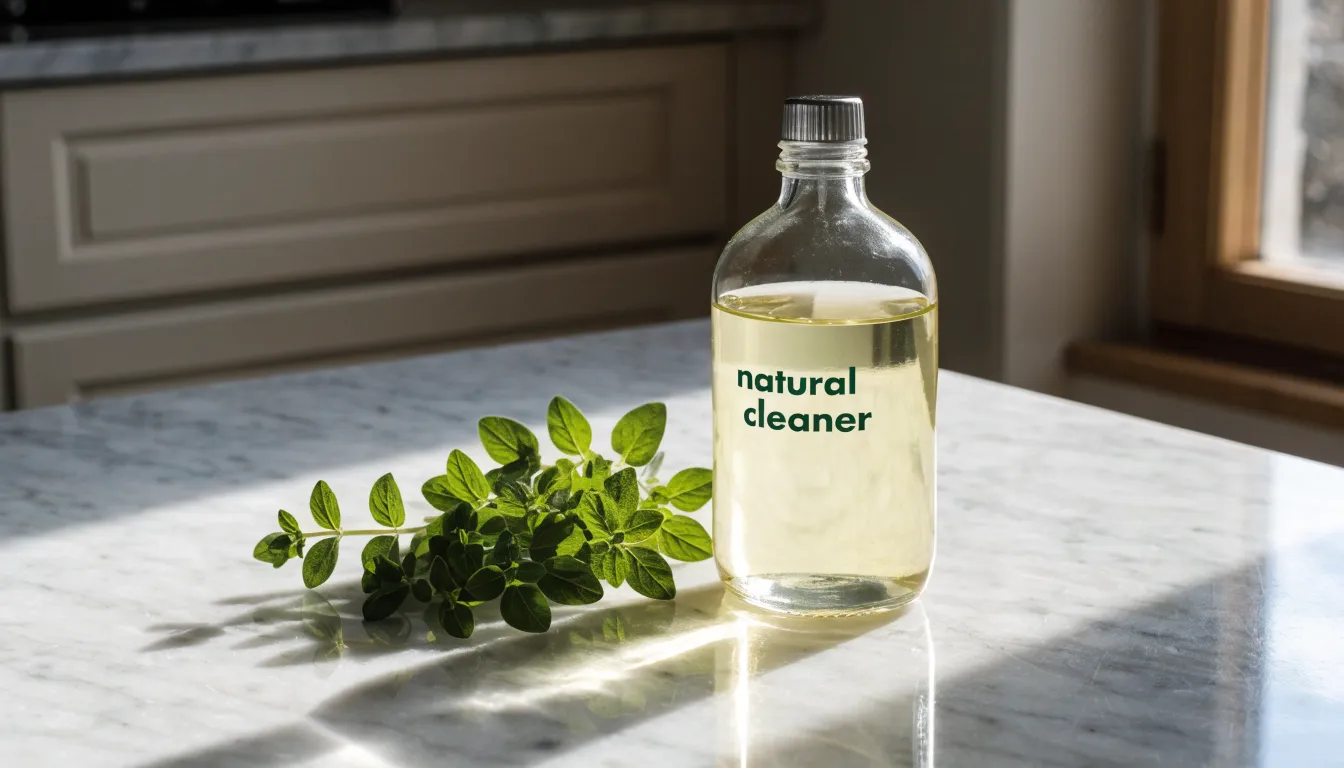
For a simple all-purpose spray, mix one cup of distilled water, one cup of white vinegar, and 5 to 10 drops of oregano oil in a spray bottle. Shake before each use.
A few cautions:
- Wear gloves, since oregano oil can irritate your hands.
- Skip marble, granite, and other natural stone, which vinegar can etch.
- Never mix vinegar with bleach.
- Keep pets away until surfaces are fully dry, especially cats.
Who Should Avoid Oregano Oil
- Pregnant or breastfeeding people: avoid it, particularly internally, and ask your healthcare provider before any use. See essential oils and pregnancy.
- Babies and young children: don’t use it on children or diffuse it around them. See using oils safely around kids.
- People on blood thinners or with bleeding disorders: avoid supplements and talk to your doctor.
- People with sensitive skin, eczema, or asthma: this is one of the harsher oils to choose; consider gentler options.
- Cats and dogs: oregano oil is high in phenols, which are especially toxic to cats. Never apply it to pets, and keep diffusers and cleaned surfaces away from them. See essential oils toxic to cats and toxic to dogs.
If anyone swallows oregano oil, especially a child, call Poison Control (1-800-222-1222 in the US) or seek emergency care.
Frequently Asked Questions
What are the main compounds in oregano oil?
Carvacrol is usually the main compound, often well over half of the oil, with smaller amounts of thymol. Both are phenols with strong antimicrobial activity in lab studies, and both are harsh on skin and mucous membranes.
Does oregano oil boost the immune system?
There’s no good human evidence that oregano oil strengthens immunity or prevents colds and flu. Those claims come from lab and animal research.
Can I take oregano oil internally?
I don’t recommend swallowing oregano essential oil. It can burn the mouth, throat, and stomach, there’s no proven internal benefit, and it may interact with blood thinners. Oil-of-oregano supplements are a separate product; talk to your doctor or pharmacist before trying one.
Can I put oregano oil on my skin?
Only well diluted, at about 1% or less (1 drop per teaspoon of carrier oil), on small areas, after a patch test. Never apply it undiluted, and keep it away from your face, eyes, and broken skin.
Does oregano oil help with SIBO or Candida?
There’s no reliable evidence that oregano essential oil treats SIBO or Candida in people. Both should be diagnosed and treated by a clinician.
Is oregano oil safe for pets?
No. Oregano oil is high in phenols, which are especially toxic to cats. Never apply it to pets, and keep diffusers and freshly cleaned surfaces away from them.